
Roofing Contractor Belvidere NJ
Clifton-based, NJ HIC #13VH11720500. 2-year roof-repair warranty.
- 5.0 rating on Google
- NJ HIC #13VH11720500
- Free, no-obligation estimates
We at Four Seasons Roofing and Construction cover Belvidere, NJ, the Warren County seat, for roofing, siding, and chimneys, one licensed company for the whole shell of the house. Estimates are free, written, and itemized. We also offer 0% financing and a $500 senior and military discount.
- One licensed contractor for roofing, siding and chimneys
- Rated 5.0 on Google
- 0% financing available, plus a $500 senior & military discount
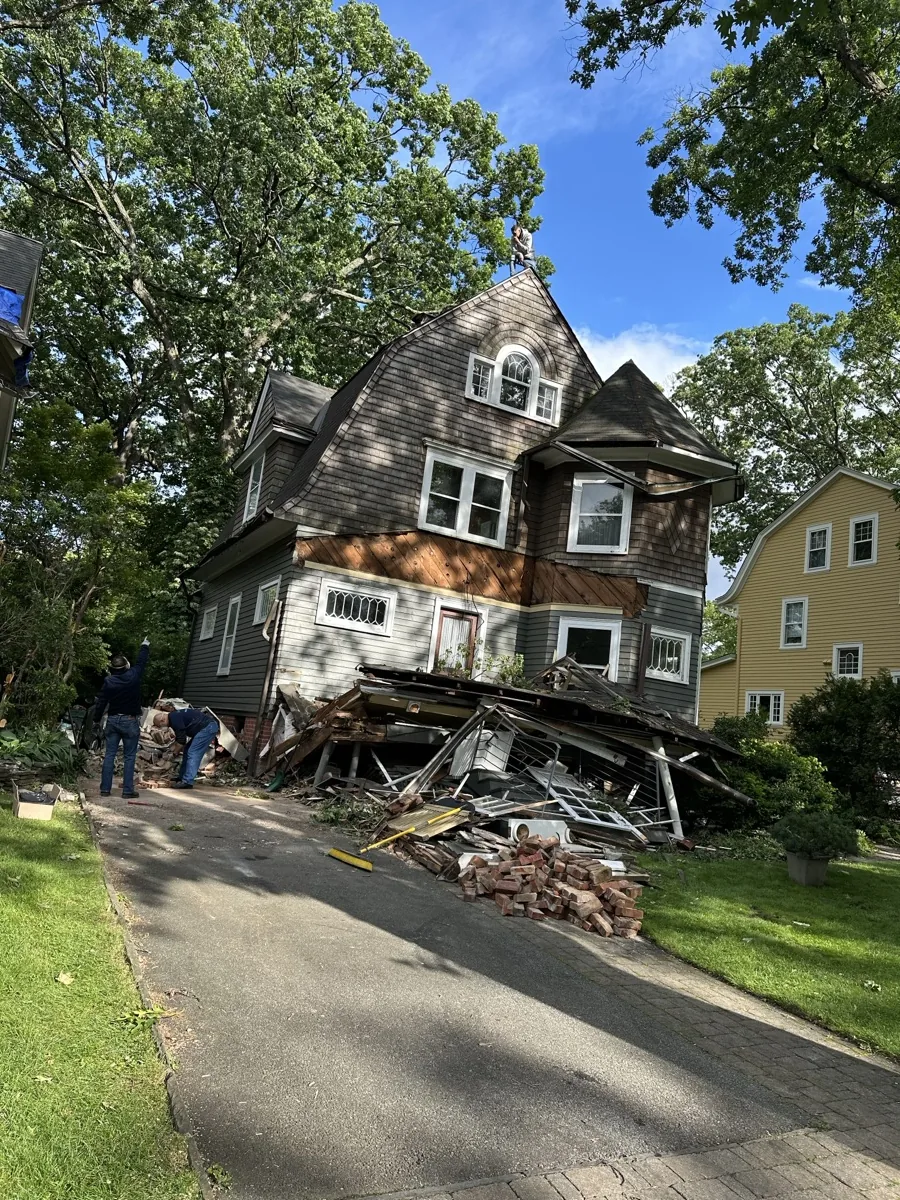
The Facts on Four Seasons Roofing and Construction in Belvidere
We at Four Seasons Roofing and Construction provide roofing in Belvidere. We are a home improvement contractor based at 38 Speer Ave in Clifton, New Jersey; we have held New Jersey Home Improvement Contractor registration #13VH11720500 since 2021, and we install GAF and Owens Corning roofing systems. Western Warren County is where the borough stands, close to the Riverton-Belvidere Bridge and the Foul Rift rapids on the Delaware River.
See every roofing service we offer · Request a free roof estimate
Keep reading: Who Signs Off on the Work in Belvidere
Ring (862) 318-3997 or leave your details in the form on this page, and we call you back.
Search for a roofing contractor in Belvidere NJ and you find a town that is anything but ordinary. Belvidere is the seat of Warren County, with a historic district of 228 contributing buildings on the National Register since 1980.
Greek Revival and Late Victorian homes line these streets, and Federal-era structures like the Maxwell-Robeson-Cummins House date to 1834. Those roofs carry steep gables, dormers, and decorative trim, which take more care than a plain tract-house roof.
Free, Honest Inspection
Every job opens with a real look at the whole roof. Photos, a plain verdict, and no charge to learn where your historic Belvidere roof actually stands.
Based in Clifton
Our base is 38 Speer Ave in Clifton. An inspection in Belvidere costs you nothing.
Answered Around the Clock
Day, night, Sunday, holiday. We pick up, ready to send help when water is coming in.
Who Signs Off on the Work in Belvidere
A Belvidere job that needs a permit goes through the borough building department, whose page is belviderenj.net/building. The department's inspector signs off on the finished work. Ordinary repairs usually need none, but check what your project requires with the department before it starts.
We are registered with the New Jersey Division of Consumer Affairs as a home improvement contractor, NJ HIC #13VH11720500. You can check that on the state licence verification portal before you hire us, or anyone else. We install GAF and Owens Corning roofing systems but are not enrolled in either manufacturer's contractor certification program.
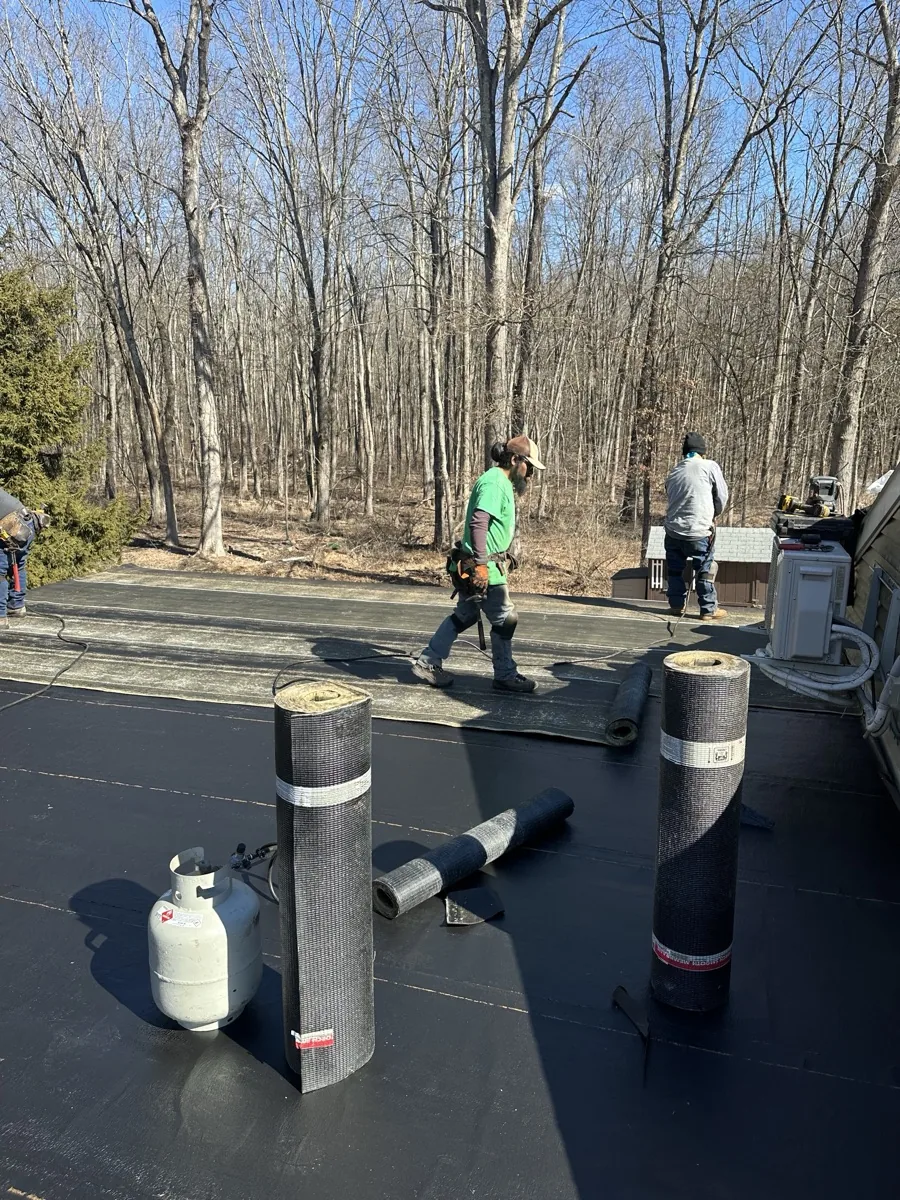
Other Work We Do in Belvidere
Everything a Belvidere Roof Might Need
Patch or full replacement? Most homeowners in Belvidere cannot tell yet, and the inspection answers that. We handle the entire range of roofing jobs, so no one gets passed to another specialist midway.
For a small fix, that is Belvidere NJ roof repair. A worn-out roof goes to Belvidere NJ roof replacement. Water coming through tonight counts as an Emergency Roof Repair Belvidere NJ call, and we answer at any hour.
Keep reading: Where Historic Belvidere Roofs Tend to Fail
Where Historic Belvidere Roofs Tend to Fail
Steep gables and deep valleys
Steep roof planes on Federal-era and Greek Revival houses run a lot of water into long valleys, so valley shingles wear out sooner than the field around them. Valleys are a frequent source of leaks on these roofs.
Dormers and decorative trim
Every dormer, gable, and piece of period trim adds another roof-meets-wall seam, and the old tar patches at those joints fail. We cut in proper metal flashing instead, matched to the look of the house.
Low-slope rear additions
Roofs over porches and rear additions sit close to flat, so water pools instead of running off. A split seam is where flat roof repair in Belvidere comes in.
Tall masonry chimneys
These older homes carry tall brick chimneys, sometimes more than one, and the flashing around them is a frequent entry point. Belvidere chimney repair handles the flashing and the brick.
A Belvidere Roof Through the Year
In spring, check for what winter left: curled shingle edges, flashing pulled loose, and stains along the eaves from January ice. Summer storms coming off the Delaware bring limbs down on Belvidere roofs.
Late fall is the last dry window before snow, so repairs put off until then get done under pressure. Winter repairs are done as well, using cold-weather technique where a sealant needs it.
Why Belvidere Customers Keep Our Number
We hold a 5.0 rating on Google, and several reviews mention showing up when promised and leaving the house clean.
We offer maintenance checkups. An older roof is worth an annual look, and the homes around the Belvidere Historic District, where small problems can go unnoticed for years, are the ones to check first.
We take small repairs too. If sealing a flashing fixes the problem, that is the job, and a Belvidere repair carries a 2-year warranty.
Pick the Help You Need in Belvidere
Patch versus replace gets sorted on the Belvidere roof repair page, a worn-out roof goes to Belvidere roof replacement, and a leak tonight is an emergency call. Belvidere also covers Belvidere NJ Roof Leak Repair, Belvidere, NJ Flat Roof Repair, storm damage repair in Belvidere, Chimney Repair, Belvidere NJ, and Siding in Belvidere. Every town we serve is listed on our service areas page.
A Roofer Who Has Worked These Old Roofs
Many results for "roofers near me" are lead brokers: middlemen who sell your phone number and never see your house. We are licensed (NJ HIC #13VH11720500) and insured, with one base in Clifton.
A call to us brings an inspection from the same business that later does the work, with the Four Seasons name on it. The roofs in the Belvidere Historic District, with their Federal-era gables and complex rooflines, take experience with older houses.
One Contractor for the Whole Roof
We do both pitched-shingle and flat-roof work, so one contractor checks the whole roof. That matters in Belvidere, where a steep Greek Revival front often joins a back addition or porch that barely slopes. The dormers, valleys, chimney, pitched field, and low-slope sections are checked together.
Weather Along the Delaware Is Hard on Belvidere Roofs
Belvidere sits along the Delaware River in western Warren County, near the Riverton-Belvidere Bridge and the rapids at Foul Rift. River-valley weather brings driving rain off the water and heavy snow loads through winter. Nor'easters roll through most often from September through April, according to the National Weather Service.
The bigger problem on these steep historic roofs is ice damming.
Snow melts higher up, refreezes at the cold eave, and the backed-up water gets under the shingles and into the house. Storm damage gets documented for insurance through storm damage roof repair in Belvidere.
We cover the borough end to end, from the streets of the Belvidere Historic District near the Warren County Courthouse, past the Warren County Museum and Belvidere Cemetery, out along County Route 620 and CR 519, and over toward neighboring White Township.
Leaks Rarely Start Where the Stain Shows
The stain on the ceiling is almost never directly under the hole. Water runs along the rafters, soaks the insulation, and appears a room away from where it got in. On a tall Federal-era or Victorian home with a finished attic, that path can be long.
We check the deck from inside where there is access, find the real entry point, fix that, and water-test before the ladder comes down. That is the work behind roof leak repair in Belvidere.
Insurance Claims Without the Runaround
Plenty of storm damage around Belvidere can be claimed, and good documentation keeps the claim simple. For the adjuster on a Belvidere claim we gather dated photos from before anyone cleans up, an itemized scope laid out as they prefer, and a roofer standing on the roof with them, naming each flashing the wind lifted.
Small damage does not always warrant a claim, and when it does not, you will get that answer from us. Paying for a minor repair yourself keeps your record and your renewal clear of a claim.
Straight Talk on Cost
A steep historic roof in Belvidere is not priced from the driveway. You get a free inspection first, then an itemized written estimate. Slope, height, dormers, valleys, any wet decking, and the trouble of matching a slate-look or shingle all go into it.
Seniors and members of the military get $500 off. 0% financing is available, so a new roof does not have to be paid in one go.
A repair is backed by a 2-year warranty, a replacement by a 50-year warranty.
Where We Roof
Our base is 38 Speer Ave in Clifton. We cover the borough and nearby Warren County towns, including White Township. Belvidere is the county seat, so the work here covers courthouse-district homes and river-valley properties alike.
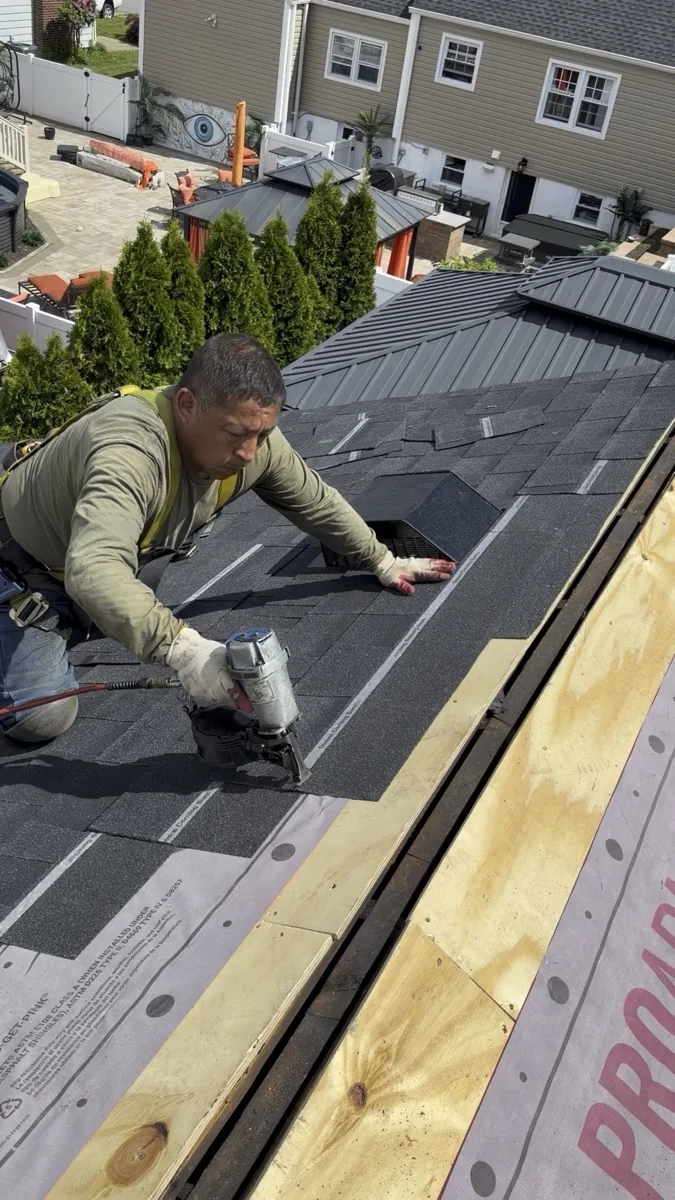
Who Covers What on a Belvidere Job
| Part of the job | Backed by | For how long |
|---|---|---|
| Roof replacement | Four Seasons; review the written coverage | 50-year roof-replacement warranty |
| Roof repair | Four Seasons; review the written coverage | 2-year roof-repair warranty |
| Inspection and photo report | Four Seasons | Free, before any quote, no obligation |
| The estimate | Four Seasons | Written and itemized before work starts |
| Permit and inspection | Belvidere building department | Confirm in the written estimate who files it |
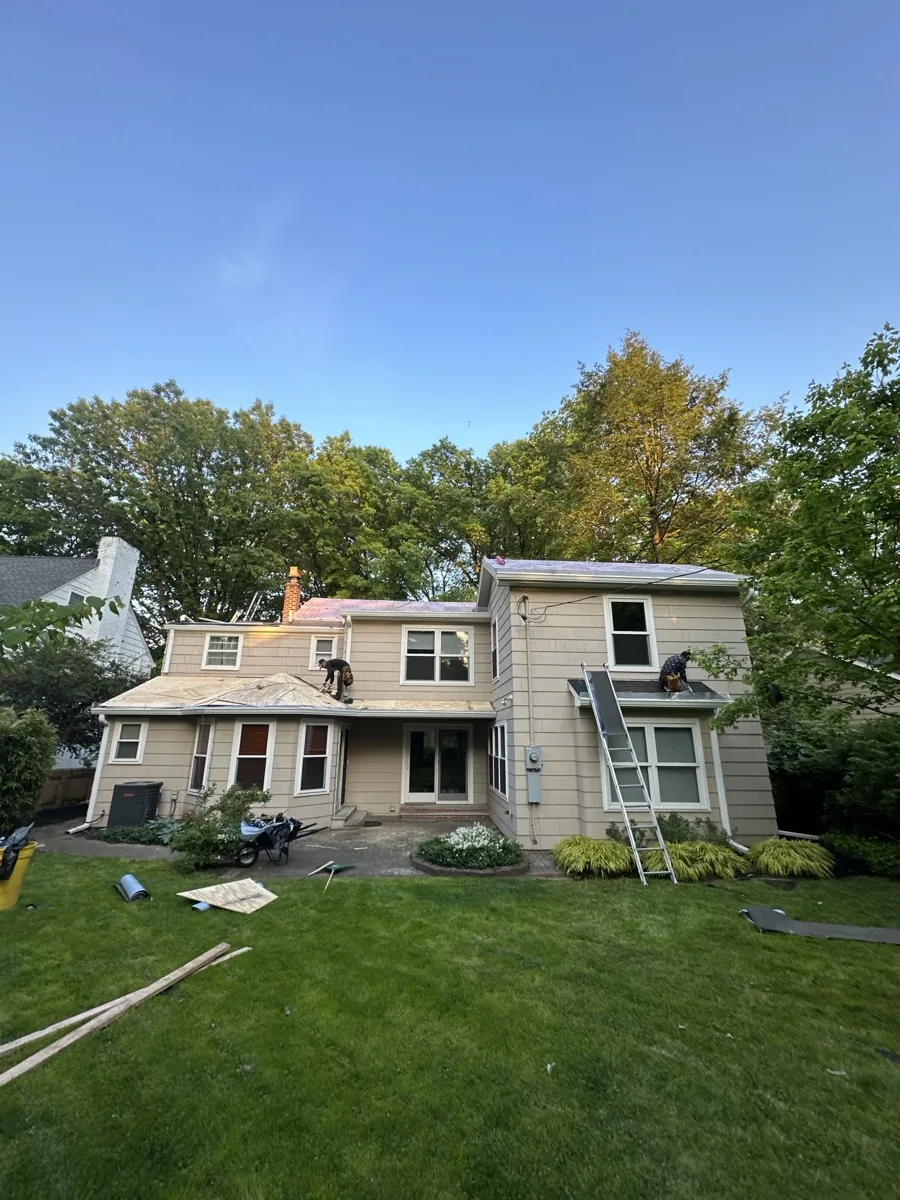
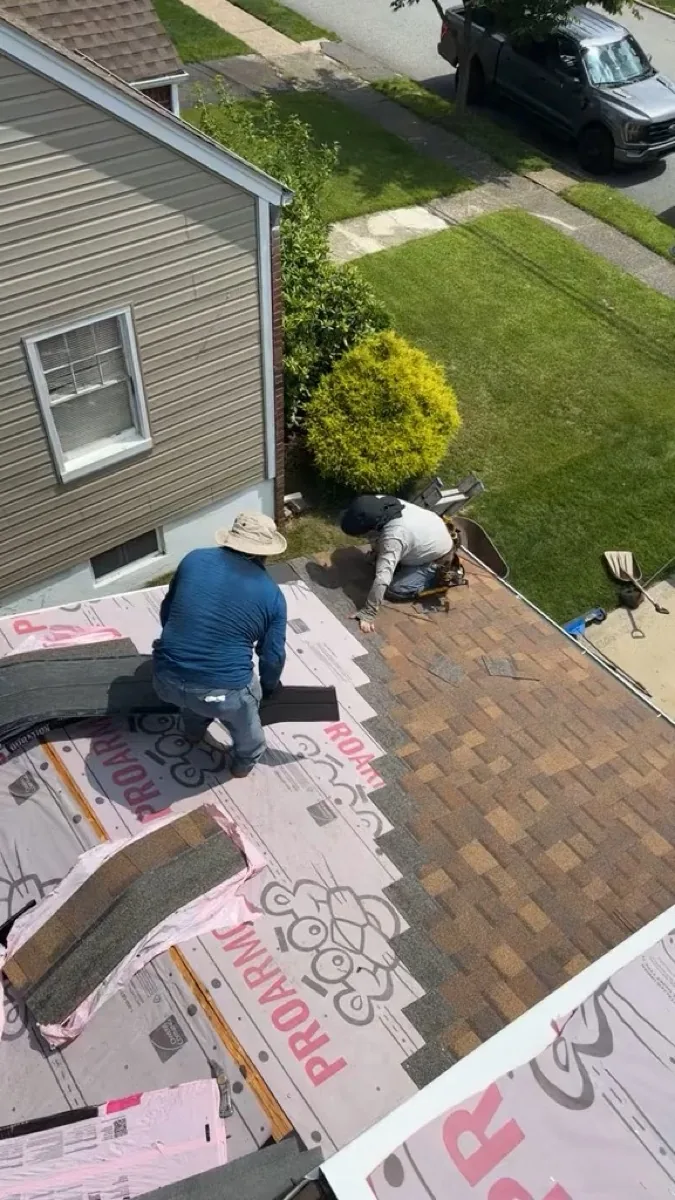
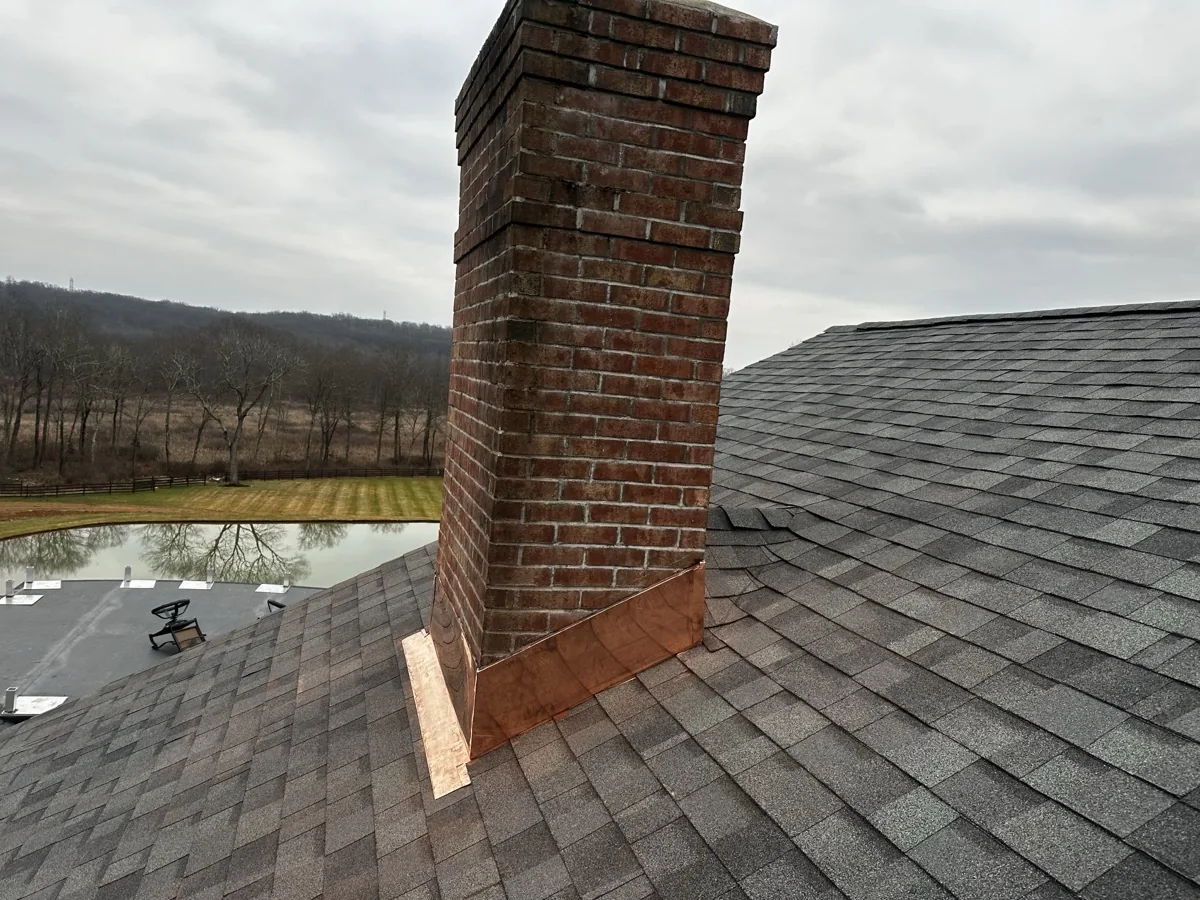
BusinessRate TOP 3 · 2026 A Top 3 roofing contractor in Clifton, NJ, based on verified Google reviews. Awards and recognition →
What Belvidere Customers Say on Google
5.0 average rating
Selected Google reviews. Read all reviews on Google below.
“Ben and his crew did a tremendous job with repairing our gutters. He did additional work at no charge to ensure proper functionality... and used quality materials that are better than original. Will be hiring Four Seasons Construction for our future home construction work.”
“Very consultative and great communication. We’re first time homeowners and felt comfortable through this journey. Fair price and good service. Thank you Ben and team for repairing our roof.”
“We had a fantastic experience with Four Seasons Roofing! We hired them to repair our roof, and we couldn't be happier with the results. Ben, was an absolute pleasure to work with. He was not only professional and knowledgeable but also went above and beyond to provide exceptional service.…”
Get a Straight Answer on Your Belvidere Roof
Phone us at (862) 318-3997 or book a free inspection. The inspection is free.
Call (862) 318-3997 Get a Free Roof Estimate
Nearby: see the rest of the Warren County towns we serve, or sort the work on the Belvidere roof leak repair page.
How a Belvidere Job Actually Runs
You reach out
Call (862) 318-3997 or send the form. We only need the address and what you are seeing.
Free inspection
Four Seasons comes out to look at the roof, and the inspection is free with no obligation to hire us.
We photograph what we find
You see photos of the problem, such as a cracked boot or a rusted valley.
Written itemized estimate
The material tier and the decking allowance are broken out as their own numbers, so you can change any of them before you sign.
The work
We install GAF and Owens Corning roofing systems. Bad boards get replaced as we find them and photographed one at a time.
After the job
Decking is billed against the allowance written into the contract. Our roof repairs carry a 2-year warranty, and roof replacements carry a 50-year warranty. Ask to review the written coverage.
Roofing Questions From Belvidere Customers
How much should a new roof cost in Belvidere, NJ?
A Belvidere roof is priced after a free inspection, because slope, height, dormers, valleys, and any wet decking on these older county-seat houses all go into the figure. You get an itemized written estimate, with a $500 discount for seniors and military and 0% financing available. A replacement carries a 50-year warranty and a repair a 2-year warranty.
Should a 20-year-old roof in Belvidere be replaced?
Age alone does not settle it. On a steep Belvidere roof the inspection covers the valleys, the flashing at dormers and chimneys, and the decking underneath, and you get photos with both options priced. We recommend a repair when one will hold.
What is the best month to replace a roof in Belvidere?
Late fall is the last dry window before snow in Belvidere, so a known weak spot is best booked before then. Work also goes on through winter, with cold-weather technique where a sealant needs it. Call (862) 318-3997 to set up the free inspection.
How can I tell if a roofer in Belvidere is legit?
Check the contractor's New Jersey home improvement registration on the state verification portal before anyone climbs onto your roof; ours is NJ HIC #13VH11720500. Ask for an itemized written estimate and photos of what was found, which is what every Belvidere customer gets from us. We install GAF and Owens Corning systems and are not enrolled in either manufacturer's certification program.
More Belvidere Roofing Questions
Do you handle residential roofing in Belvidere, NJ?
Yes. Belvidere is a borough of older houses, many in the Historic District, and we handle repairs, full replacements, flat sections over additions, and chimney flashing on them. The core roof repair service page lays out our process first.
Who signs off on roofing work in Belvidere?
In Belvidere permits run through the borough building department, and its inspector signs off on the finished work. Ordinary repairs usually do not need a permit.
Where We Work Around Belvidere
Our Google listing
Belvidere, NJ
Keep reading: where we work
Driving Directions to Four Seasons From Towns Around Belvidere
Choose a starting town below for driving directions to our base at 38 Speer Ave in Clifton.
From White Township, NJ
Roads between White Township and Belvidere: South Bridgeville Road (CR 519); Phillipsburg-Belvidere Road (CR 620).
Straight-line distance between map points: about 2.4 miles, not a drive time.
From Oxford, NJ
Roads between Oxford and Belvidere: South Bridgeville Road (CR 519); Belvidere Avenue (CR 624).
Straight-line distance between map points: about 5.0 miles, not a drive time.
From Harmony Township, NJ
Roads between Harmony Township and Belvidere: Belvidere Road (CR 519); Phillipsburg - Belvidere Road (CR 519).
Straight-line distance between map points: about 6.5 miles, not a drive time.
Get a free roof estimate
We inspect first and photograph what we find, then give you an itemized number in writing. There is no obligation, and 0% financing is available.
- Free inspection before any quote
- Written estimate, itemized line by line
- 2-year roof-repair warranty
Rather talk it through? (862) 318-3997