
Chimney Flashing and Waterproofing in New Jersey
Clifton-based, NJ HIC #13VH11720500. Review warranty coverage with your estimate.
- 5.0 rating on Google
- NJ HIC #13VH11720500
- Free, no-obligation estimates
We at Four Seasons Roofing and Construction handle chimney flashing and waterproofing across North Jersey from the base at 38 Speer Ave in Clifton. Estimates are free, written, and itemized, and the work is done by our own licensed crew.
- One contractor for flashing, brick, and roof
- Free inspection first, with photos of what we find
- Licensed and insured, NJ HIC #13VH11720500
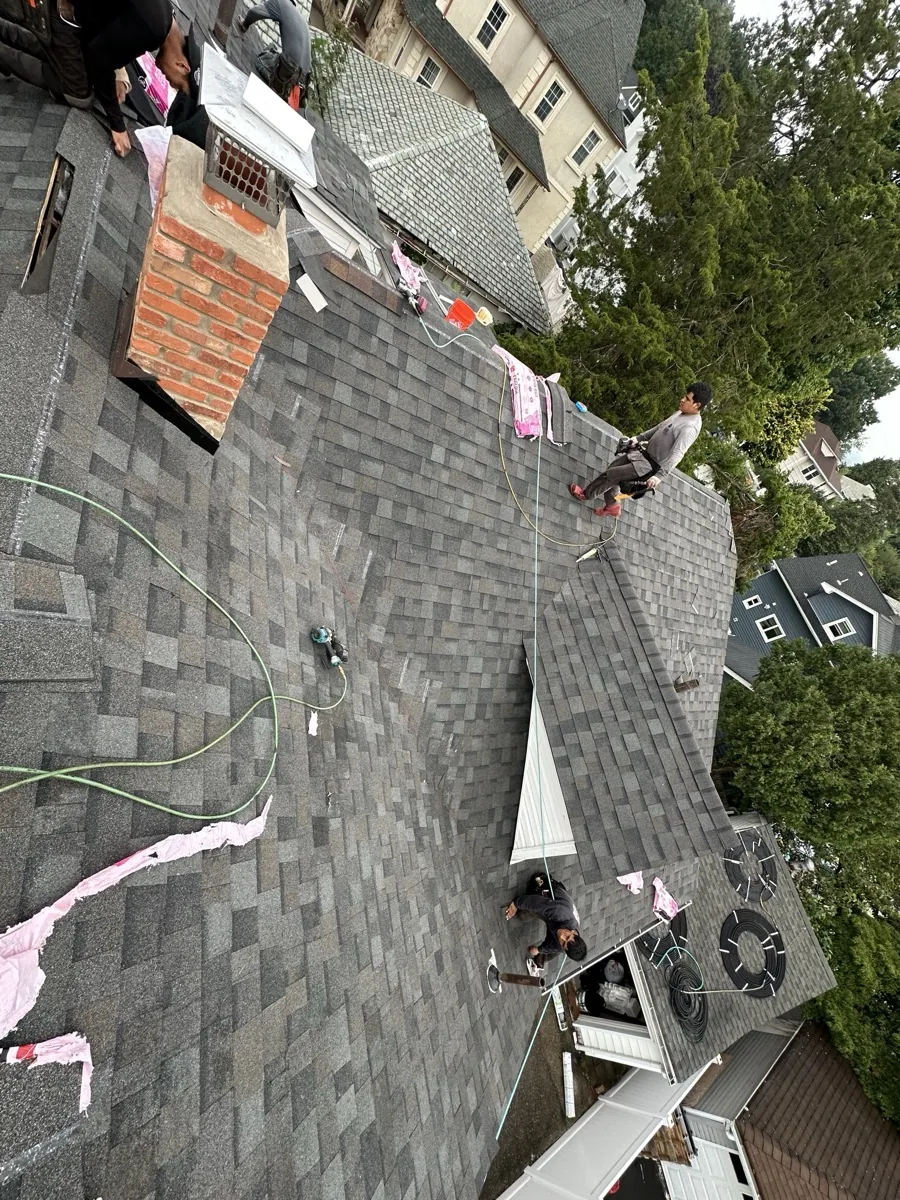
The Facts on Four Seasons Roofing and Construction
We at Four Seasons Roofing and Construction provide chimney flashing and waterproofing in New Jersey as a home improvement contractor based at 38 Speer Ave in Clifton. We have held New Jersey Home Improvement Contractor registration #13VH11720500 since 2021, and we install GAF and Owens Corning roofing systems.
See every roofing service we offer · Request a free chimney estimate
Keep reading
Got a stain near the chimney? Call (862) 318-3997 or drop the form on this page and we will put a written flashing estimate in your hands.
Most chimney leaks start where the chimney meets the roof, at the flashing. Water runs in along that seam for months before a stain shows up on your ceiling. We reflash and waterproof chimneys across Clifton and the towns nearby, sealing that joint the right way and treating the masonry so it absorbs less water.
One Crew, Both Trades
We do both trades, so one crew checks both the flashing and the brick.
The Flashing Work
Real counter-flashing involves masonry cuts and bent metal; the estimate should describe that work and its scope.
Warranty in Writing
Review the warranty coverage for this work before accepting the estimate.
All services · All service areas · Warranty details · Roof financing options · Who you are hiring
Common roofing questions · Roofing types · Recent roofing projects
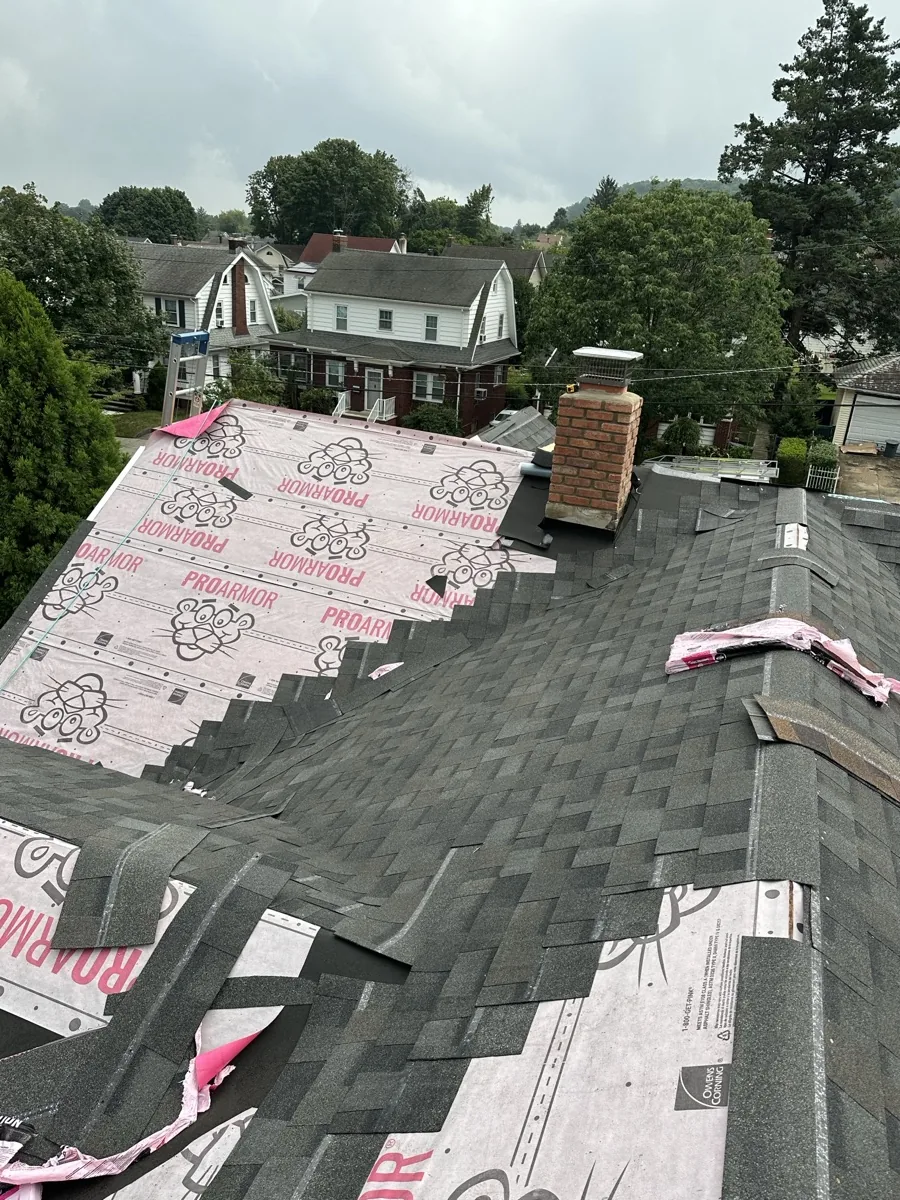
Chimney Flashing in Nutley, NJ
Nutley's pre-war housing means pre-war chimneys, with solid masonry, centered stacks, real height, and a lot of flashing perimeter to keep sealed. The original flashing on these homes was often copper, which lasts a long time when left alone, but decades of roof replacements covered much of it with tar or replaced it with thin aluminum that failed within fifteen years.
When we get a call about chimney flashing in Nutley NJ, the first question on the roof is whether the original metal is worth preserving or has been covered by layers of old patches. The answer decides whether the job is a restoration or a rebuild of the detail.
Bloomfield has a similar housing age and a similar history of layered flashing repairs, and we cover it from Clifton as well.
If your ceiling stain sits within a few feet of the chimney, check the flashing first, because that joint is where water most often gets in on houses like these.
Keep reading: How Chimney Flashing Is Repaired Properly
How Chimney Flashing Is Repaired Properly
A lasting chimney flashing repair follows four steps and uses reglet-cut counter-flashing instead of a bead of caulk.
- Pull the failed flashing and inspect the seam beneath.
- Weave new step flashing into the shingle courses.
- Counter-flash into a cut mortar joint, not surface caulk.
- Breathable waterproofing on the masonry above.
What Sets the Flashing Number
The price depends on chimney size and roof pitch. Cut-in counter-flashing costs more than a caulk bead and lasts longer.
Warranty That Means Something
Ask to review the applicable warranty with your written estimate. NJ HIC #13VH11720500, insured, with our own licensed crew on your roof and no subcontractors.
Discounts and Financing
Seniors and veterans save on every job with our discount. 0% financing is on the table. You get the real number in writing before anything starts.
The Leak That Gets Misdiagnosed Most
Water stains near the fireplace, a damp patch on the chimney breast wall, and peeling paint on the ceiling around the chase are often blamed on the roof, the brick, or the gutters. Most of the time the actual cause is the flashing, the metal system where the chimney passes through the roof.
What Correct Flashing Looks Like
- Step flashing: individual L-shaped pieces woven shingle-by-shingle up each side of the chimney, so every course sheds onto the one below.
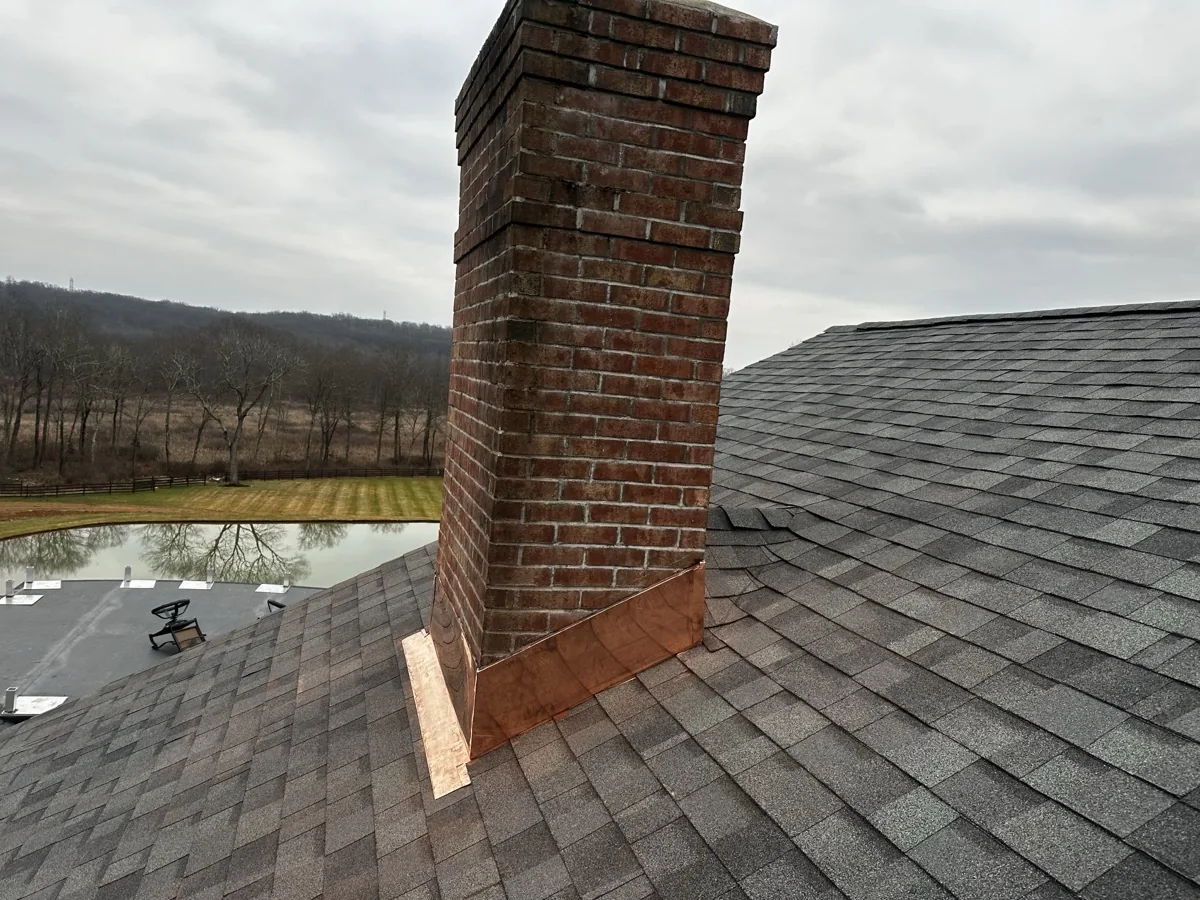
- Counter-flashing: a second layer cut into the mortar joints (a saw cut, called a reglet, not surface-glued) and bent down over the step flashing, where the mortar holds the metal in place.
- A cricket on the uphill side of wide chimneys. A small peaked diverter that splits water around the masonry instead of letting it pond against the back.
- Ice and water membrane beneath all of it, because this is the spot ice dams hit first.
What failing flashing looks like: a smear of roofing tar over the joint. Tar bridges the gap for two or three seasons, then dries and cracks, and water runs in through the cracks.
Waterproofing the Masonry Itself
Brick and mortar absorb water, so after repairs we apply a breathable siloxane-type repellent. Water beads off the surface while vapor inside the masonry can still escape. Paint-on sealers that form a film trap moisture inside the brick, and the next freeze can pop the brick faces off.
Copper, Aluminum, or Steel
Flashing material matters more than almost anywhere else on the roof: copper costs the most and often outlasts the roof around it, aluminum is the budget standard with a service life in the decades when installed right, and galvanized steel falls in between. We match the material to the roof's remaining life, the house's character, and your plans.
How to Prove the Fix Worked
A flashing repair is proven by running directed water on the repaired detail while someone watches the ceiling below, and the dry result is documented with the rest of the photos.
Who is right when a roofer says flashing and a mason says brick? It can be both, which is why a proper repair covers the flashing and the masonry above it: water through failed flashing soaks the brick, and wet brick deteriorates.
Does waterproofing sealer go on every job? After repairs it goes on the masonry above the flashing line as a breathable repellent, but not on glazed or painted brick, which cannot take it.
How long does a proper flashing repair take? The schedule depends on the scope, including any reglet cuts or cricket work, and the expected sequence is discussed after the chimney is inspected.
Why Tar Keeps Getting Sold
Tar stays common on North Jersey chimneys because it is a quick job: a roofer can smear mastic on a chimney joint without cutting a single reglet, and for a couple of seasons the ceiling stays dry. When you compare chimney leak quotes, ask whether the metal is cut into the mortar joint or applied on top of it.
How do I know if my flashing was done right last time? From the ground, counter-flashing should look like a clean metal line set into the joints, and black smears mean tar, while dampness on the chimney framing in the attic after a hard rain means water is still getting in.
Does waterproofing change the brick's color? A proper breathable repellent goes on clear and dries invisible, unlike the shiny wet-look sealers, which are the film-forming kind.
Who Covers What on a New Jersey Job
| Part of the job | Backed by | For how long |
|---|---|---|
| Warranty for the proposed service | Ask for written coverage | Review the stated term |
| Product coverage | Check the selected manufacturer's document | Product-specific terms |
| Inspection and photo report | Four Seasons | Free, before any quote, no obligation |
| The estimate | Four Seasons | Written and itemized before work starts |
| Permit and inspection | New Jersey building department | Confirm in the written estimate who files it |
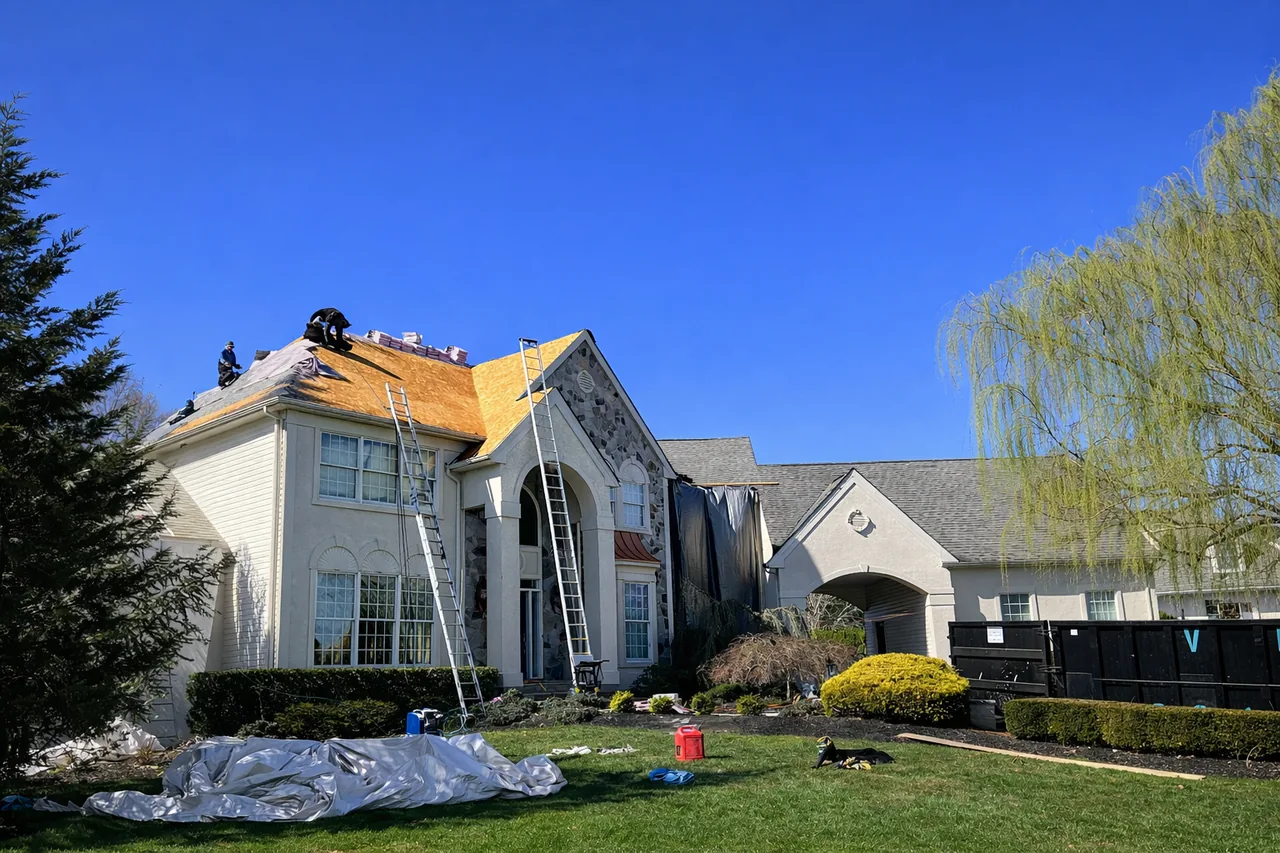
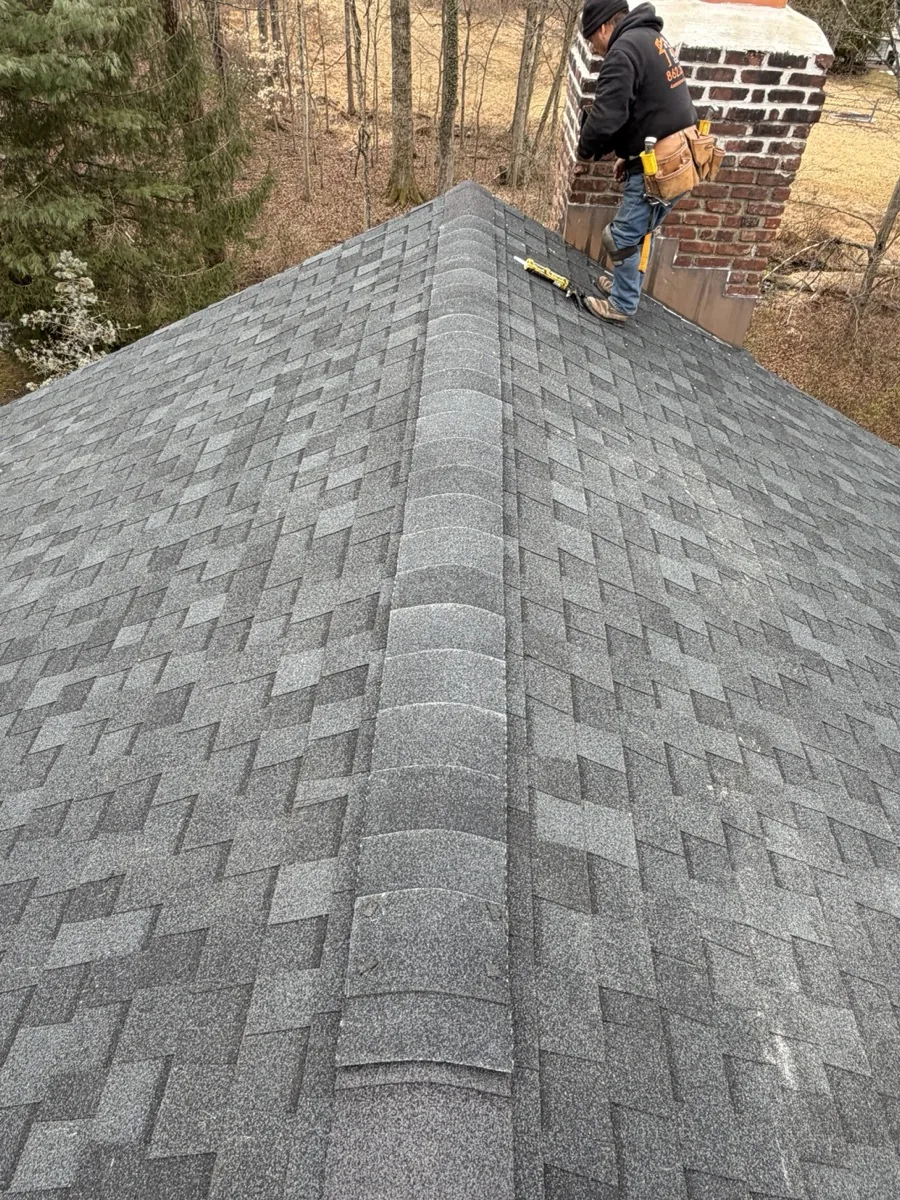
What Failing Chimney Flashing Looks Like
- Ceiling stain within a few feet of the chimney
- Caulk lines visible around the chimney base (a previous quick fix)
- Step flashing lifted or rusted through
- Attic sheathing dark around the chimney opening
- Brick stays dark days after rain
Older roofing and shorter-lived flashing
Montclair's residential guidelines describe tile or slate outlasting galvanized flashing. On that type of historic roof, the condition of the metal details matters independently of the roof covering.
How a Job Actually Runs
You reach out
Call (862) 318-3997 or send the form. We only need the address and what you are seeing.
Free inspection
Four Seasons comes out to look at the chimney and its flashing, and the inspection is free with no obligation to hire us.
We photograph what we find
You see photos of the problem, such as step flashing lifted or rusted through, or caulk lines around the chimney base.
Written itemized estimate
You get it in writing, itemized line by line, before work starts. Chimney size and roof pitch set the price.
The work
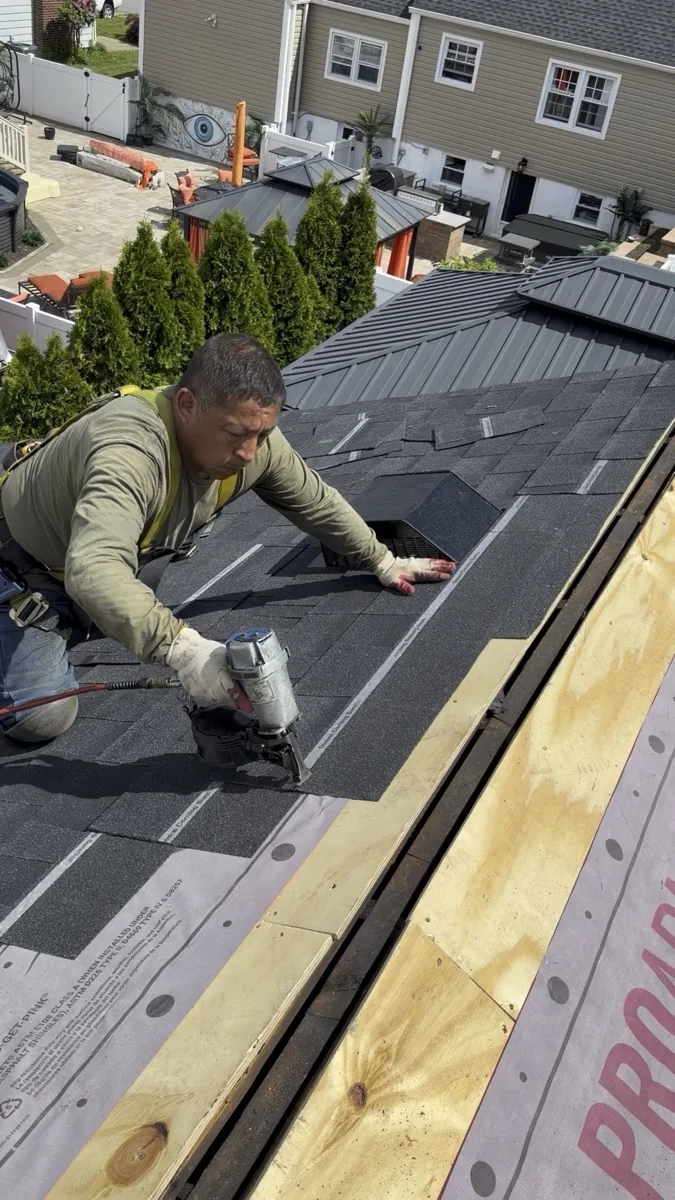
The failed flashing is pulled, new step flashing is woven into the shingles, and counter-flashing is cut into the mortar joint.
Warranty coverage
Ask to review the written coverage.
BusinessRate TOP 3 · 2026 A Top 3 roofing contractor in Clifton, NJ, based on verified Google reviews. View the full awards page →
What Customers Say on Google
5.0 average rating
Selected Google reviews. Read all reviews on Google below.
“I got recommended this company through one of my good friends. They did a phenomenal job redoing my roof at a great price. Commutation was great with the team and I was able to express my concerns with the job with amazing feedback. If youre looking to do your roof I’d really recommend four seasons!!”
“I used Four Season Construction to replace my roof. Ben the owner was very clear on the roofing process, Ben is also the owner. A small company but hands on. During the project Ben took pictures of the process and kept me informed throughout the day. I was at work when the roof was installed. The job was well done, cleaned entire property and collected all the nails. I highly recommend this company.”
“Love their work!! Very professional. I would give them a call for estimates if its ur first time,, but to me theyre my go to from now on.”
Let's Find Where the Water Gets In
Call (862) 318-3997 or book a free inspection.
Chimney Flashing & Waterproofing FAQs
What is chimney waterproofing in New Jersey?
It is a breathable siloxane-type repellent applied to the masonry after repairs. Water beads off the surface while vapor inside the brick can still escape, so the brick does not trap moisture and spall.
How much does it cost to repair chimney flashing in New Jersey?
Chimney size and roof pitch drive the price, and cut-in counter-flashing costs more than a caulk bead. Four Seasons prices the job after a free inspection that finds where the water is actually getting in.
More Flashing Questions
How long does it take to repair chimney flashing in New Jersey?
The schedule depends on the flashing scope, including any reglet cuts or cricket work. Confirm the expected sequence after the chimney is inspected.
How long does chimney flashing last in New Jersey?
It depends on the metal and the method. Copper outlasts the roof around it, aluminum has a service life in the decades when installed right, and tar over a failed seam holds for only two or three seasons.
Where We Work From
Our base is 38 Speer Ave in Clifton, just off Route 3 by the Garden State Parkway exits 153 to 155. The service area covers Passaic, Bergen, and Essex County and stretches into Union, Somerset, and Warren County towns as well.
We are registered with the New Jersey Division of Consumer Affairs as a home improvement contractor, NJ HIC #13VH11720500, and install GAF and Owens Corning product lines.
Where We Work
Our base sits at 38 Speer Ave in Clifton, and we do chimney flashing work in Montclair, Bloomfield, Wayne, Passaic, Nutley, Little Falls, Fair Lawn, Paramus, and every town around them.
Our Google listing
Service area: Passaic, Bergen, and Essex County, and into Union, Somerset, and Warren County towns
Keep reading: Other Work Across North Jersey
Other Work Across North Jersey
Related Services
Chimney repair covers brick or crown that is also failing. Tracing a stain you can't explain: roof leak repair services, or for a full assessment, the free inspection.
Get a free chimney estimate
We inspect first and photograph what we find, then give you an itemized number in writing. There is no obligation, and 0% financing is available.
- Free inspection before any quote
- Written estimate, itemized line by line
- Review warranty coverage with your estimate
Rather talk it through? (862) 318-3997