
Roofing Contractor Cranford NJ
Clifton-based, NJ HIC #13VH11720500. 2-year roof-repair warranty.
- 5.0 rating on Google
- NJ HIC #13VH11720500
- Free, no-obligation estimates
We at Four Seasons Roofing and Construction cover Cranford, NJ, a town with Victorian framing and plain suburban capes, for roofing, siding, and chimneys. Estimates are free, written, and itemized, and 0% financing is available. Our registration is NJ HIC #13VH11720500.
- One licensed contractor for roofing, siding and chimneys
- Rated 5.0 on Google
- 0% financing available, plus a $500 senior & military discount
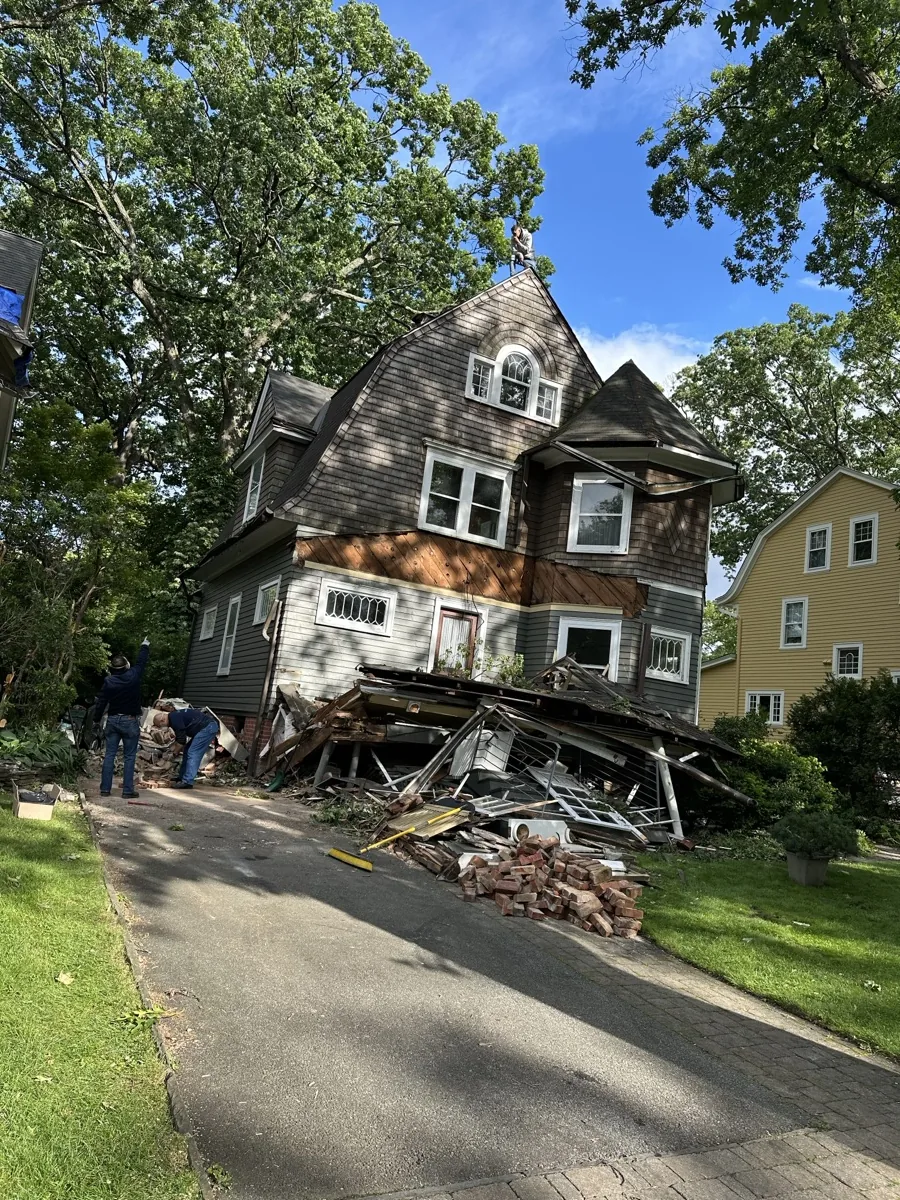
The Facts on Four Seasons Roofing and Construction in Cranford
We at Four Seasons Roofing and Construction provide roofing in Cranford. We are a home improvement contractor based at 38 Speer Ave in Clifton, New Jersey; we have held New Jersey Home Improvement Contractor registration #13VH11720500 since 2021, and we install GAF and Owens Corning roofing systems. Nomahegan Park and the Cranford Canoe Club are both tied to the Rahway River.
See every roofing service we offer · Request a free roof estimate
Keep reading: Who Signs Off on the Work in Cranford
Send in this page's form or dial (862) 318-3997, and we return the call.
Search for a roofing contractor in Cranford NJ and you are looking at a town founded in 1871, with housing stock that runs from the mill era through Victorian-era homes along the Garden State Parkway corridor and on into the rail-commuter suburb that grew up around Cranford station on the Raritan Valley Line. Those roofs vary a lot, from steep complex Victorian framing to the asphalt shingle on a postwar cape. Our base is 38 Speer Ave in Clifton, and we cover Cranford and the rest of Union County.
Free, Honest Inspection
Each job begins with a walk over the entire roof. We take photos, give you a straight verdict, and charge nothing to tell you where your Cranford roof stands.
Based in Clifton
Our base is 38 Speer Ave in Clifton. Call to discuss current repair availability.
Answered Around the Clock
Day, night, Sunday, holiday. We pick up, ready to send help when water is coming in.
Who Signs Off on the Work in Cranford
A Cranford job that needs a permit goes through the building department, whose page is cranfordnj.org/2072/Building-Department. The department's inspector signs off on the finished work. Ordinary repairs usually do not need one, but the Cranford department can confirm its requirements for the proposed work.
We are registered with the New Jersey Division of Consumer Affairs as a home improvement contractor, NJ HIC #13VH11720500. You can check that on the state licence verification portal before you hire us, or anyone else. We install GAF and Owens Corning roofing systems but are not enrolled in either manufacturer's contractor certification program.
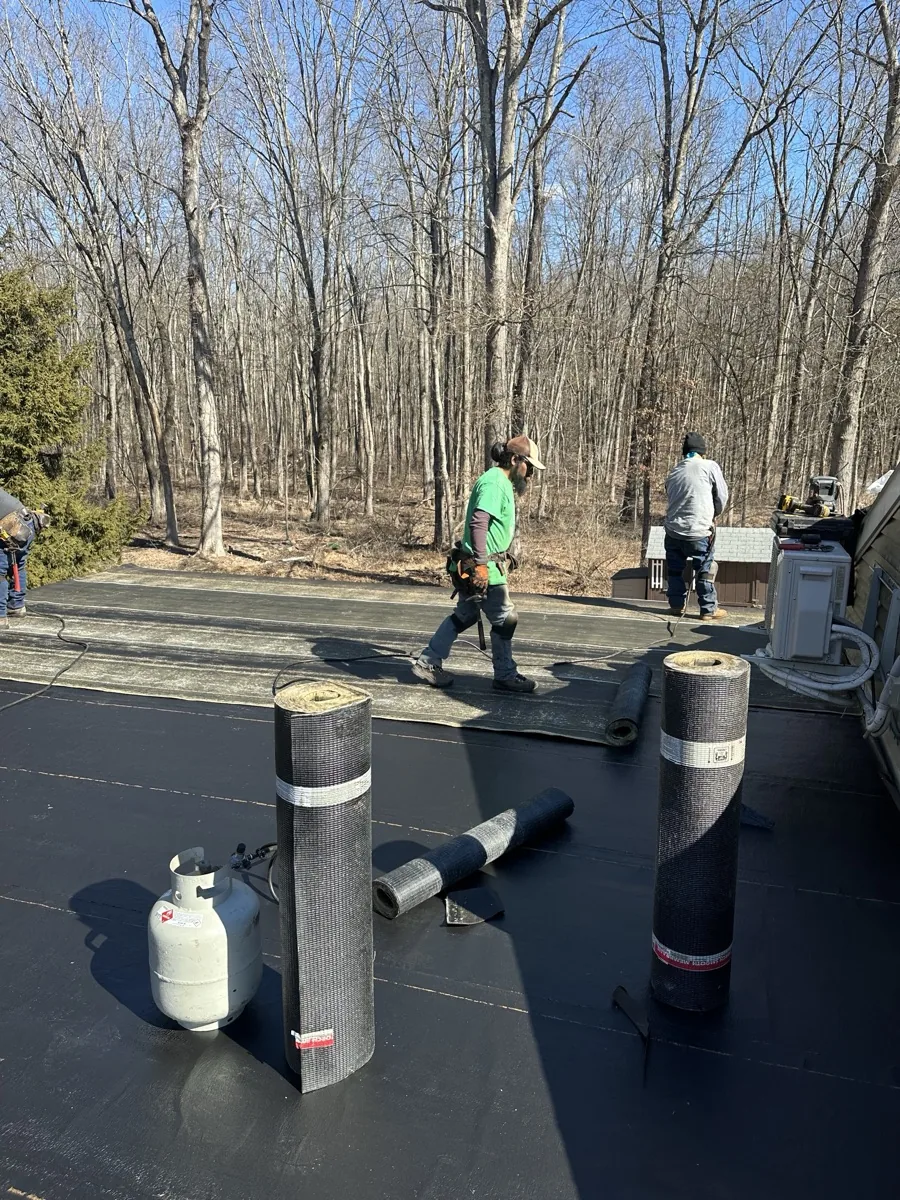
Other Work We Do in Cranford
Everything a Cranford Roof Might Need
Few homeowners can say at the start whether the roof needs a patch or a full replacement. The inspection gives the answer. Everything from minor fixes to complete tear-offs is handled by one company, so nobody passes you along.
A modest repair goes through Cranford NJ roof repair.
A worn-out roof goes through Cranford roof replacement. If water is entering tonight, call Emergency Roof Repair Cranford NJ. We pick up at any hour.
Keep reading: What Cranford Roofs Tend to Show
What Cranford Roofs Tend to Show
Steep pitches and deep valleys
Long valleys on Victorian framing carry a lot of water, and they wear out well before the field around them does. That makes them a common source of leaks.
Dormers and complex joints
Every gable and dormer adds one more roof-meets-wall seam, and the old tar patches fail at those joints. We cut in proper metal flashing instead.
Flat rear additions
Additions and porch roofs are low-slope, so water sits on them rather than running off. See flat roof repair in Cranford when a seam lets go.
Masonry chimneys
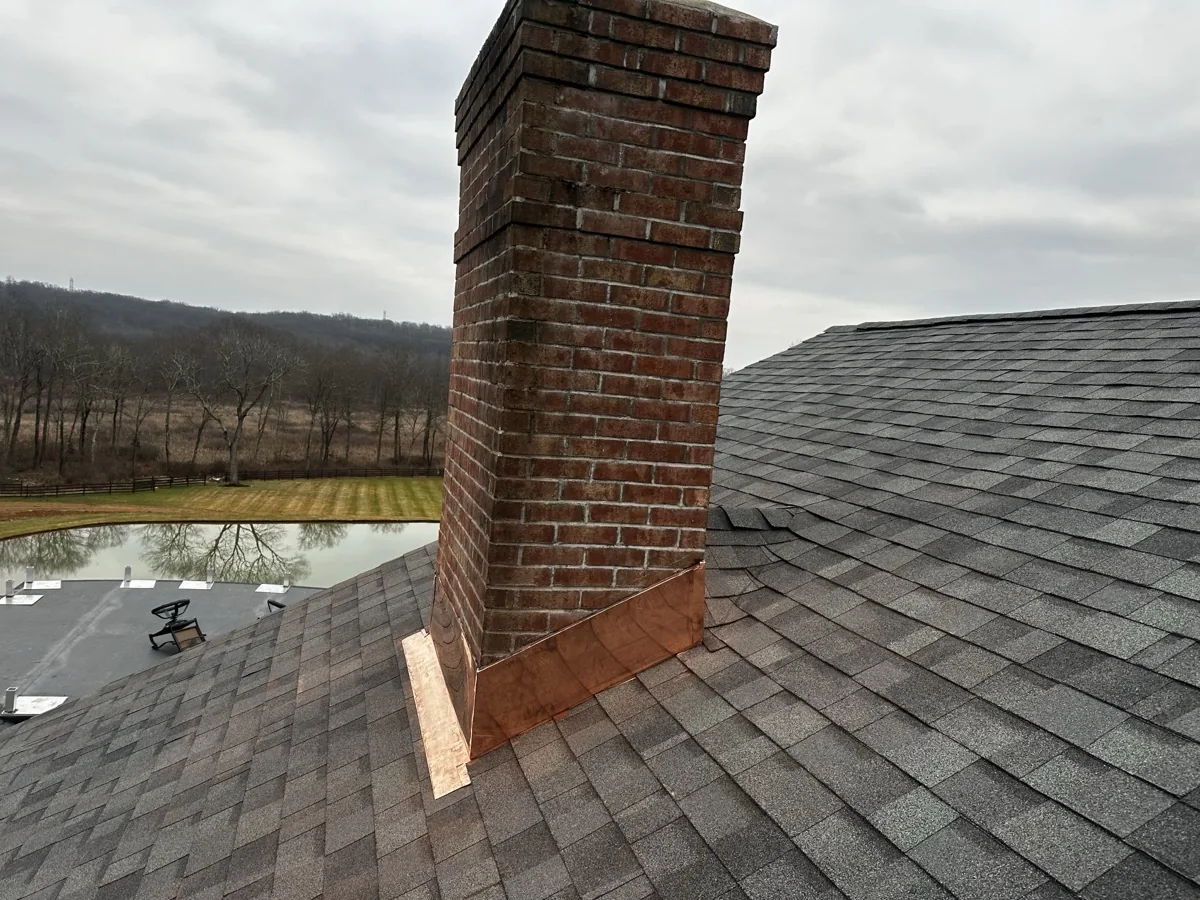
Older Cranford homes carry tall masonry chimneys, and the flashing around them is a frequent entry point. Chimney repair in Cranford handles the flashing and the brick.
A Cranford Roof Through the Year
A Cranford roof shows its winter damage in spring: lifted shingles, opened flashing, and the ice stains that January damming left at the eaves. Gusting summer storms bring limbs down, and fall is the last dry stretch before snow. Winter repairs still go forward, using cold-weather technique where the sealants need it.
Why Cranford Customers Keep Our Number
We hold a 5.0 rating on Google, and roughly the same thing comes up in the reviews: left the house clean, fixed what was quoted, showed up when promised.
Maintenance checkups. We offer annual checkups; once a roof is past its fifteenth year it should get one every year, and it goes double for the older homes around Cranford's historic core, because small problems on those can go unnoticed there for years.
Small repairs. We do come out for one small repair, such as sealing a single flashing.
A Roofer Who Has Worked Roofs Like These
Many of the results for "roofers near me" are lead brokers, middlemen who sell your inquiry to the top bidder without a site visit. We are licensed under NJ HIC #13VH11720500 and insured, working out of one base in Clifton.
You call, someone inspects, the same company does the work, and the job stays under our name. Cranford has Victorian-era houses on the Parkway corridor and plain suburban capes too, and the inspection covers whichever kind you own.
One Contractor for the Whole Cranford Roof
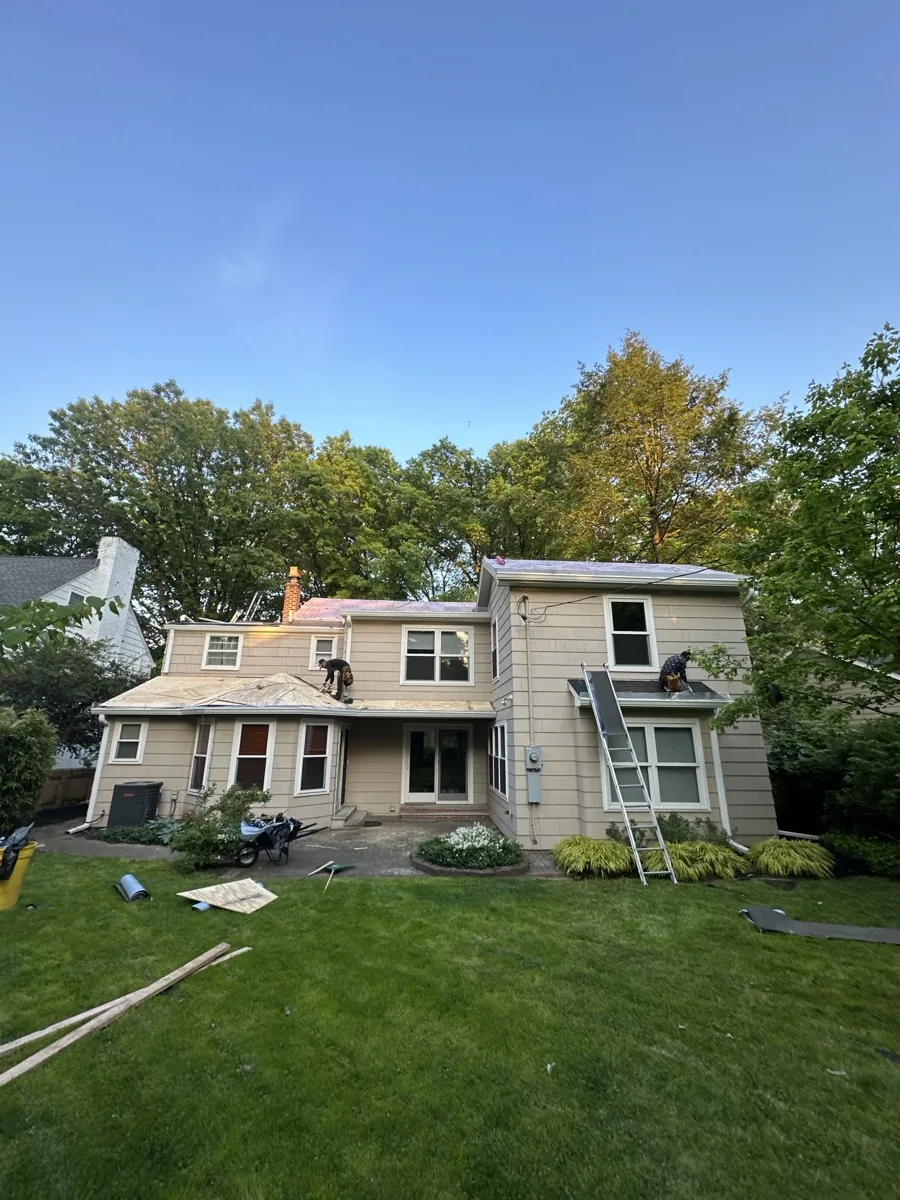
In Cranford a pitched front can stand beside a rear addition under a flat roof, or a porch with one, and we cover both. Dormers, valleys, the low-slope parts, the main pitch, and the chimney that passes through them are checked together.
Near the Rahway River, Water Is the Main Concern
Cranford sits low along the Rahway River, with Nomahegan Park, Lenape Park, and the Cranford Canoe Club all tied to that water. Cranford (NOAA normals, 1991-2020) runs about 50 inches of rain a year. Nor'easters roll through most often from September through April, per the National Weather Service, and snow comes on top of that.
Ice damming is the other winter problem: after snow melts higher up and refreezes at the cold eave, the backed-up water goes under the shingles and on into the house. Storm damage gets documented for insurance through storm damage roof repair in Cranford.
We cover all of Cranford, from the Indian Village section over by Mohawk Park to the homes along North Avenue, Centennial Avenue, and the blocks near Memorial Park and the Cranford Theater downtown.
Leaks Rarely Start Where the Stain Shows
The stain on the ceiling is almost never under the actual hole. Water soaks the insulation and runs along the rafters, then shows up a room away from its entry point. On a tall older Cranford home with a finished attic, that path can be long.
We water-test before the ladder comes down, after we check the deck from inside where there is access, find the real entry point and fix that. That is the work that goes into roof leak repair in Cranford.
Insurance Claims Without the Runaround
Much storm damage in Cranford can become a paid claim, and the strength of the file decides how it goes. The file holds dated photos shot ahead of any tidying and a scope broken into itemized lines, and a roofer who climbs up with the adjuster and points out the lifted flashing helps too. Where the damage is minor enough that filing would not pay, we say so, because paying for a small repair yourself keeps your record clean at renewal.
Straight Talk on Cost
An older Cranford roof is not priced from the driveway. After the free inspection you are given a written, itemized figure. How steep the roof is, how tall it stands, the number of dormers and valleys, any water that soaked down to the decking, and how easily a matching shingle turns up all go into it.
Repairs come with 2-year warranty coverage, replacements with 50-year coverage. Take $500 off if you are a senior or have military service. 0% financing is available, so a full replacement does not have to be paid at once.
Where We Roof
Our base sits at 38 Speer Ave in Clifton. We also cover the Union County neighbors, over to roofing in Westfield and roofing in Springfield, and out to Garwood, Kenilworth, Roselle Park, Clark, and Linden. Every town we cover is listed on our service areas page.
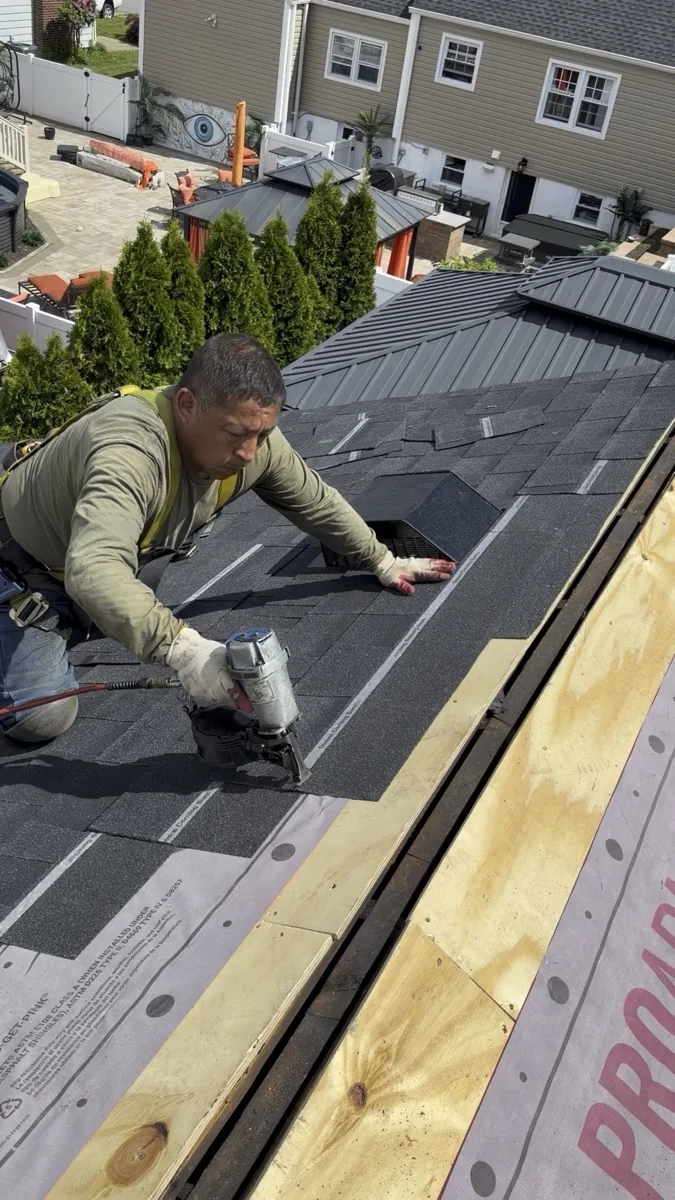
Who Covers What on a Cranford Job
| Part of the job | Backed by | For how long |
|---|---|---|
| Roof replacement | Four Seasons; review the written coverage | 50-year roof-replacement warranty |
| Roof repair | Four Seasons; review the written coverage | 2-year roof-repair warranty |
| Inspection and photo report | Four Seasons | Free, before any quote, no obligation |
| The estimate | Four Seasons | Written and itemized before work starts |
| Permit and inspection | Cranford building department | Confirm in the written estimate who files it |
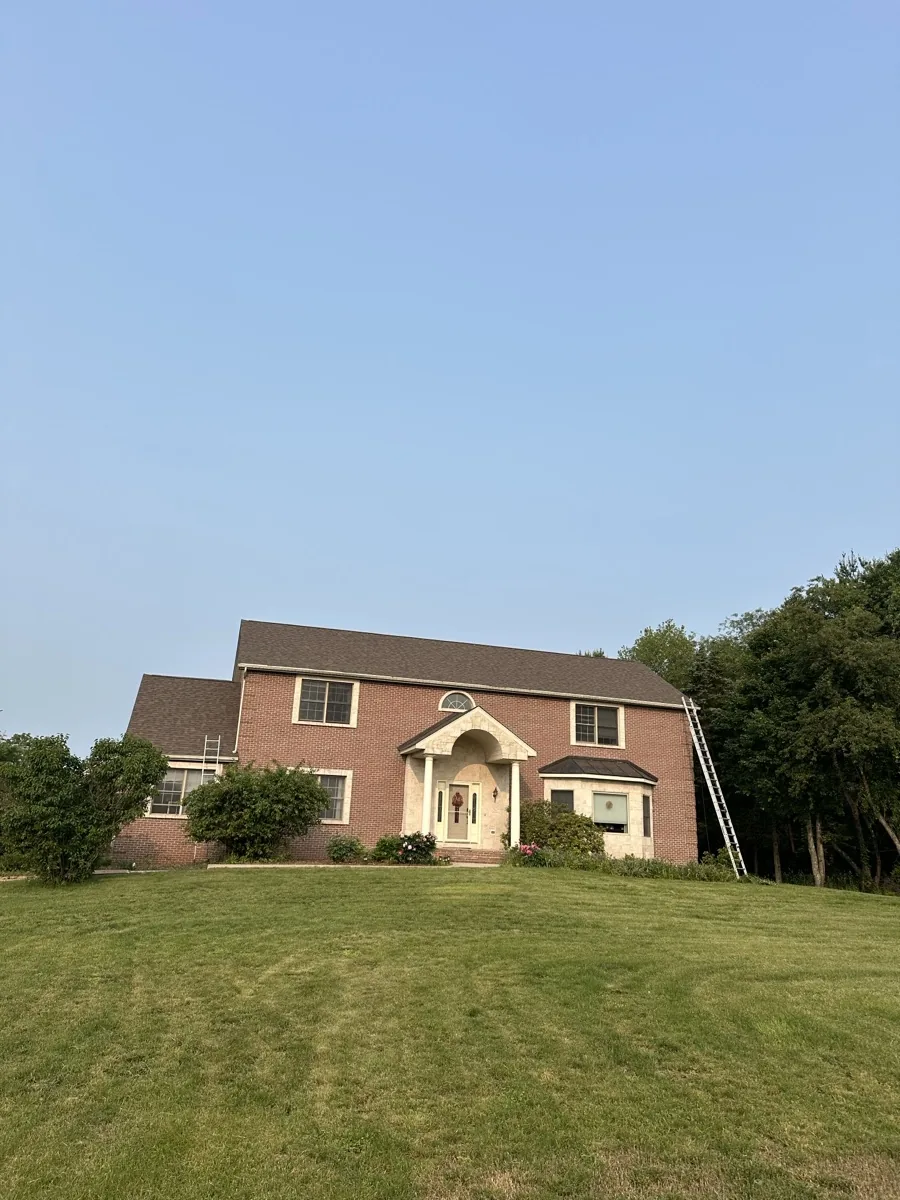
BusinessRate TOP 3 · 2026 A Top 3 roofing contractor in Clifton, NJ, based on verified Google reviews. View the full awards page →
What Cranford Customers Say on Google
5.0 average rating
Selected Google reviews. Read all reviews on Google below.
“I had a great experience getting my roof redone with Four seasons construction. Ben was very professional and great at communication from start to finish. I'd recommend their service for any roofing needs”
“I called Ben from Four Season Roofing and Construction to fix my siding and some roof leaks. Working with Ben and his crew was one of the best experience I had with any contractors. These guys were very professional with outstanding workmanship. I have absolutely no complaints with Four Season Roofing and I will work with them again in the future. Thank you Ben for coming through at the last minute to take care of me.”
“Ben and his crew did a tremendous job with repairing our gutters. He did additional work at no charge to ensure proper functionality... and used quality materials that are better than original. Will be hiring Four Seasons Construction for our future home construction work.”
Get a Straight Answer on Your Cranford Roof
Phone us at (862) 318-3997 or send the form on this page, and we will get you a written estimate. The inspection is free.
Call (862) 318-3997 Get a Free Roof Estimate
Nearby: roofing contractor in Westfield and Springfield, or sort the work on the Cranford roof leak repair page.
How a Cranford Job Actually Runs
You reach out
Call (862) 318-3997 or send the form. We only need the address and what you are seeing.
Free inspection
Four Seasons comes out to look at the roof, and the inspection is free with no obligation to hire us.
We photograph what we find
You see photos of the problem, such as a cracked boot or a rusted valley.
Written itemized estimate
The material tier and the decking allowance are broken out as their own numbers, so you can change any of them before you sign.
The work
We install GAF and Owens Corning roofing systems. Bad boards get replaced as we find them and photographed one at a time.
After the job
Decking is billed against the allowance written into the contract. Our roof repairs carry a 2-year warranty, and roof replacements carry a 50-year warranty. Ask to review the written coverage.
Roofing Questions From Cranford Customers
How much should a new roof cost in Cranford, NJ?
A new Cranford roof is priced after the free inspection, because the number of dormers and valleys on an older Victorian, how far water reached the decking, and how easily a matching shingle turns up all move the figure. You get an itemized written number, 0% financing is available, and seniors and military get $500 off. Repairs carry a 2-year warranty and replacements a 50-year one.
How can I tell if a Cranford roofer is lying?
Check the registration first: NJ HIC #13VH11720500 is ours, and you can confirm it on the state licence verification portal. A straight Cranford roofer climbs up, shows photos of the whole roof, and gives a written, itemized estimate after the free inspection rather than a number from the driveway.
Do you handle residential roofing in Cranford, NJ?
Yes, across Cranford, from the Indian Village section near Mohawk Park to the homes along North Avenue and Centennial Avenue, on Victorian framing and postwar capes alike. If the whole exterior needs attention, we also do siding in Cranford.
Is a roofer in Cranford required to be licensed in New Jersey?
Ask any Cranford roofer for the New Jersey home improvement contractor registration number before work starts, and check it on the state portal. We are licensed and insured, and our registration is NJ HIC #13VH11720500. When a job needs a permit, it goes through the Cranford building department.
More Cranford Roofing Questions
Will insurance cover roof repair in Cranford?
That depends on your policy and your insurer, and we do not decide coverage. With nor'easters rolling through around Cranford most often from September through April, we document storm damage with dated photos and an itemized scope and meet your adjuster on the roof. When it is wear and tear rather than a storm, we tell you so before you file.
Pick the Help You Need in Cranford
Patch versus replace gets sorted on the Cranford roof repair page, a worn-out roof goes to Cranford roof replacement, and a leak tonight calls for emergency roof help in Cranford. Below is the full list of what we handle in town.
Our Google listing
Cranford, NJ
Keep reading: Roofing in Towns Next to Cranford
Roofing in Towns Next to Cranford
Cranford borders nine municipalities: Garwood, Westfield, Springfield, Kenilworth, Roselle, Roselle Park, Linden, Winfield, Clark.
Roof Repair in New Jersey · Roofing Service Areas Across North Jersey · Roofing & Exterior Services in North Jersey
Driving Directions to Four Seasons From Around Cranford
Choose a starting town below for driving directions to our base at 38 Speer Ave in Clifton.
From Westfield, NJ
Roads between Westfield and Cranford: North Avenue East (NJ 28); Central Avenue (CR 613).
Straight-line distance between map points: about 2.4 miles, not a drive time.
From Garwood, NJ
Roads between Garwood and Cranford: South Avenue (CR 610); North Union Avenue.
Straight-line distance between map points: about 1.1 miles, not a drive time.
From Kenilworth, NJ
Roads between Kenilworth and Cranford: Orange Avenue; Springfield Avenue (CR 615).
Straight-line distance between map points: about 1.7 miles, not a drive time.
Get a free roof estimate
We inspect first and photograph what we find, then give you an itemized number in writing. There is no obligation, and 0% financing is available.
- Free inspection before any quote
- Written estimate, itemized line by line
- 2-year roof-repair warranty
Rather talk it through? (862) 318-3997