
Four Seasons Roofing and Construction · Homeowner guide
Skylight condensation or a roof leak? What NJ homeowners can check
Published
Water around a skylight does not identify the cause by itself. For New Jersey homeowners, we at Four Seasons Roofing and Construction recommend recording when moisture appears and where it starts, then arranging a roof inspection. Condensation and water entering through the roof require different repairs.
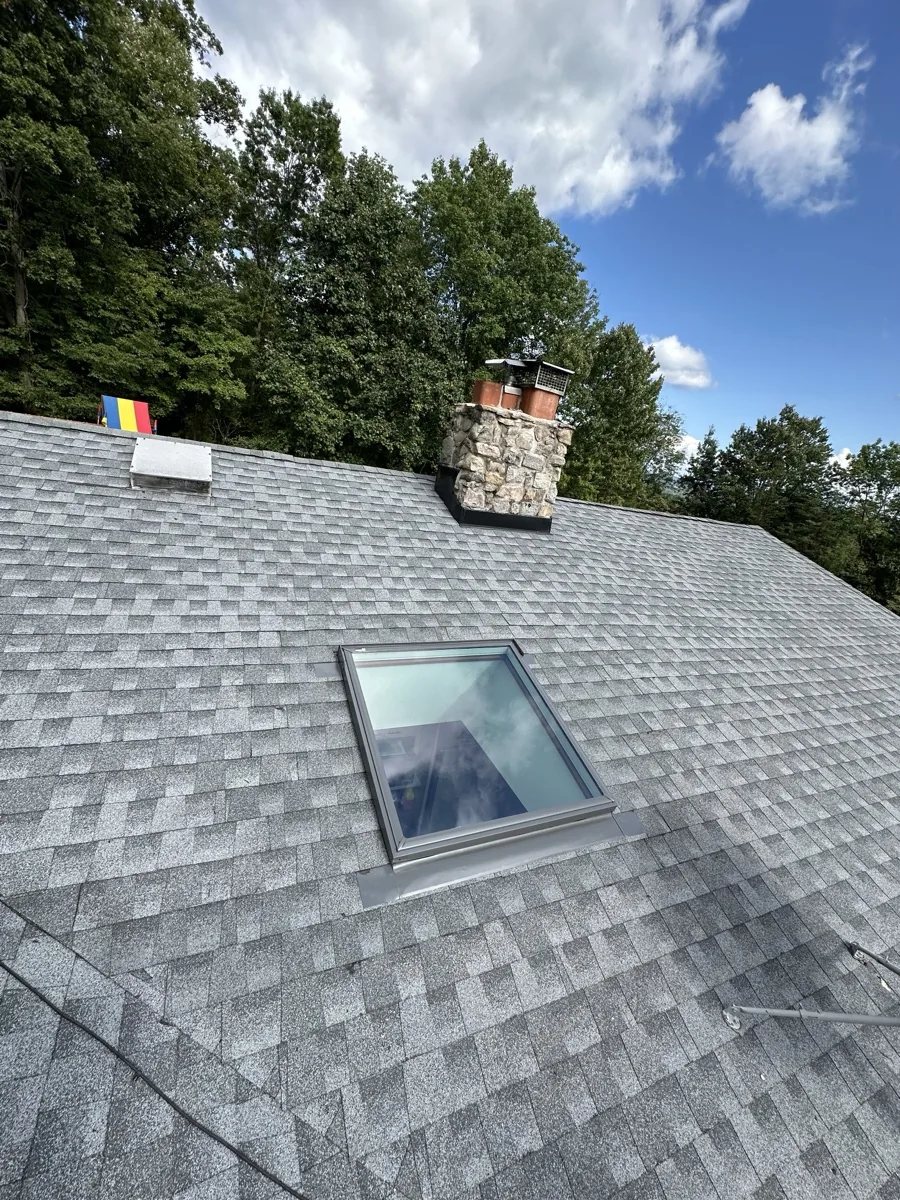
Does the water appear only during rain?
Write down the time you first notice moisture, including whether it is raining, whether snow is melting and whether the room has recently been humid, and photograph the same area each time, because a sequence is more useful to the inspection than one close-up of a dry ceiling stain.
A link with rainfall is a useful clue, but it does not prove the skylight itself has failed, so avoid ordering a replacement unit from the appearance of the interior stain alone, since the surrounding roof and flashing need to be considered too.
Separate the observation from the explanation
For your first message to the roofer, describe a specific event: water on the room-side glass before breakfast, a damp corner after rain, or a stain that enlarged while snow melted. Include a wider photograph showing the opening and a closer image of the wet point, taken from a safe place; a close-up alone can make the location difficult to understand.
The Department of Energy's attic guide distinguishes moisture entering through roof defects from moisture carried by air, and also identifies ice dams as a possible water source, so a New Jersey winter complaint deserves more detail than “the skylight leaks”: outdoor melting and indoor condensation are different possibilities, even when both occur during cold weather.
Record a dry-weather observation as well as a wet-weather one when that is possible without delaying attention to active damage, and if the glass stays clear but the surrounding finish becomes wet, say so; if both are wet, report both rather than choosing the explanation that seems easier to repair.
Keep the original photographs with their dates, and when an inspector compares them with the roof findings, ask which observation the proposed repair explains and whether any part of the moisture pattern remains unexplained.
What does the manufacturer say about condensation?
VELUX explains that warm, moist indoor air can produce noticeable condensation at a skylight, and managing excess room moisture through suitable ventilation and air circulation may help; that is a possible cause, not a diagnosis of your particular roof.
Note whether droplets are visible on the inside surface of the glass or whether moisture is emerging from the drywall around the opening, tell the inspector if the pattern changes after a shower or on cold mornings, and do not climb onto furniture or an unsecured ladder to reach the glass.
| What you observe | What to record |
|---|---|
| Droplets on the inside glass | Room humidity conditions, temperature changes and time of day |
| Staining at an upper corner | The first wet point and whether rain or melting snow preceded it |
| Water after roof work | The work date, contractor details and the original scope |
| Moisture returning after a repair | What was repaired and photographs before and after that work |
Check the room conditions without disturbing the roof
VELUX's condensation guidance connects this problem with excess indoor moisture and limited ventilation or air circulation. Tell the inspector whether the room has a humidifier, whether moisture follows bathing or cooking, and whether similar droplets appear on other windows; these observations can help frame the inspection without establishing the cause on their own.
A small humidity meter can add a measured reading to your notes, as the EPA's moisture guidance explains. Write down the room and time with each reading rather than treating one number taken elsewhere in the house as a description of conditions beside the skylight.
The DOE home ventilation guide says kitchen and bathroom exhaust should discharge outdoors, not into an attic, so if you do not know where a fan terminates, make that an inspection question; hearing the fan run does not tell you where its air goes.
That guide also explains how moist air reaching cold surfaces can produce condensation and why insulation alone does not solve air leakage, so where a skylight has a shaft through an attic, ask whether the assessment needs to consider that surrounding assembly as well as the roof surface, and who would evaluate any issue outside the roofing scope.
Describe where the moisture appears in relation to the glass, since fogging that seems enclosed between panes is a different observation from droplets on the room-facing surface, and if you cannot tell from a safe position, report that uncertainty rather than dismantling or reaching the unit.
In its warranty explanation, VELUX separates insulating-glass seal coverage from other product coverage. That makes the location of visible moisture worth recording when asking about product service, although the manufacturer still needs the particular product information and evidence to assess a claim.
Which details should the roof inspection cover?
Ask the inspector to explain the evidence for the proposed repair. Useful questions include whether the surrounding roof covering is sound, how the flashing meets the skylight and whether the unit can be identified. Manufacturer installation instructions vary by product and roof configuration; VELUX publishes model-specific installation resources.
If you have paperwork from the skylight installation, set it aside for the visit, since a model number or installation invoice can help the contractor find the applicable instructions. A phone photograph of a label is useful if it is already accessible from a safe position; there is no need to get onto the roof to collect it.
Match the product to the proposed repair
The VELUX product identification guide explains that its product plate can identify the model, glass and manufacturing information. Plate locations vary; if the relevant label cannot be photographed from an already safe position, leave identification to the inspection instead of climbing up to obtain it.
Knowing the product helps make an estimate specific, so ask whether the recommendation concerns the glass or skylight body, its connection to the roof, or adjacent roofing, and request the identified model in the record if the contractor can establish it.
In VELUX's drawings and specifications, deck-mounted and curb-mounted products are separate, with different flashing systems listed for different roof materials, so a quote for “new flashing” should lead to a question about the compatible system for your actual unit and roof covering, rather than an assumption that any kit fits.
For an estimate that includes opening finished surfaces, ask what area would be opened, why that access is needed and whether restoring the finish is included, and if the roof inspection cannot establish a concealed condition, have the estimate identify the uncertainty and the point at which further findings would be discussed before the scope changes.
Keep any old proposal that describes a previous skylight replacement, since comparing its product description with the unit identified on site may clarify which paperwork belongs to this opening, especially if the house has more than one skylight.
The DOE attic guide describes moisture pathways through roof and flashing defects as well as air movement from occupied rooms. Where the inspection includes an accessible attic or skylight shaft, request that its findings identify the observed location of moisture and the parts that could not be seen; do not treat an inaccessible concealed area as a confirmed dry area.
Ask the contractor to connect that finding to the room photograph you supplied, and label the side of the opening examined in an overview photograph to help locate the finding when you discuss the repair.
Should you put sealant around the skylight?
Have the cause checked first, because a request for “more caulk” gives the contractor a proposed solution before the water path has been identified. Ask instead for a description of the defect, photographs where practical and the scope of the repair.
For a Clifton home, we at Four Seasons can assess the roofing side through a roof inspection. Any recommendation for NJ roof repair should explain which part of the assembly is being addressed. Confirm separately whether the skylight product itself needs manufacturer service.
Separate roof work from product coverage
The VELUX warranty explanation treats condensation differently from water entering through a covered product and distinguishes coverage for different components. A wet ceiling does not establish that a manufacturer owes a replacement, and a roofer's estimate does not establish what that manufacturer's warranty covers.
Before authorizing changes to a product for which you may seek warranty service, check the applicable documents and ask the manufacturer what information it needs, because VELUX also identifies installation requirements and exclusions involving unauthorized work, so retain photographs of the condition before the repair.
When comparing estimates, look for the same problem description in each one, because a proposal to address surrounding shingles and a proposal to replace the skylight answer different questions, and each contractor should explain the evidence connecting its work to the moisture you reported.
Have the written scope identify anything left for another provider, such as a product claim or interior finish repair, and ask who to contact if the roof work is completed but the original moisture pattern returns, keeping that answer with the estimate.
What if the ceiling is actively dripping?
Keep people away from wet electrical fixtures or a visibly sagging ceiling, do not access a wet roof, move belongings only when you can do so safely, and seek urgent help if there is an electrical or structural hazard.
When arranging the visit, say that the leak is active and describe where the water is entering, and do not describe a historic dry mark as an active leak or assume a mark is old without checking whether it has changed.
Describe the damage as well as the dripping
From a safe position, note whether water has reached an electrical fixture, whether a ceiling has changed shape and whether the affected area is still enlarging, and give those observations to the person arranging the visit without touching the area to find out whether it is soft or opening a ceiling yourself to look for the source.
According to EPA guidance, the moisture source should be corrected and wet materials addressed, with experienced help where hidden mold is suspected, and stopping visible dripping does not document what happened to damp finishes or concealed materials, so ask what further assessment is appropriate and which provider would handle it.
If a room cannot be used safely, say that explicitly when discussing access, describe the route to the affected room and any access restriction before the visit, and leave decisions about roof access and inspection equipment to the contractor.
Keep the inspection request focused on what you know: where you saw water, when you saw it, what has changed and any immediate hazard, and do not wait to assemble a perfect photo history before reporting active damage or ask anyone to enter an unsafe space just to collect another image.
What should be included in the repair record?
Keep the inspection findings with the estimate, and after work is complete, save the description of what was replaced or repaired and any applicable product paperwork. If moisture returns, that record lets the next visit start with the previous findings.
We at Four Seasons Roofing and Construction are based at 38 Speer Ave, Clifton, NJ. Request an inspection or call (862) 318-3997. Mention the skylight when booking so the visit can be scoped around it.
Close out the work with a usable record
Ask for photographs that identify the repaired location rather than a collection of close-ups with no orientation. Keep the final work description alongside the original estimate, including any agreed changes, so a later contractor can distinguish the work actually completed from options that were discussed but not selected.
For a property in Passaic County, start any construction-approval question with the office serving the property's municipality. The Clifton Building Department administers building and related subcode work, while the City of Passaic construction office publishes its own application and inspection resources; these are separate municipal routes.
If a proposed skylight repair expands into changing the opening or other building work, give that actual scope to the relevant office and ask what review applies, and keep its answer with the estimate, since the word “repair” alone does not describe every part of a project.
After completion, add a dated note if the same symptom recurs and refer to the earlier photographs when contacting the contractor, and record the conditions again rather than assuming every later mark has the same cause.
Keep receipts for any skylight parts, such as a VELUX unit or flashing kit, with their model information, since those details help distinguish the installed component from a similarly named product or an option that appeared only on an earlier quote.
Ask whether the inspection took place during the reported conditions or during dry weather, and have any limit on confirming the cause recorded; if the recommendation depends on observing a future recurrence, clarify what information to collect safely and whom to contact, since a proposed next step is not a completed repair.
Before a roofer visits your New Jersey home, see roof Leak Inspection Notes for New Jersey Homeowners.