
Masonry Bloomfield NJ
Clifton-based, NJ HIC #13VH11720500. 2-year workmanship warranty.
- 5.0 rating on Google
- NJ HIC #13VH11720500
- Free, no-obligation estimates
BusinessRate TOP 3 · 2026 A Top 3 roofing contractor in Clifton, NJ, based on verified Google reviews. See our awards →
Four Seasons Roofing and Construction handles brick and stone masonry in Bloomfield, NJ. Mortar gets matched for hardness and color before repointing starts, and every job begins with a free look and a written, itemized estimate.
- Mortar matched for hardness and color before repointing starts
- Written, itemized estimate before any work starts
- Licensed and insured, NJ HIC #13VH11720500
What Homeowners Say on Google
5.0 average rating
“Had some water issues with my roof and called this company and was so impressed with the service and how quick my issue was resolved”
“I had four seasons construction replacing my roof in Hoboken, they did a great job the crew arrived on time and they finished the job in one day. Highly recommended.”
“Great people to deal with throughout the process of repairing my roof. Took great care of getting rid of any nails on my lawn afterwards.”
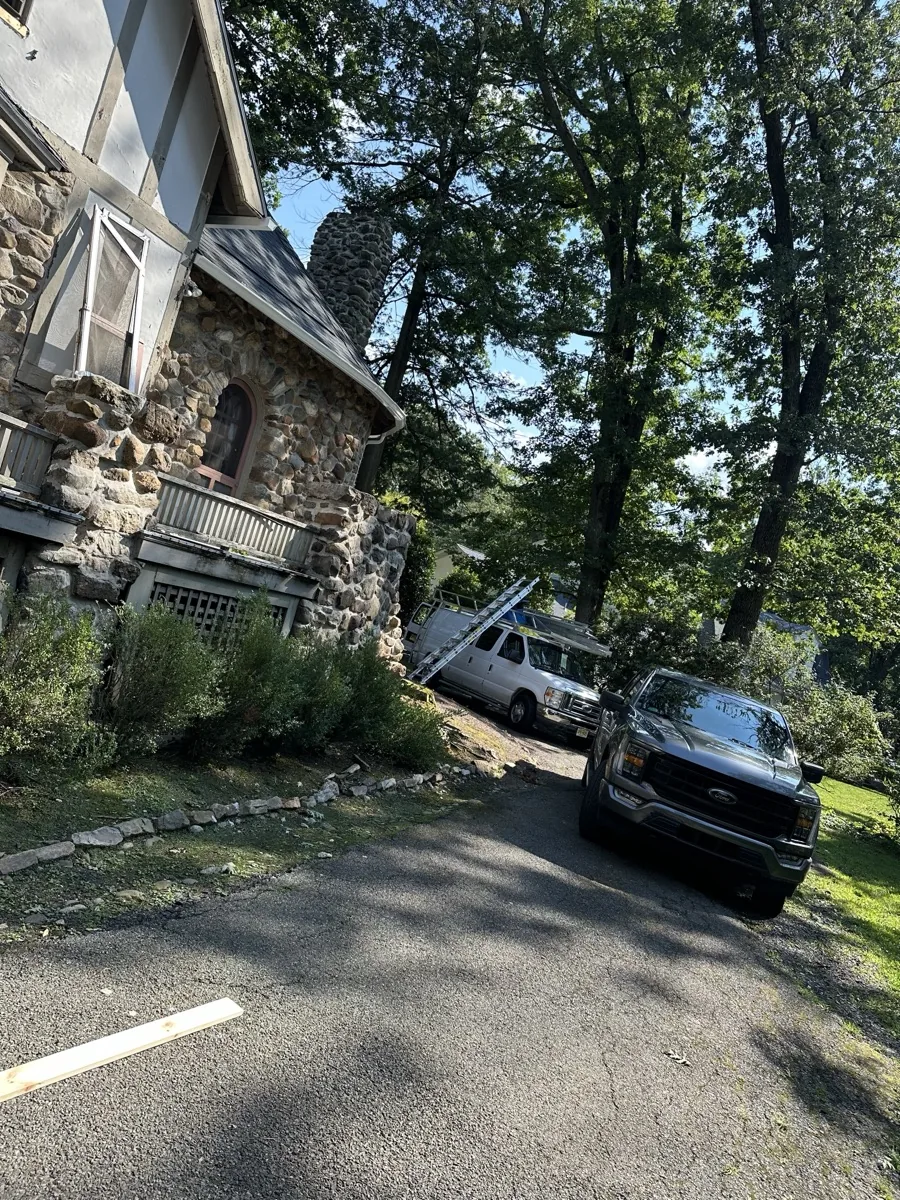
Other Work We Do in Bloomfield
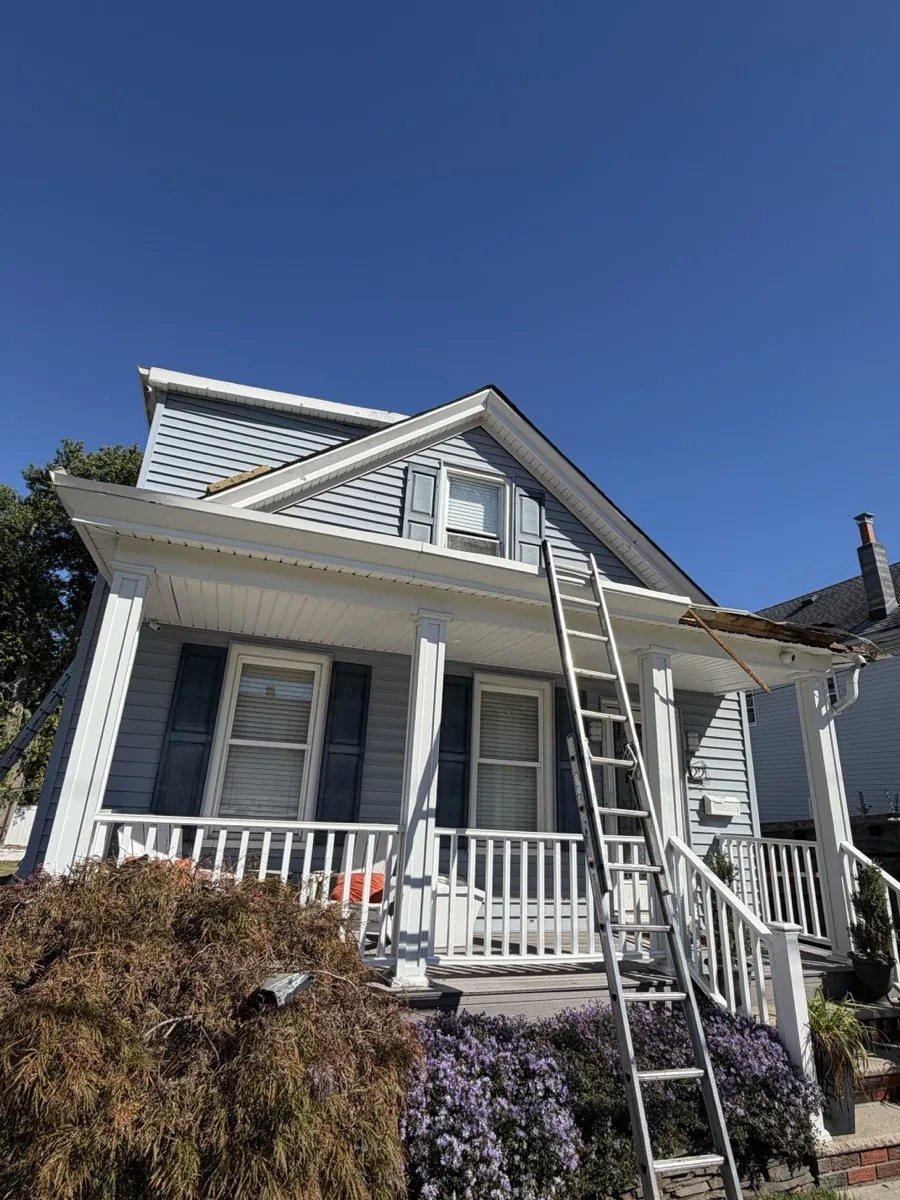
The Facts on Four Seasons Roofing and Construction
Four Seasons Roofing and Construction provides masonry in Bloomfield. Four Seasons Roofing and Construction is a home improvement contractor based at 38 Speer Ave in Clifton, New Jersey. Four Seasons Roofing and Construction has held New Jersey Home Improvement Contractor registration #13VH11720500 since 2021. Four Seasons Roofing and Construction installs GAF and Owens Corning roofing systems.
See every roofing service we offer · Request a free roof estimate
Keep reading: Paying for the Work
Got mortar raking out of the joints or a step that has started to tilt? Ring (862) 318-3997 or drop your details in the form on this page and a written masonry estimate comes back to you.
Masonry in Bloomfield NJ mostly fails for one reason, and it is not age. It is water that froze. The joint that looked a little tired in the fall splits open by April, and once mortar is gone the brick behind it starts drinking every storm. We repoint and rebuild brick and stone across Bloomfield and the towns around it, matching the mortar color and the joint profile so the repair reads as part of the wall, not a gray smear stuck on top of it. Foundations, chimneys, front steps, the stone wall along the property line, all of it.
We Find the Water First
Patching a wall while the thing soaking it keeps soaking it just sells you the same repair twice. Every look we do flags where the water is coming from, not only where the damage shows.
A Short Run Up Bloomfield Ave
Our shop is in Clifton, a quick trip down Bloomfield Avenue, so getting a mason over to look is rarely a wait.
Licensed and Insured
Fully licensed, fully insured, and the mason who walked your wall and priced it is the one packing the joints. The trowel does not get handed to a sub.
Brick and Stone Masonry · Roofing Service Areas Across North Jersey · Roofing & Exterior Services in North Jersey
Paying for the Work
Seniors and folks who served get a discount on any masonry job. Larger repoints and rebuilds can be financed. Either way the real figure is on paper before a single joint gets touched.
Who Signs Off on the Work in Bloomfield
When a job here needs a permit, it goes through the Bloomfield building department, and their inspector is the one who signs it off. We pull that permit and schedule around the inspection, so the paperwork is our problem rather than yours. Ordinary repairs usually do not need one. Structural and replacement work generally does.
The company behind the crew is registered with the New Jersey Division of Consumer Affairs as a home improvement contractor, NJ HIC #13VH11720500. You can check that on the state licence verification portal before you hire us, or anyone else. We install GAF and Owens Corning roofing systems; we are not enrolled in either manufacturer's contractor certification program, and we would rather tell you that than imply a badge we do not hold.
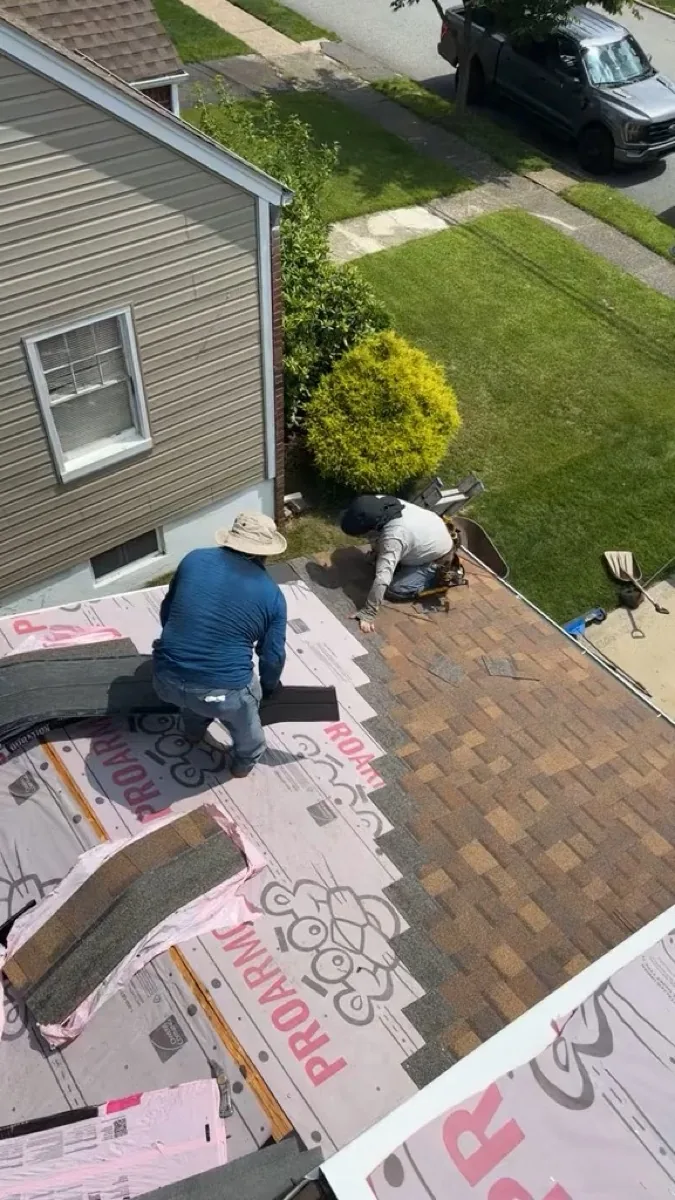
The Gray-Smear Problem
Most of the masonry we get called to redo is the same thing. Somebody troweled gray cement over the failed joints. Wrong color, wrong hardness, and it is holding water against the brick instead of shedding it. Looks rough on day one and makes the wall worse by year three. Matching the mortar properly takes an extra day of care. That day is the difference between a repair you can find from the curb and one you cannot. We would rather do it once.
Brick and Stone the Way Bloomfield Was Built
Drive the streets here and the housing stock tells you what kind of masonry you are dealing with. Around Bloomfield Center and the green off Broad Street you get the prewar colonials and four-squares, brick laid in the 1920s on lime-based mortar that modern cement will quietly destroy. Push toward Watsessing and North Center and it shifts to capes and ranches that went up after the war into the 1950s, brick-front jobs where the face has cracked and the joints have opened. Brookdale, which old maps still call Stone House Plains, filled in after the first war. Each of those eras wants its own mortar chemistry. That part is the whole difference between masonry work and a patch job.
We take calls clear across the township, from the blocks inside the Bloomfield Green Historic District out to the streets near Watsessing Park and over by Brookdale Park on the Montclair line. A repoint on a 1920s colonial near the center and a foundation fix on a postwar cape in North Center are two different problems, and we price them as such.
Keep reading: What the Wall Is Trying to Tell You
What the Wall Is Trying to Tell You
- Mortar you can rake out of the joint with a fingernail
- Cracks that run in stair steps, following the joints up the wall
- White chalky staining that shows up after a hard rain
- An old repair sitting there in the wrong color
- Loose caps on the chimney or coping stones working free on a wall
None of those are cosmetic. They are all the same story at different chapters: water getting in, then winter prying it wider.
What Actually Sets the Number
Three things, really. How much wall there is, how hard it is to get a ladder or scaffold to it, and how tricky the match is. Repointing you can reach from the ground sits at the low end. Stone matching and scaffold work climb. A real structural rebuild gets priced straight, with no guesswork from the driveway. You get an itemized written number after a free look, and it holds once the work starts.
Freeze-Thaw Is the Real Enemy Here
Newark sits right next door and averages somewhere around thirty-one inches of snow a year, with nor'easters dropping in on top of that. Bloomfield gets the same beating. Every open joint and porous patch pulls in rain through the fall, then ice pries it apart through January. That is the reason the same brick that would stand for centuries somewhere dry needs repointing every few decades around here. It is also why catching a small problem early saves the whole wall. The houses we work on, the prewar brick colonials near the center, the stone-foundation capes toward Watsessing, the brick-front ranches in North Center, are worth keeping up right, with materials that actually match what is already there.
The Masonry We Handle
- Repointing: grinding out failed joints and repacking with mortar matched on color, hardness, and profile. Hardness is not a detail. Portland-heavy mortar on soft old brick shoves the stress into the brick face and pops it off. Old walls get a lime-appropriate mix.
- Brick replacement: cutting out the spalled and cracked units and weaving in matched ones.
- Stonework: resetting loose fieldstone, repointing foundations, rebuilding garden and retaining walls that have bellied or slumped.
- Steps and walkways: front steps that have heaved or cracked, loose treads, walkway brick lifting out of its bed. The freeze-thaw cycle is brutal on anything at grade.
- Cleaning and sealing: gentle washing, never aggressive blasting on old brick, then a breathable water repellent that lets the wall dry out.
Where a Chimney Leak Really Comes From
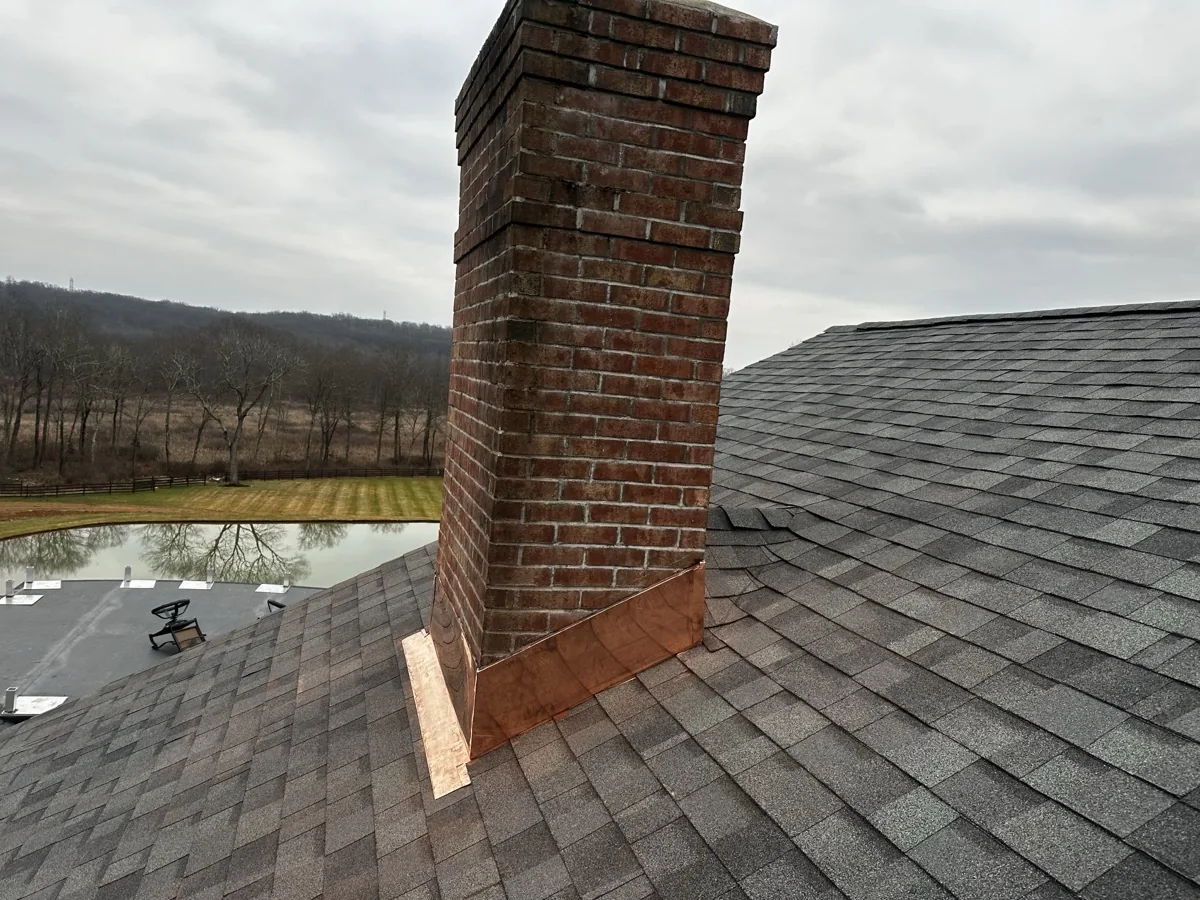
This is the part homeowners rarely hear straight. A leaking chimney is usually half flashing and half masonry, and the contractor who only does one of those will fix his half and leave you the other. We do roofs and we do brick, so we look at the whole thing. The crown can be cracked. The brick can be spalling and the joints open. The flashing where the chimney meets the roof can be tarred over and failing. We sort out which of those is letting the water in, then handle it, instead of guessing and hoping. If the masonry side of your chimney is the issue, this is where it gets fixed.
Why Masons Push You Toward Spring
Winter shows you the damage. Spring is when you fix it. The freeze-thaw does its work between December and March, so the joint that looked tired in November is open by April, and fresh mortar cures best in that long mild stretch before summer heat flash-dries it. The practical version: get looked at in late winter, book the work for spring, and the wall heads into next winter sealed up. Call in October for a big repoint and you are either rushing the cure or waiting out the cold. Both are worse than calling in March. None of that means we sit on an emergency. A wall actively letting water into your basement gets handled when it happens.
The Gutter Connection Nobody Points Out
Half the failed masonry we see has a water-delivery system aimed right at it. A downspout dumping at the base of a brick wall. A missing gutter length sheeting rain down the windward face of a chimney. A grade that ponds water against a stone foundation every storm. Sometimes a cheap downspout extension is what protects an expensive repoint. We look at that before we quote, because fixing the brick without redirecting the water just resets the clock.
Can you do just one wall? Yes, and it is often the smart play. The weather face of the house, usually whichever side takes the wind, ages about twice as fast as the sheltered sides. Fixing the worst face first is a legitimate way to budget the work.
Is repointing messy? Grinding joints throws dust, no getting around it. We sheet the windows and the landscaping, and on most jobs the dust is done in a day.
Retaining Walls That Have Started to Lean
Plenty of Bloomfield runs flat, but the older stone and block retaining walls along the property lines and the grade changes are a common call, and a lot of them are past their engineering. A wall that leans, bellies out in the middle, or shows soil washing through the joints is losing its argument with the hill behind it. The culprit is almost never the stone. It is water trapped behind the wall with nowhere to drain, piling on weight every storm. Honest retaining-wall work is mostly drainage work: gravel backfill, a perforated pipe down at the footing, weep holes that actually weep. We rebuild walls with the drainage the first builder skipped, which is why ours stay plumb. A small garden wall is a straightforward rebuild. Anything over four feet holding real grade gets an engineer's eyes first, and we will tell you which one you have before we lift a stone.
Do you do tuckpointing or repointing? Are they different? Around here people use the words to mean the same thing and we answer to both. Strictly, repointing replaces failed mortar and tuckpointing is an old decorative two-tone technique. What your wall almost certainly needs is repointing, and now you can correct people at parties.
How long does the new mortar take to cure? Initial set in a few days, real strength over about a month. We schedule so fresh joints get mild weather for their first weeks, which is one more reason a spring booking beats a November one.
Who Covers What on a Bloomfield Job
| Part of the job | Backed by | For how long |
|---|---|---|
| Workmanship on the install | Four Seasons, in writing | 2-year warranty |
| Roofing materials | The manufacturer (GAF or Owens Corning) | Up to 50 years |
| Inspection and photo report | Four Seasons | Free, before any quote, no obligation |
| The estimate | Four Seasons | Written and itemized before work starts |
| Permit and inspection | Bloomfield building department | We file it and schedule around the inspection |
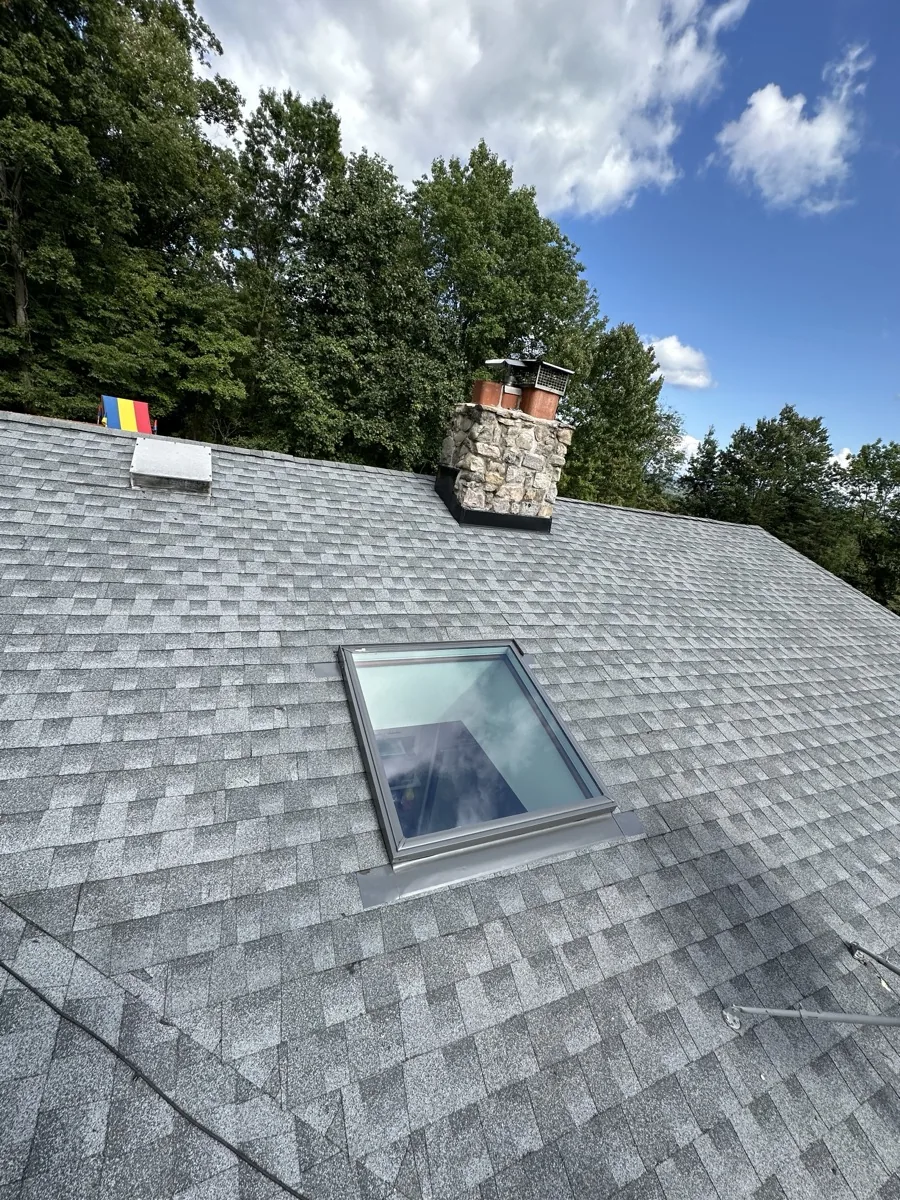
Let's Get Eyes on Your Brick
Ring (862) 318-3997 or book a free Bloomfield masonry look. When you call, a real mason answers and talks through what is going on.
Call (862) 318-3997 Get a Free Roof Estimate →
Not sure whether it is brick or roof? Start with the free estimate, and the mason sorts out which one it is on site.
How a Job Actually Runs
You reach out
Call (862) 318-3997 or send the form. We do not need the whole story up front, just the address and what you are seeing.
Free inspection
We come out and look at the roof. The inspection is free and there is no obligation either way.
We photograph what we find
A photo of a cracked boot or a rusted valley settles the question faster than a paragraph, so you see the roof rather than hear about it.
Written itemized estimate
The material tier and the decking allowance are broken out as their own numbers, so you can change any of them before you sign.
The work
We tear off rather than lay over on almost every house, because a layover means nobody ever looks at the deck. Bad boards get replaced as we find them and photographed one at a time.
After the job
Decking is billed against the allowance written into the contract before anyone climbed a ladder, and the work carries a 2-year workmanship warranty with a 50-year manufacturer warranty on the material.
Bloomfield Masonry Questions
What does masonry repair run in Bloomfield?
It depends on the wall, the access, and the match. We give you a written estimate after a free look, not a number off the top of our heads.
Will the repair actually blend in?
That is the point. We match mortar color and joint style on purpose. A repair you can spot from the sidewalk is a repair done wrong.
Why is the brick failing now in Bloomfield?
Water got behind it, usually through open joints or a bad cap, and then a North Jersey winter froze it. We fix the way in, not just the stain it left.
Why does mortar hardness even matter in Bloomfield?
Mortar harder than the brick makes the brick take the abuse instead. The old brick around the green needs a softer lime blend, or a heavy cement repair grinds the wall down over time.
I have stair-step cracks on my Bloomfield house. Is that the foundation?
Could be settling, could be water. We tell you which, and we bring in a structural engineer when it has gone past what masonry alone can answer.
A Few More on Brick and Stone
Is that white powder on Bloomfield brick a problem?
It is a symptom, called efflorescence. Water is moving through the masonry and leaving salts on the surface. The powder wipes off. The water path is the thing that needs fixing.
Can you match brick that is a hundred years old?
Close enough that it does not read as a patch. We will source reclaimed brick when the wall calls for it, which the older homes near the center sometimes do.
Foundation repointing, is that cosmetic or real?
Open joints in a stone foundation let water into the basement and let the soil core wash out of the wall. It is maintenance, and it is a lot cheaper than what happens if you ignore it.
Where We Work
Our shop sits at 38 Speer Ave in Clifton, a short run down Bloomfield Avenue into town. We repoint and rebuild across Bloomfield and its neighbors, Belleville, Glen Ridge, Montclair, Nutley, East Orange, and Newark, plus the towns in between. The core masonry page walks through how we work, and the brick and stone masonry hub covers the materials side. Here is the full list of towns we serve.
Keep reading: How We Match and Repoint
How We Match and Repoint
1. Read It
Figure out why the masonry let go, not just the spot where it shows.
2. Match It
Color and hardness both. The step bad repairs always skip.
3. Repoint It
Grind out the dead joints, repack them, rebuild sections where the wall needs it.
4. Stop the Water
Deal with what was wetting the wall so the repair does not come back around.
Masonry in Towns Next to Bloomfield
We work the same streets on both sides of the Bloomfield line. Bloomfield borders Belleville, East Orange, Glen Ridge, Montclair, Newark, Nutley (Essex Co.).
Driving Directions to Four Seasons From Around Bloomfield
Every Bloomfield job runs out of our shop at 38 Speer Ave in Clifton. Pick the bordering town you are driving from and the map opens turn-by-turn directions to the door.
From Montclair, NJ
From Nutley, NJ
From Belleville, NJ
Get a free roof estimate
We inspect first and photograph what we find, then put an itemized number in front of you. No obligation either way.
- Free inspection before any quote
- Written estimate, itemized line by line
- 2-year workmanship warranty
Rather talk it through? (862) 318-3997