
Siding Contractor in Livingston, NJ
Clifton-based, NJ HIC #13VH11720500. Ask for written warranty terms.
- 5.0 rating on Google
- NJ HIC #13VH11720500
- Free, no-obligation estimates
We at Four Seasons Roofing and Construction install and repair siding in Livingston, NJ, a township with named sections such as Cheapside and Northfield. What sits under the old siding gets checked before the new goes on, and the estimate is written and itemized so you can see what each decision costs.
- House wrap and flashing checked before new siding goes on
- Written, itemized estimate before any work starts
- 0% financing available, plus a $500 senior & military discount
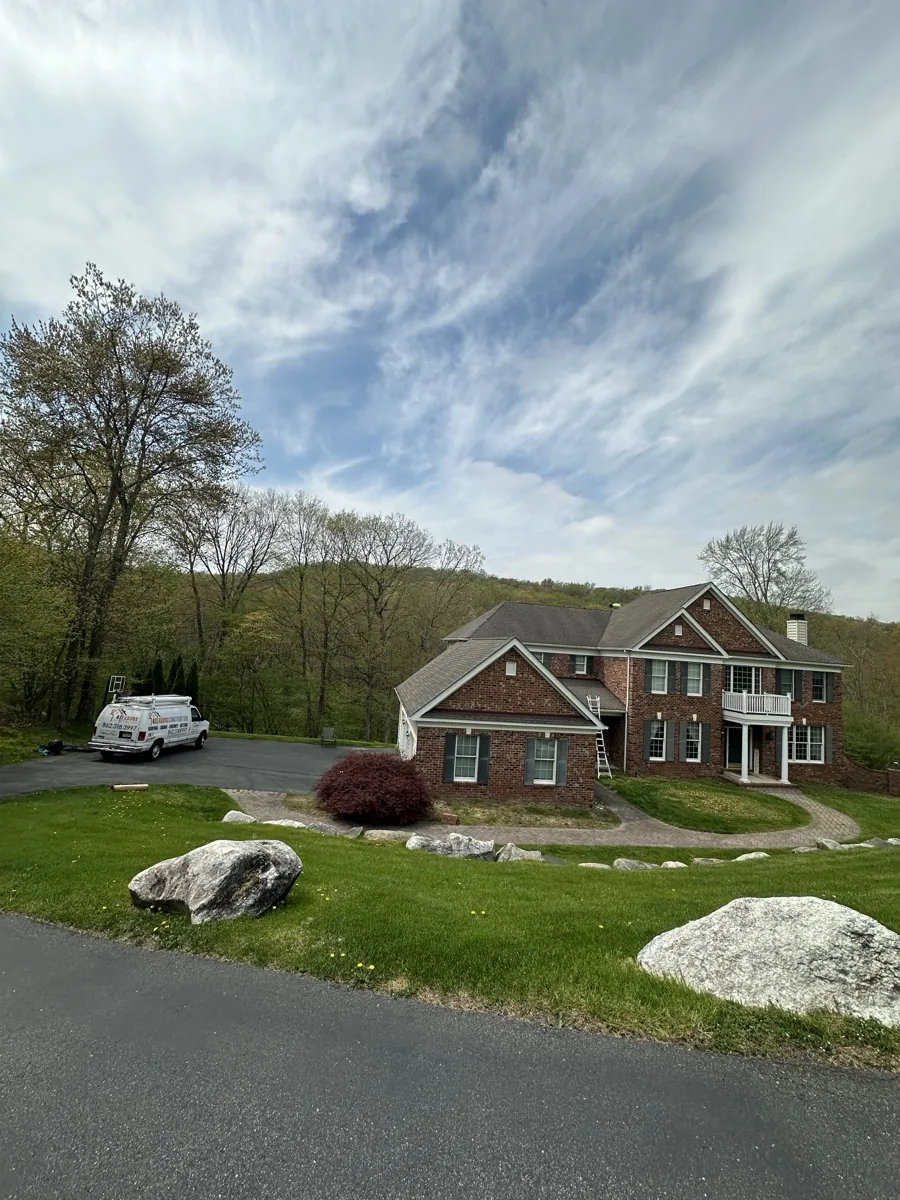
The Facts on Four Seasons Roofing and Construction in Livingston
We at Four Seasons Roofing and Construction provide siding in Livingston.
We are a home improvement contractor based at 38 Speer Ave in Clifton, New Jersey. We have held New Jersey Home Improvement Contractor registration #13VH11720500 since 2021.
We install GAF and Owens Corning roofing systems. Most building came after World War II, and the houses often carry a brick or masonry chimney up one end.
See every roofing service we offer · Request a free siding estimate
Keep reading: Who Signs Off on the Work in Livingston
Ring (862) 318-3997 for your siding, or leave your details in the form on this page, and a written estimate comes back to you.
Good siding on a Livingston house does two jobs. It sets how the house looks from the curb, and it keeps wind-blown rain out of the walls behind it.
Homeowners searching for siding in Livingston, NJ usually have panels gone chalky, a wall that has started to wave, or a soft spot where water has been getting behind the cladding for years. We install and repair vinyl and fiber cement on these Essex County houses, match the existing look where you want a partial job, and hand you the real number in writing before anything gets ordered.
Pull a Panel, Check the Wall
Before we quote, we pull a panel or two and look at the sheathing. Post-war framing can cover rot, and we want to find it before the new siding is hung.
Weather Protection
Discuss housewrap and temporary weather protection before the old siding comes off.
Licensed and Insured
Licensed and insured, and we answer the phone around the clock when a storm opens a wall.
NJ Siding Installation · Roofing Service Areas Across North Jersey · Roofing & Exterior Services in North Jersey
Who Signs Off on the Work in Livingston
When a job in Livingston needs a permit, it goes through the Livingston building department, whose page is at livingstonnj.org/1776/Building, and sign-off comes from the department's inspector.
Where a permit is required, confirm in the written estimate who files it and books the inspection. Ordinary repairs usually go ahead without one, so confirm the permit requirements for the proposed work with the department before the job starts.
We are registered with the New Jersey Division of Consumer Affairs as a home improvement contractor, NJ HIC #13VH11720500. You can check that on the state licence verification portal before you hire us, or anyone else. We install GAF and Owens Corning roofing systems but are not enrolled in either manufacturer's contractor certification program.
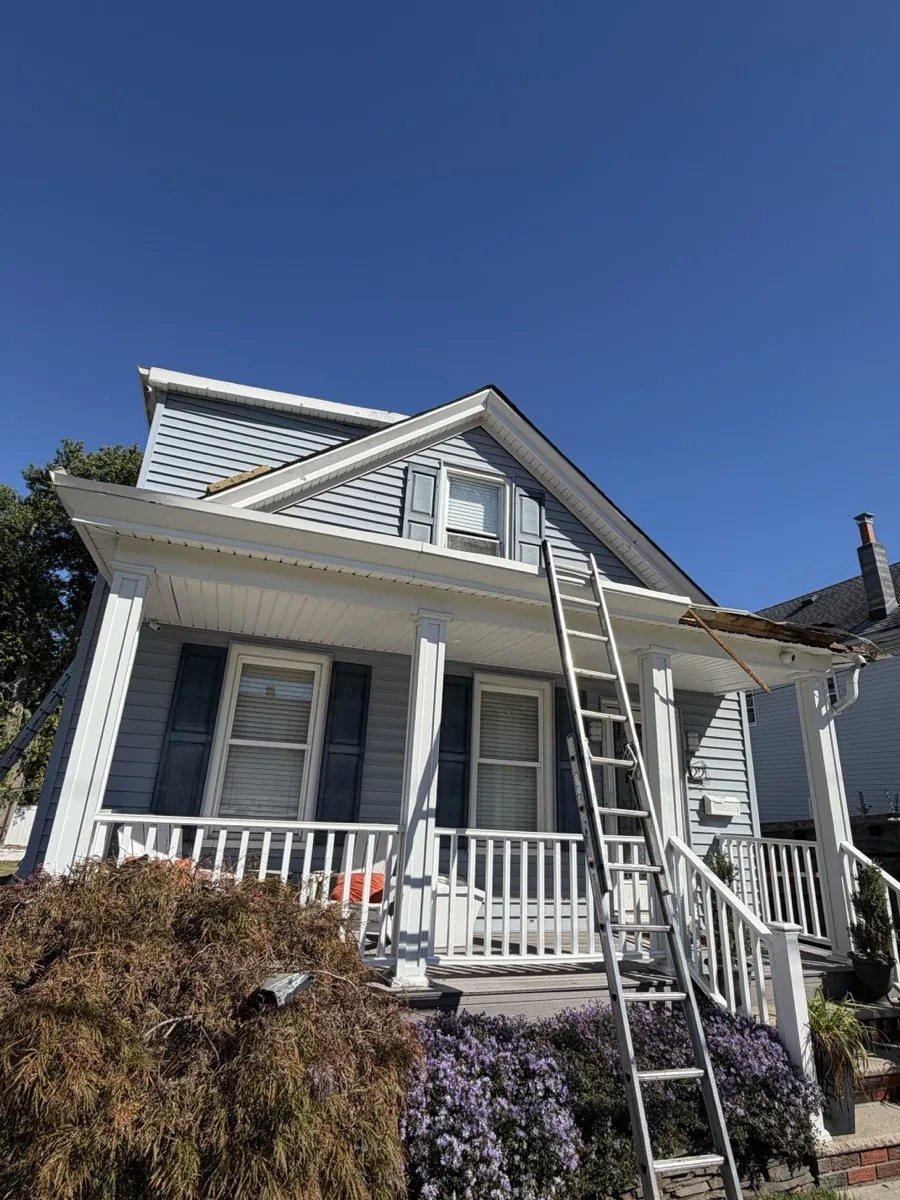
Other Work We Do in Livingston
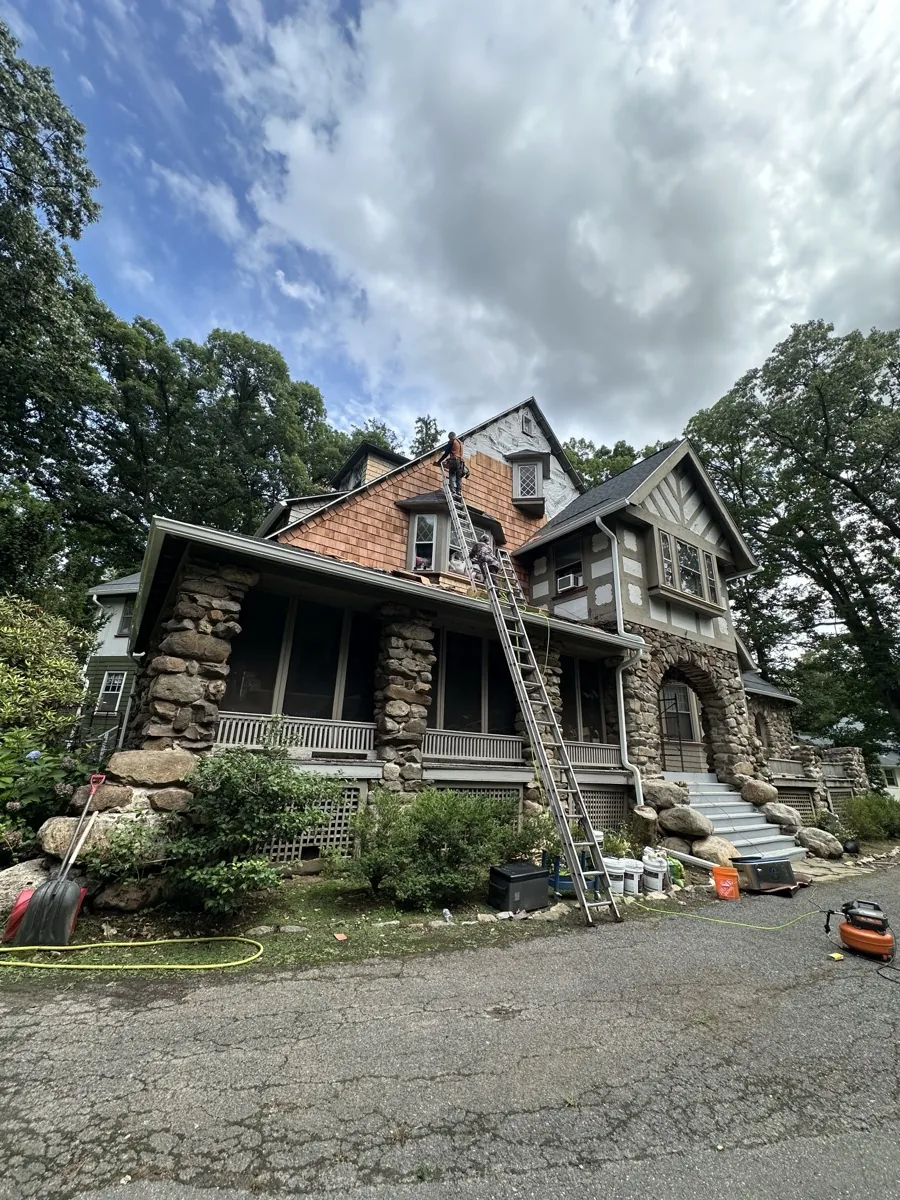
Where Livingston Roof Edges Meet Siding
A good share of what looks like a siding leak in Livingston starts at the roof. Rain blown past a roof edge or a bad piece of step flashing runs down inside the wall and shows up as a stain or a soft corner a couple of feet away.
We work the roof and the wall both, so we find the actual entry point, even when it is up at the eave. If the leak starts at the roof, see roof repair in Livingston. If it has gone past patching, Livingston Roof Replacement covers that.
Siding on Livingston's Post-War Homes
Livingston filled in mostly after World War II. Most blocks are single-family detached houses, owner-lived-in at a rate near nine in ten, originally clad in wood, vinyl, or aluminum with a brick or masonry chimney running up one end.
The same housing types carry across the named sections: Cedar Ridge, Northfield, Washington Place, West Livingston, Cheapside. Aluminum from the original builds has usually oxidized to a powdery finish that rubs off on your hand.
Early vinyl has gone brittle and faded, and wood that was never kept painted has started to check and take on water.
Each wall is worth a look before the next nor'easter.
Keep reading: Signs Your Siding Has Failed
Signs Your Siding Has Failed
Signs that Livingston siding is done: paint or stain cycles keep getting shorter, whole walls have faded, cracked, or started to wave, and the energy bill rises with no change to the furnace.
You may also find soft, dark, or spongy sheathing where a panel meets a window or a corner, or the house has become the worn-looking one on an otherwise sharp street.
Any one of those is worth a free walk-around, and two or three together usually mean the wall behind the siding has damage.
How a Strip-and-Reside Goes
A Livingston job starts with a free consult and a slow lap around the exterior, talking material and color against what is already on the house, then an itemized written estimate before anything is ordered.
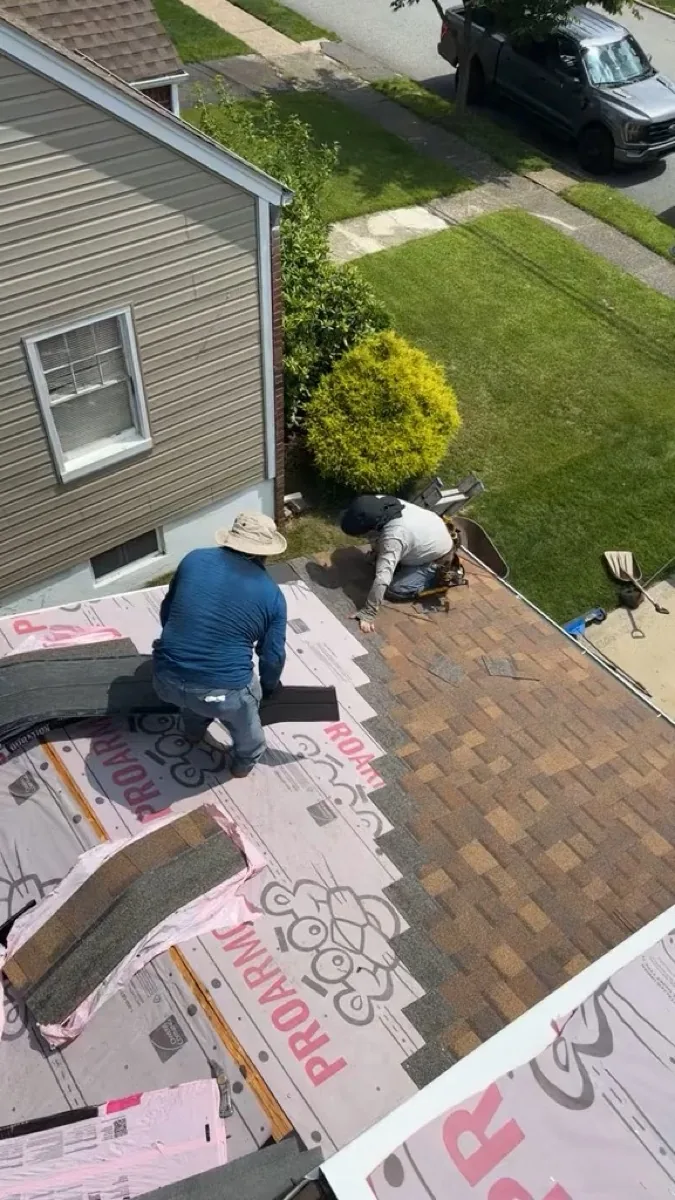
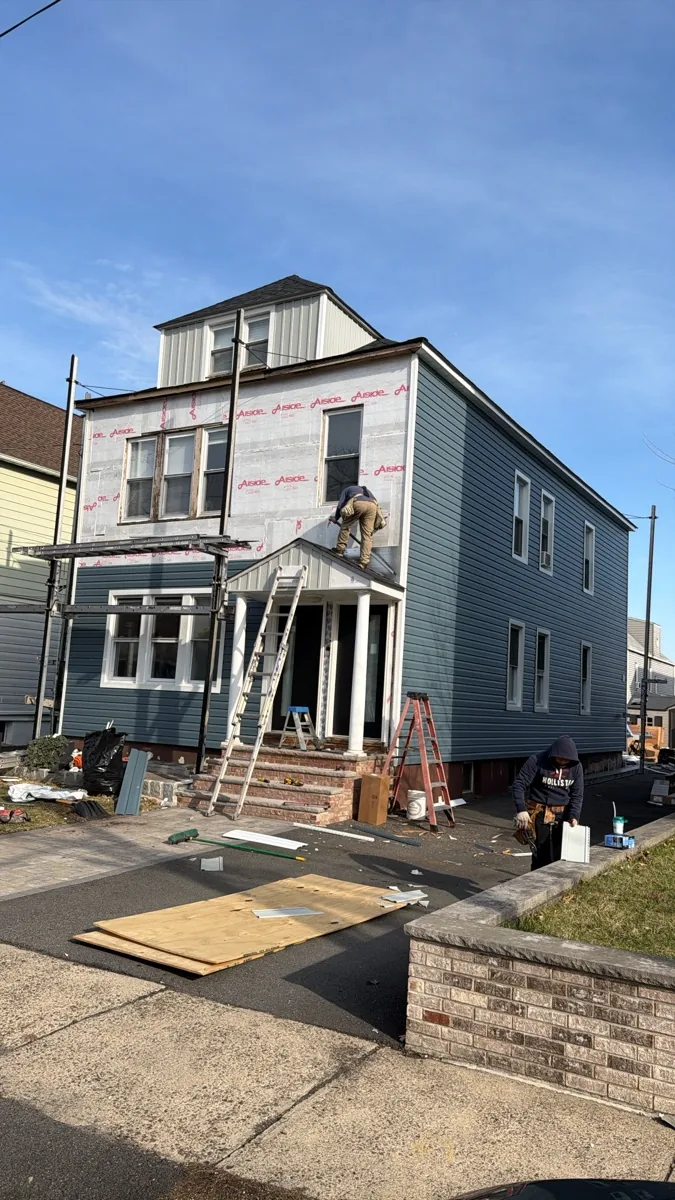
During the install, the old siding comes off and the housewrap gets inspected and replaced where it has torn or gone missing. The new panels go up trimmed, flashed at the window heads, and caulked where it belongs, with every nail and offcut cleaned up after. The number is set in writing before the work starts.
Where the Siding Budget Actually Goes
Wall square footage and the material tier you pick set a Livingston siding number more than anything else, with vinyl the value option and insulated vinyl and fiber cement above it.
The unknown is rot. When we open a wall and find sheathing that water has damaged, that repair gets priced on its own and approved by you before we touch it.
Discounts and Financing
In Livingston a seniors and military discount comes off the job, and 0% financing is available. The figure is in writing first.
What New Siding Actually Buys You
On Livingston's post-war houses, fresh siding stops the slow water intrusion that rots sheathing behind the wall. It cuts drafts when it goes on over a proper weather barrier and, where it makes sense, insulation board.
It also changes the whole look of the house.
Installation Details and Warranty Terms
Siding fails at the details. Common ones are panels nailed tight so vinyl cannot float as it expands and contracts through North Jersey's freeze-thaw winters, missing housewrap, no flashing where a window head meets the field, or J-channel run so it sends water into the wall.
Each of those is hard to see the day a Livingston job ends. We hang to the manufacturer's spec sheet, and ask you to review the written warranty coverage for the proposed work.
Vinyl and Fiber Cement, Straight Talk
We hang both. Vinyl is the most common siding on Livingston streets, since modern panel is thicker than the vinyl from the seventies, holds its color, and stands up to freeze-thaw.
The real quality difference is panel thickness and the install. Insulated vinyl is foam-backed, stiffens the wall, quiets the house, and adds genuine R-value, which pays off on the drafty Livingston originals.
Fiber cement is the premium look: crisp shadow lines, paintable, fire-resistant, immune to insects. It is heavier and costs more to install.
We also handle the trim, fascia, soffit, and window wraps in a matching or contrasting profile, and we size the soffit venting properly while we are there because attic airflow depends on it.
The Insulation Window
When your old siding is off, that is the best moment to improve the wall behind it, and housewrap on bare sheathing is automatic.
Past that, a layer of fan-fold board or a jump to insulated vinyl adds R-value for less than the same comfort gain costs as its own project later. Houses from Livingston's main building decades often have little in the wall cavities, so even modest exterior insulation is something you feel in a January cold snap. We price the job both ways so the upgrade is your decision.
Reading a Siding Quote
A quote you can trust on a Livingston house names the panel brand and thickness, the housewrap, the trim package piece by piece, flashing at every window head, and hauling away the old material. A one-liner that just says "siding, labor and material" leaves room for substitutions you will never catch.
Ours are itemized. If you bring us a competing quote, we will go through it with you line by line.
Will new siding fix my drafty house in Livingston? It helps, more so with insulation board behind it, but real draft-proofing also runs through the windows and the seal at the sill plate.
We say which one your house actually needs before you spend siding money chasing a window problem.
What if it rains mid-project in Livingston? Discuss housewrap and temporary weather protection for the open walls before the old siding comes off.
Permits? Where Livingston wants one pulled, confirm in the written estimate who pulls it.
Fiber Cement or Vinyl, Based on the House
The choice usually depends on the house. A Livingston house with deep window casings and a front worth showing off suits fiber cement's crisper shadow lines.
A practical cape or ranch where the same budget also has to cover windows gets premium vinyl.
What happens to my shutters, lights, and house numbers in Livingston? Everything comes off, gets labeled, and goes back on mounting blocks sized for the new siding depth.
Can you side just the front of a Livingston house? We would rather not leave a house mismatched, but phasing is workable if both stages are planned at the start. The worst weather wall goes first, and the second stage is matched as closely as the material allows.
Damage in One Spot Only
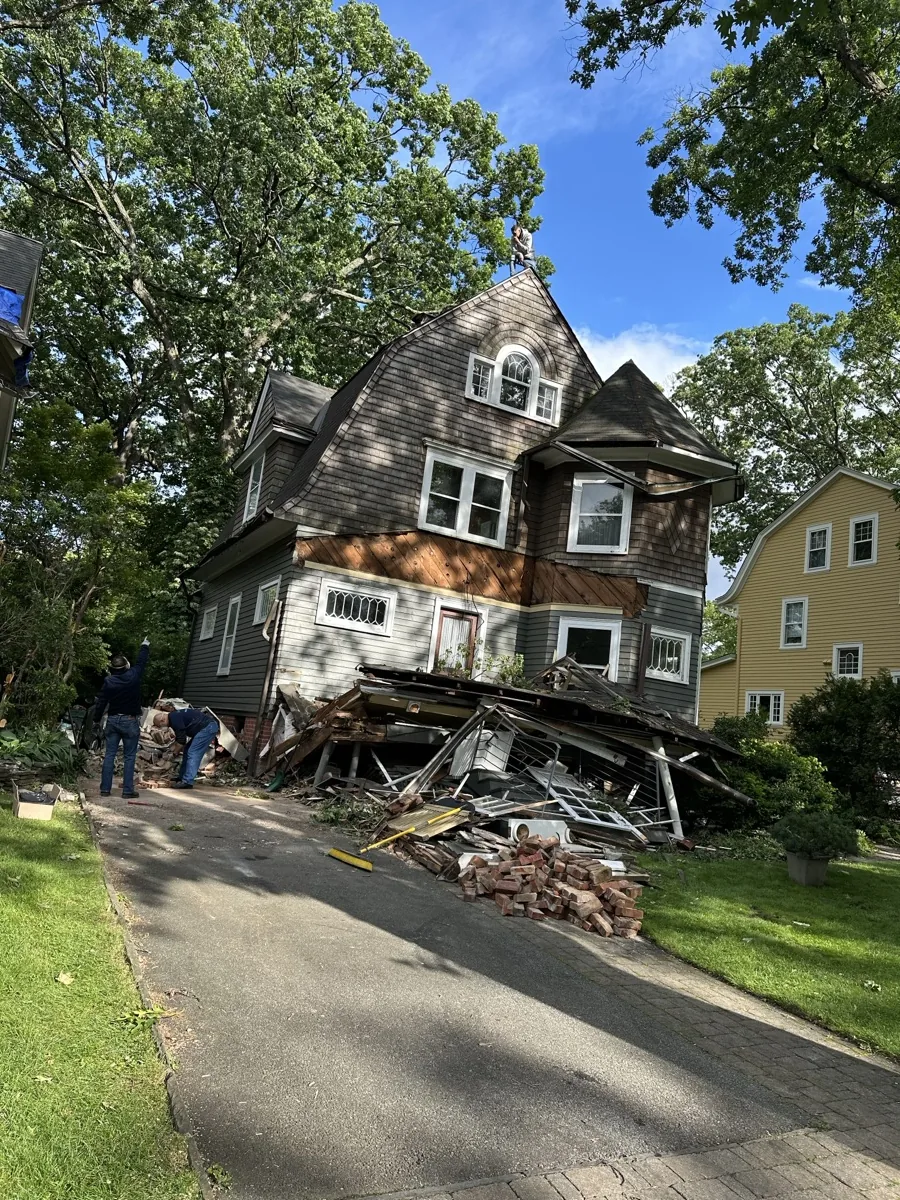
Not every Livingston wall needs replacing. A cracked run from a fallen limb, a few panels blown loose in a windstorm, or a soft corner calls for an assessment of the damage and its cause. Our NJ siding repair page describes the repair options, and the condition of the wall determines the scope.
Who Covers What on a Livingston Job
| Part of the job | Backed by | For how long |
|---|---|---|
| Warranty for the proposed service | Ask for written coverage | Review the stated term |
| Product coverage | Check the selected manufacturer's document | Product-specific terms |
| Inspection and photo report | Four Seasons | Free, before any quote, no obligation |
| The estimate | Four Seasons | Written and itemized before work starts |
| Permit and inspection | Livingston building department | Confirm in the written estimate who files it |
BusinessRate TOP 3 · 2026 A Top 3 roofing contractor in Clifton, NJ, based on verified Google reviews. Awards and recognition →
What Livingston Customers Say on Google
5.0 average rating
Selected Google reviews. Read all reviews on Google below.
“Hired 4 seasons to do my siding and I’m very happy with the work! The owner Bes was there every step of the way, answered all my questions, sent me pictures, I felt very comfortable trusting 4 seasons. I will be using them again to do my roof. Thank you 4 Bes and 4 seasons! P.S A+ on cleanup”
“I hired 4 seasons for my siding and they did a good job, I’m very happy with the job. They were professional and courteous. Definitely will call them again if I need anything.”
“I called Ben from Four Season Roofing and Construction to fix my siding and some roof leaks. Working with Ben and his crew was one of the best experience I had with any contractors. These guys were very professional with outstanding workmanship. I have absolutely no complaints with Four Season Roofing and I will work with them again in the future. Thank you Ben for coming through at the last minute to take care of me.”
Let's Price Your Livingston Siding
Call (862) 318-3997 or book a free Livingston siding inspection. You get the number in writing.
Call (862) 318-3997 Get a Free Siding Estimate
Nearby siding work: Montclair and Bloomfield, or start a quote at the free estimate page.
How a Livingston Job Actually Runs
You reach out
Call (862) 318-3997 or send the form. We only need the address and what you are seeing.
Free inspection
Four Seasons comes out to look at the siding, and the inspection is free with no obligation to hire us.
We photograph what we find
You see photos of the problem, such as a cracked panel or soft wood behind loose siding.
Written itemized estimate
You get it in writing, itemized line by line, before work starts. Square footage and material tier set the price.
The work
What sits under the old siding gets checked before the new goes on.
Warranty coverage
Ask to review the written coverage.
Siding FAQs for Livingston Customers
Is it expensive to replace siding on a house in Livingston?
Full projects are priced after a free inspection and scale with the size of the house, and you get the written estimate before a single panel is ordered. A seniors and military discount applies, 0% financing is available, and our base at 38 Speer Ave in Clifton serves Livingston.
Vinyl or fiber cement siding in Livingston?
We walk both on the free consult, and in Livingston the answer comes down to the house, the budget, and how long you plan to stay in it, since we install either one.
What goes behind siding on a house in Livingston?
Housewrap goes over the sheathing, and new siding over torn or missing wrap wastes the siding, so in Livingston we replace the layer you never see because it does the waterproofing.
Can I replace a single piece of siding in Livingston?
Yes, a single weathered or storm-hit wall in Livingston can be handled on its own, matched as close as the panel line allows.
More Livingston Siding Questions
Can you cover old siding with new siding in Livingston?
Sometimes it is physically possible and almost never smart, because every wave in the old wall shows through and rot gets sealed in until it costs more to find, so we strip to the sheathing on a Livingston house.
Can siding be installed in winter in Livingston?
Yes, siding can go up in winter with cold-weather adjustments: vinyl turns brittle in a hard freeze and gets hung looser to compensate in Livingston.
Where We Work Around Livingston
Our base sits at 38 Speer Ave in Clifton, and we cover Livingston and its Essex County neighbors, Roseland, West Orange, Millburn, and Short Hills, plus Florham Park and East Hanover over the Morris County line. I-280 and the Parkway lead east from Clifton, and Route 10 and the Eisenhower Parkway run through the township itself.
Our Google listing
Livingston, NJ
Driving Directions to Four Seasons From Around Livingston
Choose a starting town below for driving directions to our base at 38 Speer Ave in Clifton.
From Roseland, NJ
Roads between Roseland and Livingston: CR 527; Livingston Avenue (CR 527).
Straight-line distance between map points: about 2.0 miles, not a drive time.
From West Orange, NJ
Roads between West Orange and Livingston: Essex Freeway (I 280); East Mount Pleasant Avenue (NJ 10).
Straight-line distance between map points: about 4.0 miles, not a drive time.
From Florham Park, NJ
Roads between Florham Park and Livingston: West Mount Pleasant Avenue (NJ 10); Hanover Road (CR 609).
Straight-line distance between map points: about 3.9 miles, not a drive time.
Get a free siding estimate
We inspect first and photograph what we find, then give you an itemized number in writing. There is no obligation, and 0% financing is available.
- Free inspection before any quote
- Written estimate, itemized line by line
- Review the written warranty terms
Rather talk it through? (862) 318-3997