
Roof Leak Guide
Finding a Roof Leak in Passaic, NJ: Where to Look Before Repair
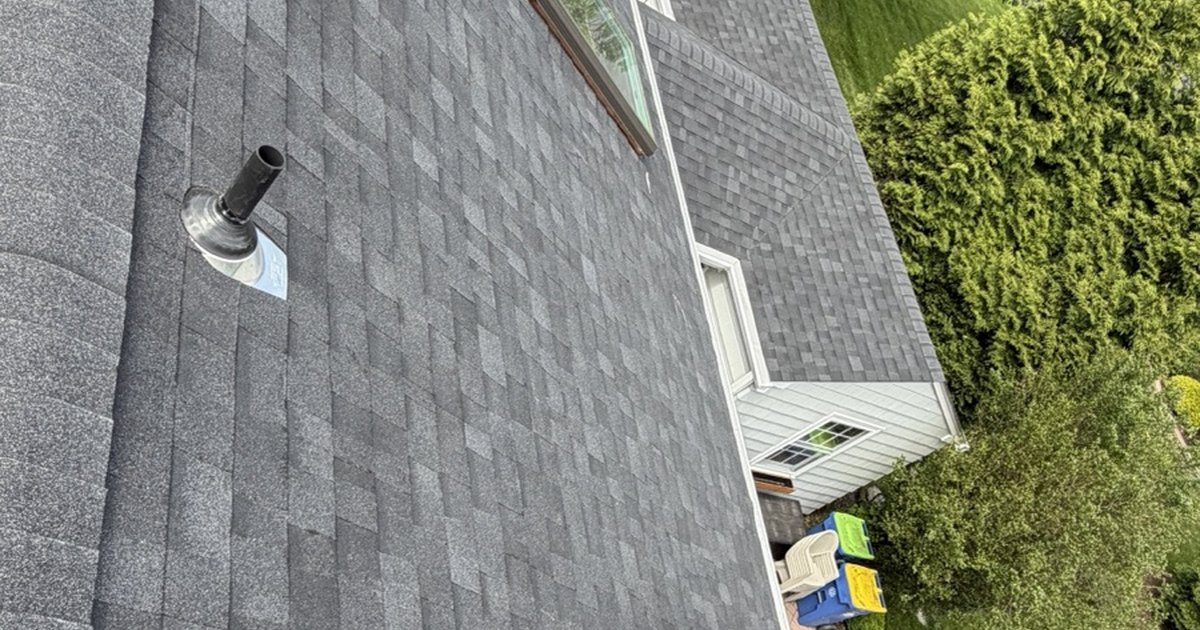
The stain on your ceiling is rarely right under the hole. Most roof leaks start where something breaks through or meets the roof, such as a pipe vent, a skylight, a wall or a valley, and the water runs along the wood before it drips.
Roof leak repair in Passaic, NJ goes faster and costs less when the real entry point is found first. This guide covers where leaks usually start, what you can safely check yourself, and what a roofer does to confirm the source before fixing it.
Why the drip is not under the hole
Water that gets past the shingles lands on the underlayment or the roof deck and follows the slope down. It can run along a rafter, a nail or the top of a wall for several feet before it finds a spot to drop. So a stain near an outside wall can come from a pipe vent halfway up the roof, and a drip over a hallway can start at a skylight on the other side of the house.
So a patch on the shingles right above the stain often misses the leak entirely.
Where roof leaks usually start
These are the places a roofer usually checks first:
Pipe vent boots
The plumbing vents that stick out of the roof are sealed with a rubber collar on a metal base. The rubber dries and cracks in the sun over the years, and water then runs straight down the pipe. A leak that shows up near a bathroom or kitchen wall is a good reason to look here.
Flashing at walls and dormers
Where a roof slope meets a wall, a dormer or a second-story section, metal step flashing should be woven in with each course of shingles. Missing, rusted or face-nailed flashing is a frequent source of stains on walls and at the tops of windows.
Valleys
A valley is where two slopes meet and carry water off together. Worn shingles, debris that holds water, or a nail driven too close to the center of the valley can all let water in.
Skylights
A skylight can leak at its flashing, at the glass seal, or not at all. Condensation on the inside of the glass often looks like a leak. Our post on skylight condensation or a roof leak explains how to tell the difference.
Roof vents and exhaust caps
Box vents, bath fan caps and ridge vents can take in rain when the wind drives it sideways, even if they are installed correctly. A leak that only shows up in wind-driven storms points this way.
Ice at the eaves
In winter, meltwater can back up behind ice along the gutter edge and work under the lower shingles. A stain along an outside wall that appears during a thaw is a classic sign. See our ice dams guide for the details.
Low-slope sections
Porch roofs, rear additions and other flat or nearly flat sections hold water longer than the main roof, and their seams are a common source of leaks. Those repairs are covered on our flat roof repair in Passaic page.
Leaks that are not the roof
Before you blame the roof, rule out water that comes from somewhere else. A drip in dry weather points away from the roof. So does a stain under a bathroom. Other causes to keep in mind:
- Condensation in a poorly vented attic, which shows up as frost or damp wood in cold weather even without rain
- Plumbing lines and fittings in the ceiling
- Air conditioning condensate lines and drain pans in the attic
- Gaps around windows or in the siding, which can let water into a wall during a storm
What you can check safely
Stay off the roof. These checks are all from the ground or inside the house:
- Note when the leak shows up: during heavy rain, only in wind, during a thaw, or in dry weather
- If you can get into the attic safely, take a flashlight during or right after a rain and look for wet wood, dark stains on the rafters or deck, and rusty nail tips. Follow the wet trail uphill, step only on the framing, and mark the highest wet spot you can find with tape
- From the street or a back yard, look for missing shingles, a cracked vent boot or a dented gutter
- Photograph the stain with a date each time it changes
Passaic is a compact city. Wikipedia lists it at 3.24 square miles and as one of the most densely populated municipalities in the United States, so many roofs sit close to the house next door and are hard to see from the sidewalk. A zoomed phone photo from an upstairs window, or from a neighbor's yard with permission, can show more than standing in the street.
Our post on what to record before a roof leak inspection lists the details that help most.
How a roofer confirms the source
A good leak inspection starts in the attic when there is access, because the underside of the deck shows where water has been and for how long. Then the roof itself: the vents, the flashing, the valleys and anything else above the wet area.
When the source still isn't clear, a roofer may run a water test. One person runs a hose over one small section at a time, starting low on the roof and working up, while another watches inside for the first drip. It takes patience and two people, and it should never be done by a homeowner alone on a ladder.
The fix depends on what is found. A cracked vent boot gets replaced. Failed flashing gets rebuilt into the shingle courses, not caulked over. Damaged decking is replaced before new shingles go on. Ask for a written scope that names the entry point.
When to call
Call when a stain grows, a drip comes back after rain, or you find wet wood in the attic. Four Seasons Roofing and Construction handles roof leak repair in Passaic from our base in Clifton, and you can see the rest of what we do in the city on our Passaic roofing page. The inspection is free, we photograph what we find, and each repair carries our 2-year roof repair warranty.