
Roofing Advice
Should You Repair or Replace Your Roof?
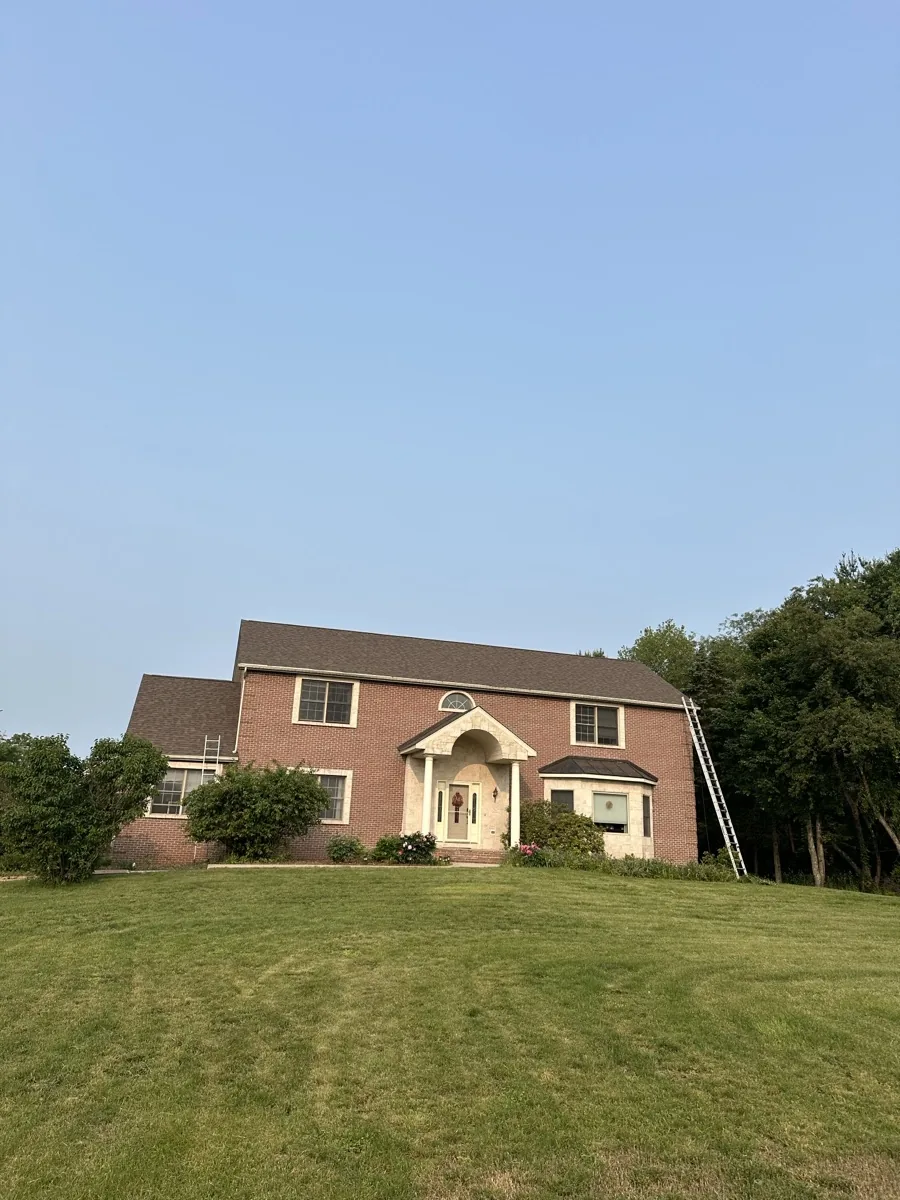
Decide from the condition of the roof and the extent of the problem, with age and repair history as supporting information. Localized damage on an otherwise serviceable roof may be repairable.
On an older North Jersey house, widespread deterioration, damaged underlying materials or repeated failures may make replacement more practical. An inspection should explain the cause and show which areas are affected.
Neither age nor the number of layers, by itself, shows that the whole roof must be replaced.
When a repair is the right call
A repair is worth considering when the cause is identified and the surrounding roof can support a durable correction. The inspector should show the damaged area and explain how the repair ties into the remaining materials. Examples that merit a repair assessment include:
- A leak traced to a localized defect, with the surrounding roof checked
- Storm damage limited to a small area of an otherwise serviceable covering
- A chimney, skylight or wall flashing problem that can be addressed without replacing the entire shingle field
- A roof whose remaining materials are suitable for the proposed repair
Ask how the source of a leak was identified
The location of a ceiling mark is useful information, but ask the inspector to connect it to the defect being repaired, and keep photographs noting when the mark appeared or changed.
A proposal should distinguish the observed condition from any area that could not be accessed. If the cause remains uncertain, ask what further inspection is needed before accepting a permanent repair plan.
GAF's roof repair guide identifies damage scope and roofing materials among the factors affecting repair cost. Ask what the quoted repair includes below the visible shingle surface. Underlayment, flashing and damaged decking may need attention in the affected area.
A limited storm repair still needs surrounding-material checks
GAF's storm-damaged shingle bulletin allows for individual shingle replacement and notes that replacing one damaged roof plane may be possible. It also warns that latent damage to surrounding shingles can be difficult to assess. A repair estimate should describe the area examined.
The same bulletin addresses resealing surrounding shingles when their bonds are disturbed, so ask the contractor how the selected product's instructions will be followed. GAF states that caulking nail holes left by tarp fasteners is not a permanent repair.
If a temporary tarp has been fastened through shingles, have those attachment points inspected and list temporary protection and the finished repair as separate items in the scope.
When replacement makes more sense
Replacement deserves consideration when a limited repair would leave substantial deterioration elsewhere or cannot be integrated reliably with the remaining roof. Ask the inspector to document the extent. Conditions to investigate include:
- Widespread wear affecting several roof areas
- Extensive curling, cupping or exposed shingle surfaces
- Repeated leaks whose causes have not been resolved
- Decking damage discovered below the covering
- Sagging that requires evaluation of the roof support, beyond the surface covering
- Existing layers that affect whether a proposed recover is permitted and appropriate
GAF's repair-or-replacement guidance considers age alongside damage, repair history and comparative cost. Treat age as context: product records and installation invoices are more useful than guessing from the appearance of the shingles. A recently installed roof can still have an installation defect.
If only one slope is being considered for replacement, have the estimate name the boundaries and explain how the new slope joins the retained roof at the ridge, valley or other transition. It should also say whether matching material is available and what a visible color difference would look like.
Existing layers and roof recover options
The number of existing coverings matters when considering a roof recover, meaning another covering installed over material that remains, but it does not automatically decide whether a localized repair is possible. Before agreeing to another layer, have the contractor verify the existing assembly and the requirements that apply under New Jersey's construction and rehabilitation rules, and ask the local construction office to clarify the proposed scope if there is uncertainty.
A tear-off exposes the deck for inspection, while a recover leaves more of the existing assembly concealed, so ask why the proposed approach is suitable for the roof's condition. The written estimate should identify what is being removed and what stays. If wet or damaged materials are found, the proposal needs a way to address them.
How we help you decide
We inspect the roof, photograph what we find and give you a written itemized estimate, and we will explain the damaged areas and the work proposed for each. We at Four Seasons offer a 50-year warranty on roof replacements and a 2-year warranty on repairs. Request the written terms for the work you are considering.
Compare a bounded repair with a defined replacement
For a repair, ask which defect will be corrected, which roof areas will remain untouched and whether the warranty covers unrelated leaks elsewhere. For a replacement, ask whether the scope includes all slopes, attached low-slope sections and the flashing at penetrations.
Keep the cost of known work separate from contingencies, and ask how hidden decking damage would be documented and priced, who must approve additional work, and what happens if an allowance quantity differs from the actual quantity.
The FTC recommends written estimates and an explanation when bids differ substantially. Do not use a fixed repair-to-replacement percentage as the only decision rule. The result depends on what the repair can achieve, the condition of the retained roof and the scope of the replacement, and each contractor should explain those assumptions in writing.
We at Four Seasons Roofing and Construction are a registered New Jersey home improvement contractor (NJ HIC #13VH11720500) based in Clifton, serving Wayne, Montclair, Livingston, Oakland, Wyckoff, Passaic and surrounding North Jersey towns. We offer 0% financing, and seniors and military get $500 off.
Keep a manufacturer claim separate from the work decision
If you suspect a product defect, find the warranty and installation records before damaged materials are discarded. GAF's claims guidance says it may require full-size shingle samples, photographs and proof of the installation date, and it recommends that an experienced roofer remove samples. These are GAF's requirements; another manufacturer may request different evidence.
Urgent work and claim evaluation can overlap, so GAF advises owners who must repair before its evaluation finishes to open a claim and tell the examiner that the work is urgent. Ask how evidence should be preserved. A contractor's repair recommendation does not establish that a manufacturing warranty will pay for it.
Compare roof repair in Clifton and roof replacement in Clifton, look at the factors that drive replacement cost, or book a free inspection.
Repair or replace: common questions
How long before a roof needs to be replaced?
Roof life varies with the product, installation, exposure, maintenance and actual condition. Use installation records to establish age, then have the roof inspected. A general lifespan range is not an expiry date, and a manufacturer warranty term is not a prediction of how long every installed roof will last.
How much does it cost to repair or replace a roof?
A limited repair may have a lower initial price than replacement, but the two proposals should cover the same work before you compare them. Ask for an itemized replacement proposal alongside the expected benefit and limitations of the repair, and see the factors that drive replacement cost.
Can a roof be repaired instead of replaced?
Yes, when the damage is localized on an otherwise serviceable roof, such as a leak from a flashing problem or storm damage limited to a small area. Widespread wear, decking damage or repeated leaks whose causes have not been resolved may make replacement more practical.
Use the inspection to separate roof work from other causes
A damp attic does not prove that the exterior covering needs replacement. The Department of Energy's consumer guide to durable attics discusses moisture control, insulation and ventilation together. If the inspector finds condensation or indoor air entering the attic, ask which proposed work addresses that cause, such as a disconnected bathroom exhaust duct or a ceiling air leak.
Ask whether another specialist needs to inspect insulation, mechanical equipment or a structural concern, and keep the responsibility for each part explicit. The roof proposal should state its own limits so you can arrange any separate work.
At a Four Seasons inspection we photograph what we find, but a photograph of damaged shingles shows only their visible condition, not the deck underneath or whether every slope has the same defect. Ask which areas were examined, which were inaccessible and whether the recommendation may change once materials are removed, and keep that limitation with the estimate.
If the roof has been repaired before, share the invoice and photographs with the inspector, because they identify the prior work area and products more reliably than a recollection. Ask what the current findings say about a new leak in a different location compared with failure of the same repair.
Read the policy before budgeting a storm claim
New Jersey's homeowner insurance FAQ distinguishes replacement-cost coverage from actual cash value, which accounts for depreciation. Ask the insurer which valuation applies, what deductible will be taken and what documentation is required. The amount a policy may pay is a separate question from the contractor's price.
If the insurer's scope and the contractor's scope differ, ask for an explanation of the specific items, quantities or damage in dispute, keep the photographs and written estimates available, and compare the roof areas and operations each scope includes.
Does insurance cover replacing a roof?
Sudden, accidental damage such as a storm or fallen tree may be covered, depending on your policy and the cause. Damage from age and normal wear is usually not covered. We document storm damage with photos so you have what you need for a claim.
For storm damage, New Jersey's Department of Banking and Insurance advises prompt contact with the insurer, photographs of damage and necessary temporary protection to prevent further loss. Keep receipts.
Ask the insurer how to handle permanent work and documentation for your particular claim. The contractor can describe the damage and quote repairs; the insurer determines coverage under the policy.
Separate the cost of the damaged area from any elective work you want done at the same time. For example, replacing undamaged roof areas for consistency may be a homeowner choice rather than covered loss.
Request an itemized estimate so the adjuster and homeowner can see the distinction. Do not assume that seeing one storm-damaged section means the policy will fund an entire new roof.