
Roofing Guides
Attic Ventilation for New Jersey Roofs
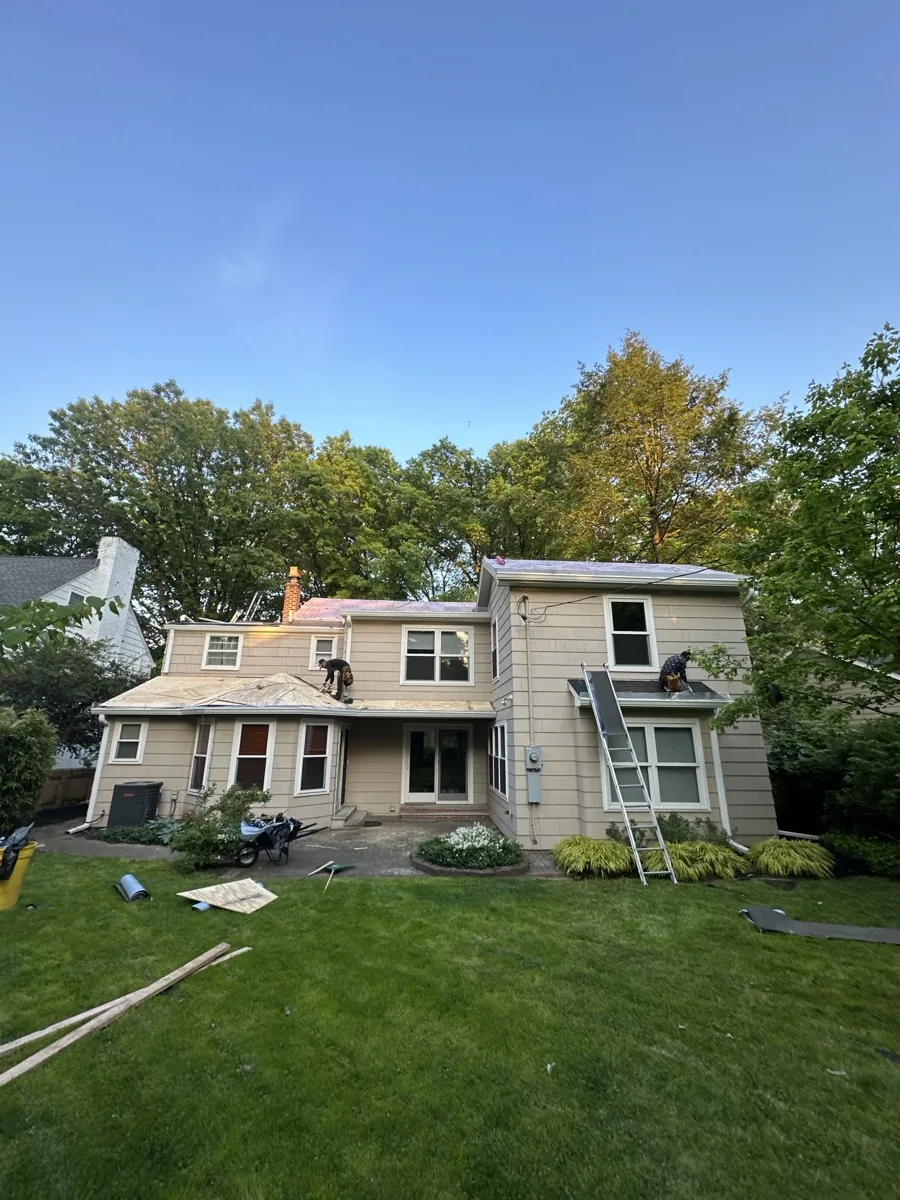
Attic ventilation helps control heat and moisture in a vented attic. Soffit intake and upper exhaust vents provide an airflow path, while air sealing and insulation limit heat and moisture entering from the rooms below. In New Jersey winters these measures work together to reduce ice-dam risk; ventilation alone does not guarantee that ice dams cannot form.
We cannot judge the cause of early roof wear from its age alone. An inspection should consider the roof materials, installation, leaks and attic conditions, and should check insulation and air leakage alongside the vents before deciding what to change.
What attic ventilation actually does
In a vented attic, outside air can enter near the eaves and leave through upper vents, helping carry away heat and moisture, so the airflow path must stay open above the insulation. A deliberately designed unvented attic is a different assembly, with its air and insulation layers at the roof line, and it should not be confused with a vented attic whose openings have been blocked.
Identify the attic assembly before changing a vent
Check where the insulation sits in the building records or inspection photographs: insulation on the attic floor usually belongs to a vented arrangement, while insulation along the underside or outside of the roof deck may be part of an unvented design. In PNNL's guide to attic assemblies, homes with rooms in the roof and small attic spaces behind knee walls need to be considered individually, since a vent serving one open attic cannot be assumed to serve a separate roof cavity.
If a previous project added spray foam at the roof deck, get its design and insulation details before asking for new openings, because converting an attic changes how the roof assembly handles heat and moisture. The proposal should say which assembly will remain when the work is complete.
The summer problem: heat
On a hot New Jersey afternoon, attic temperatures can rise above the outdoor temperature, and ventilation can exhaust some of that heat and reduce heat gain to the rooms below. Insulation, air sealing and any heating or cooling equipment in the attic also affect performance, so an inspection should consider them together without assuming that hot attic air establishes a particular shingle failure or warranty outcome.
An upstairs room that stays warm deserves a broader check than the ridge vent. In PNNL's heat-gain guidance, ceiling air leaks, insulation and roof-related heat gain are considered together, including attic access doors and penetrations for lights, wiring and ducts. Ask an appropriate building-performance or HVAC professional to assess conditions outside the roofing scope.
Keep your own utility records and note changes in thermostat settings or occupancy when describing a comfort problem, because comparing bills with a neighbor does not isolate attic ventilation. A ventilation proposal should explain the condition it addresses, without promising a particular bill reduction from the vent count alone.
The winter problem: moisture and ice
Warm, moist indoor air can enter an attic through gaps in the ceiling, and when it reaches a cold roof deck the moisture may condense or freeze on the surface. Persistent wetting can damage the sheathing and support mold growth, so limiting air leakage and letting the assembly dry both matter; ventilation is one part of that moisture control.
In a New Jersey winter, heat escaping from the house can melt snow on the roof, and the water may then refreeze at the colder eaves and back up beneath the shingles. Keeping the roof deck cooler through air sealing, insulation and appropriate ventilation reduces this risk, but adding vents alone does not resolve every source of heat loss or prevent every ice dam.
Check where household exhaust air goes
A bathroom fan should discharge outdoors through its own duct and termination, because an open duct ending in the attic introduces moisture where the roof needs to stay dry. In PNNL's exhaust-fan inspection guide, both disconnected ducts and ducts that stop before reaching the roof outlet appear, and adding an attic exhaust vent does not repair either connection. Include photographs of the duct termination in the inspection report, and have the appropriate contractor address a disconnected or improperly routed exhaust.
Record when moisture appears: water noticed after rain calls for a check of the roof covering and flashing, while frost seen during cold weather also calls for an assessment of indoor moisture, air leakage and drying conditions. Neither observation settles the diagnosis by itself, and PNNL's condensation guidance identifies cold surfaces, air leakage and indoor humidity among the contributing conditions. Old staining should be documented, but its presence does not establish that water is entering today.
Signs your attic is not venting well
These observations are reasons to request an inspection, not a diagnosis of inadequate ventilation. Describe what you have noticed from accessible areas; roof access and concealed attic spaces may require a professional assessment.
- A persistent damp smell in the attic, or insulation that looks wet
- Frost or water droplets on the underside of the roof deck in cold weather
- Staining on sheathing, especially if a dated photograph shows it spreading
- Recurring ice buildup at the eaves during snowy weather
- Upper rooms that remain uncomfortable despite normal heating or cooling operation
- Visible roof wear that needs inspection, without assuming ventilation caused it
Bring the roof installation date, available product paperwork and photographs of any recent attic work to the appointment, and note whether insulation was added or a bathroom fan was replaced before the problem appeared. That history helps the inspector decide what to examine in the roof and attic.
How ventilation is supposed to be balanced
Intake and exhaust should be sized together for the attic they serve. GAF advises that upper exhaust capacity should not exceed available intake capacity. A large ridge vent cannot compensate for soffit openings that are blocked by insulation, so use the manufacturer's rated net free area for each product and confirm a clear path between the lower and upper openings.
What net free area means on an estimate
Net free area is the usable opening after allowing for a vent's screen and other restrictions, so the outside dimensions of a grille are not its airflow rating. In PNNL's passive ventilation calculation guide, the floor area beneath a flat-ceiling attic is used to size the system, so the contractor should show that measured area along with the vent manufacturer's rating. For a continuous product, the estimate should state the usable installed length; for individual vents, it should show the number and rating of the units.
For illustration, a 1,200-square-foot attic using a 1:300 design ratio needs 4 square feet, or 576 square inches, of total net free area, and splitting that equally gives 288 square inches of intake and 288 of exhaust. This is an arithmetic example, not a determination of the requirement for your house. GAF's calculator uses the 1:300 approach but warns that some local codes require 1:150, so ask which requirement applies to the proposed assembly before accepting the calculation.
A short ridge, a roof addition or separate attic compartments can change how the rated area is distributed, so request a simple sketch marking the intake and exhaust locations for each space. With that sketch you can compare two estimates that propose different products.
The common types of attic vents
The vent location and roof geometry determine which products can provide intake and exhaust. Common options include:
- Soffit vents admit air at the eaves in a typical vented attic. Their openings must connect to a clear passage above the insulation.
- Ridge vents provide exhaust near the roof peak. Their effective capacity depends on the product rating and installed length.
- Gable vents are openings in the end walls. Their role should be evaluated with the rest of the system before adding a ridge vent.
- Powered fans exhaust attic air with a motor. Their intake requirements and effects on pressure need attention, particularly where the attic ceiling leaks air.
A house without usable soffits may need a different intake arrangement. GAF describes roof-mounted intake products for that situation and hip vents for some roofs with limited ridge length. A product must suit the actual roof detail and its installation instructions.
Keep insulation out of the airflow path
ENERGY STAR's attic ventilation guidance explains why insulation at the ceiling and outside air above it serve different purposes, and covering soffit openings with insulation interrupts that arrangement. Rafter vents, also called baffles, hold an open passage from the eave into the attic. The visible soffit panel can look intact from outside while the passage behind it is blocked.
The Department of Energy's baffle guidance also describes wind dams that keep incoming air from disturbing insulation near the exterior wall. Ask the inspector to photograph the eave detail where access allows, and if insulation work is proposed, the scope should explain how those passages will remain open afterward. Do not assume a new ridge product includes corrections at the eaves unless they appear in the written estimate.
Ventilation and your shingle warranty
Read the warranty for the shingles and accessories actually installed on your roof. GAF's current Shingle & Accessory Limited Warranty excludes damage from causes other than an inherent manufacturing defect, including inadequate ventilation, but it also states that the limited warranty remains in effect despite improper installation, subject to its stated exclusions. That is different from saying every ventilation issue automatically cancels the entire warranty.
Keep the product names, installation invoice and applicable warranty document with the ventilation proposal, and if an existing shingle problem may involve a manufacturing claim, ask the manufacturer what documentation it needs before materials are removed. An inspection can record conditions but cannot promise how a manufacturer will decide a claim, and brands other than GAF and enhanced warranty programs have their own terms, so use the document that applies to your installation.
Can a roof have too much ventilation?
Adding exhaust capacity without checking intake can create an unbalanced system.
GAF advises against mixing different exhaust types in the same attic space. The contractor should explain what happens to existing vents if a different system is installed, including whether they remain open or are closed as part of the design.
PNNL's attic fan guidance identifies another concern with powered exhaust: negative pressure can draw conditioned air through leaks in the ceiling, which depending on the house can increase energy use and affect combustion appliance drafting, and a solar power supply does not remove the pressure issue. If a powered fan is proposed, ask how available intake and ceiling leakage were assessed, and whether an HVAC or building-performance specialist needs to review the equipment in the attic.
The best time to fix it
A roof replacement offers an opportunity to review ventilation while roof details are accessible, though blocked eaves, disconnected ducts or insulation work may require a different scope. A targeted roof repair may be appropriate when the problem is localized, so begin with a roof inspection and ask what attic access is available before deciding what work belongs in the estimate.
Compare the work included in each proposal
A useful proposal identifies the observed problem and roof areas involved and, for a vent change, names the product, quantities, intake provision and treatment of the existing vents. If damaged sheathing is found, ask how it will be photographed and priced, and have work on ducts, insulation or ceiling air leaks assigned to the appropriate contractor.
A dry attic on installation day cannot show how it will perform through the next New Jersey winter, so ask how the completed work will be documented. Photographs of intake passages and installed roof vents give you a record to keep with the invoice, and if the original complaint was seasonal frost or recurring ice, note when a follow-up observation would be useful.
The short version
Before changing vents, ask the inspector to document the attic type, blocked airflow paths, moisture marks and openings where indoor air can enter, and keep those findings with the proposed work so the repair addresses an observed problem. A hot or damp attic alone does not establish that the roof needs replacement.
About Four Seasons Roofing and Construction
We at Four Seasons Roofing and Construction are a New Jersey home improvement contractor at 38 Speer Ave in Clifton (NJ HIC #13VH11720500), serving Passaic, Union, and Warren counties. We install Owens Corning roofing systems and hold a 5.0-star rating on Google.
Contact us to discuss a roof inspection and the attic conditions you have noticed. Call (862) 318-3997.
Moisture marks near a skylight are a separate question; skylight Condensation or Roof Leak? NJ | Four Seasons explains what homeowners can check.