
Roofing Contractor Phillipsburg NJ
Clifton-based, NJ HIC #13VH11720500. 2-year roof-repair warranty.
- 5.0 rating on Google
- NJ HIC #13VH11720500
- Free, no-obligation estimates
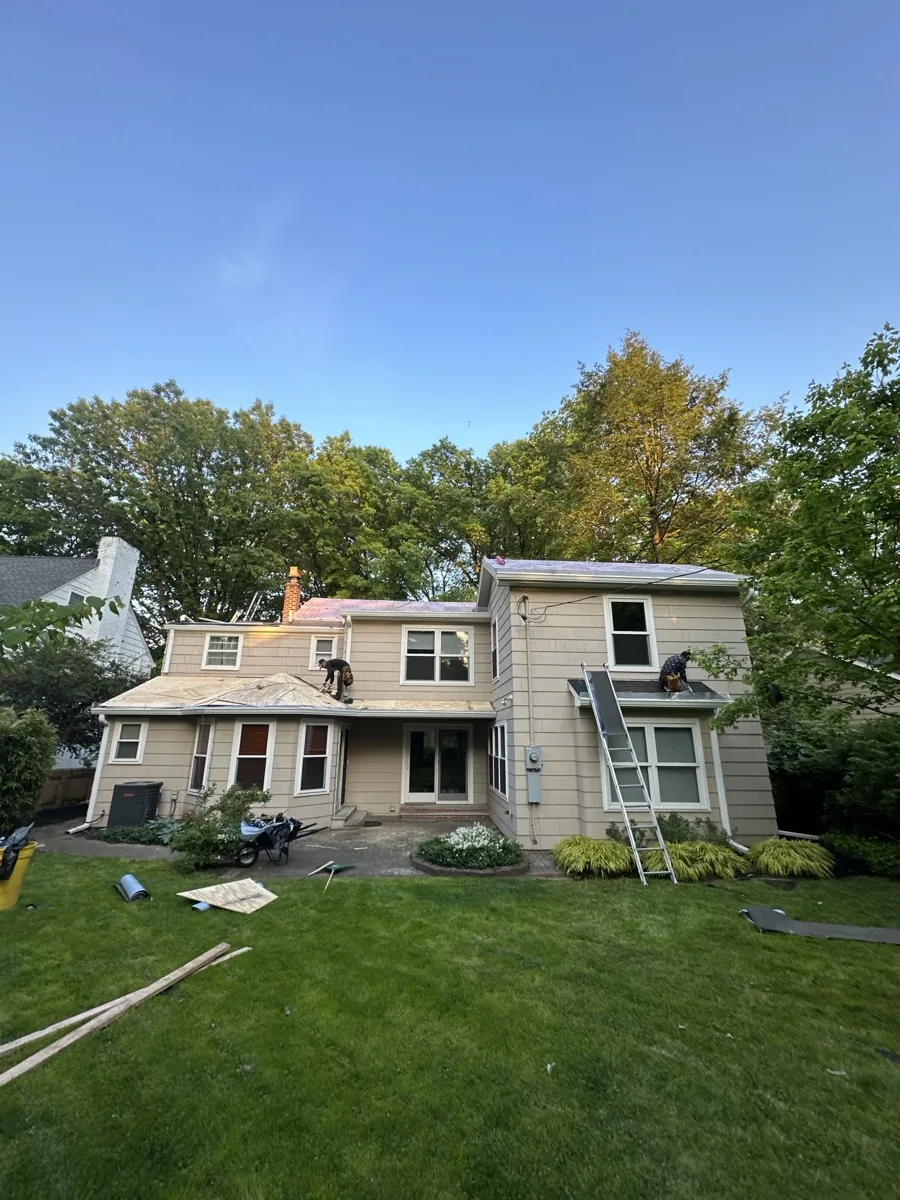
We at Four Seasons Roofing and Construction cover Phillipsburg, NJ, a town of dense rowhomes and semi-detached frame houses, for roofing, siding, and chimneys, one licensed company for the whole shell of the house. Estimates are free, written, and itemized.
- One licensed contractor for roofing, siding and chimneys
- Rated 5.0 on Google
- 0% financing available, plus a $500 senior & military discount
The Facts on Four Seasons Roofing and Construction in Phillipsburg
We at Four Seasons Roofing and Construction provide roofing in Phillipsburg, a town that faces Easton across the Delaware River by the Northampton Street Bridge. We are a home improvement contractor based at 38 Speer Ave in Clifton, New Jersey, and we have held New Jersey Home Improvement Contractor registration #13VH11720500 since 2021. We install GAF and Owens Corning roofing systems.
See every roofing service we offer · Request a free roof estimate
Keep reading: Who Signs Off on the Work in Phillipsburg
Ring (862) 318-3997 or leave your details in the form on this page, and we call you back about your Phillipsburg roof.
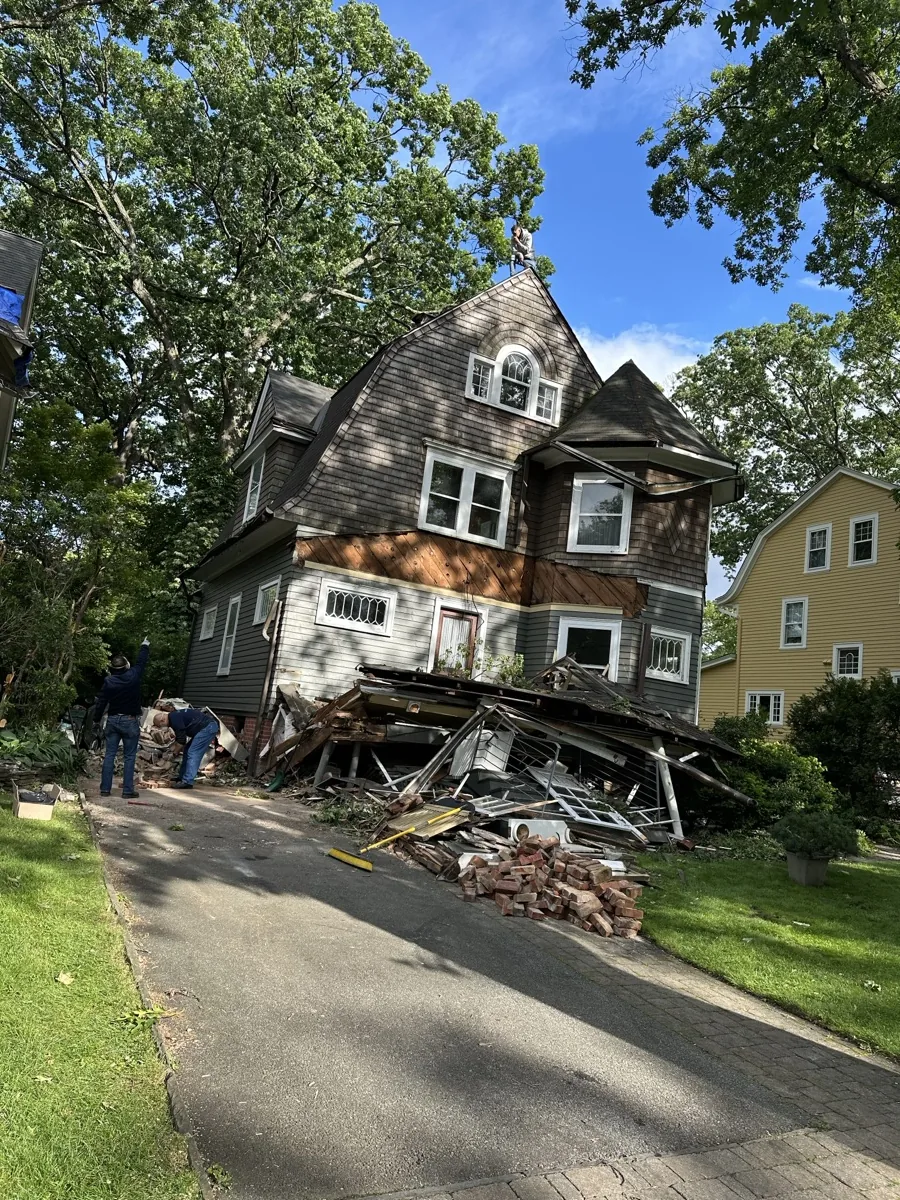
Phillipsburg is a Warren County river town with deep roots, so a roofing contractor in Phillipsburg NJ works on a lot of older houses. The town grew from an agricultural village in 1824 into a railroad and industrial hub by its 1861 incorporation, and the housing stock shows it.
Steep-pitched Victorian frame homes and turn-of-the-century rowhouses sit on tight urban lots near the Delaware River, with valleys, dormers, and complex framing. Our base sits in Clifton.
Free, Honest Inspection
Every job opens with a real look at the whole roof. Photos, a plain verdict, no charge to find out where your older Phillipsburg roof actually stands.
Based in Clifton
We serve Phillipsburg from our Clifton base. Call to discuss current availability.
Answered Around the Clock
Day, night, Sunday, holiday, we pick up when water is coming in.
Who Signs Off on the Work in Phillipsburg
Any permit a Phillipsburg job needs goes through the building department listed at phillipsburgnj.org/our-town/departments/inspections. The department's inspector signs off on the finished work. Ordinary repairs usually go ahead without one, and the Phillipsburg department can confirm the requirements for the proposed work before the job starts.
We are registered with the New Jersey Division of Consumer Affairs as a home improvement contractor, NJ HIC #13VH11720500. You can check that on the state licence verification portal before you hire us, or anyone else. We install GAF and Owens Corning roofing systems but are not enrolled in either manufacturer's contractor certification program.
Other Work We Do in Phillipsburg
Everything a Phillipsburg Roof Might Need
Plenty of Phillipsburg homeowners cannot yet say whether a patch will do or the whole roof needs replacing. The inspection answers that. Because we cover everything from a small fix to a full replacement, nobody gets handed between specialists.
Small jobs go through roof repair Phillipsburg NJ. A worn-out roof goes through roof replacement in Phillipsburg. Water arriving this evening makes it an Emergency Roof Repair, Phillipsburg NJ call, answered at any hour.
Keep reading: What an Older Phillipsburg Roof Tends to Show
What an Older Phillipsburg Roof Tends to Show
Steep pitches and deep valleys
Victorian-era framing on Phillipsburg houses sends water into long valleys, and those wear out sooner than the field around them.
Tight lots and adjacent walls
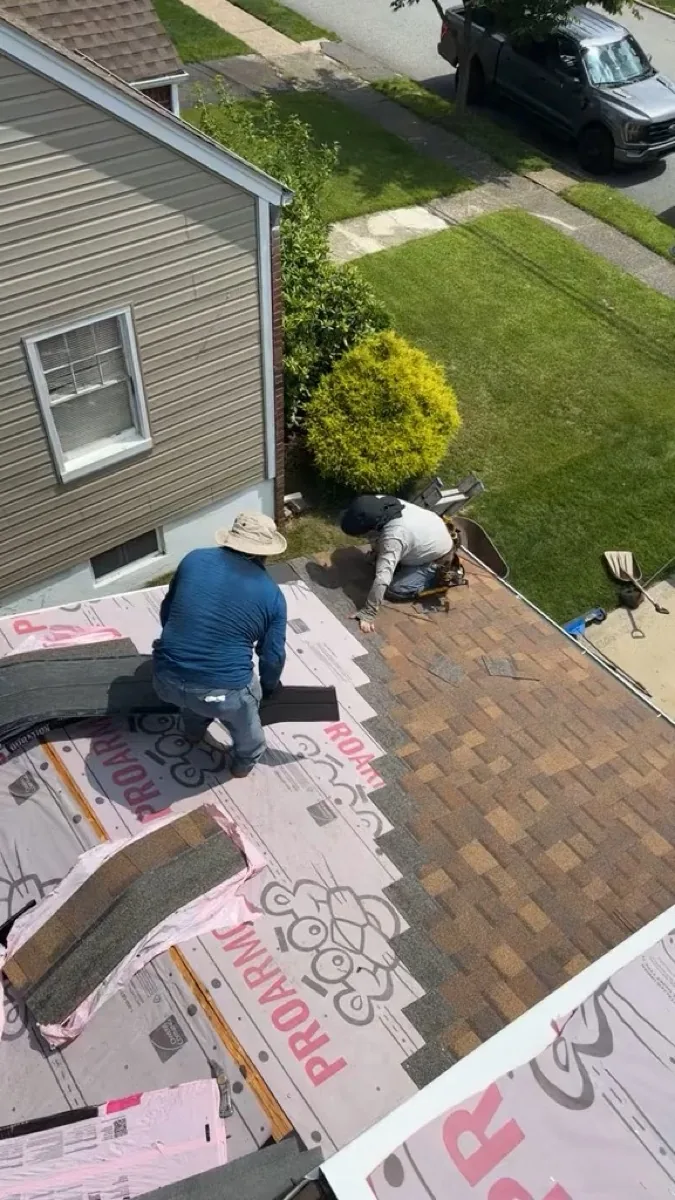
On Phillipsburg's dense rowhomes and semi-detached frame houses, shared and close-set walls make tear-off staging and step flashing where additions meet the original structure the real work. We plan the access before the tear-off starts.
Low-slope rear additions
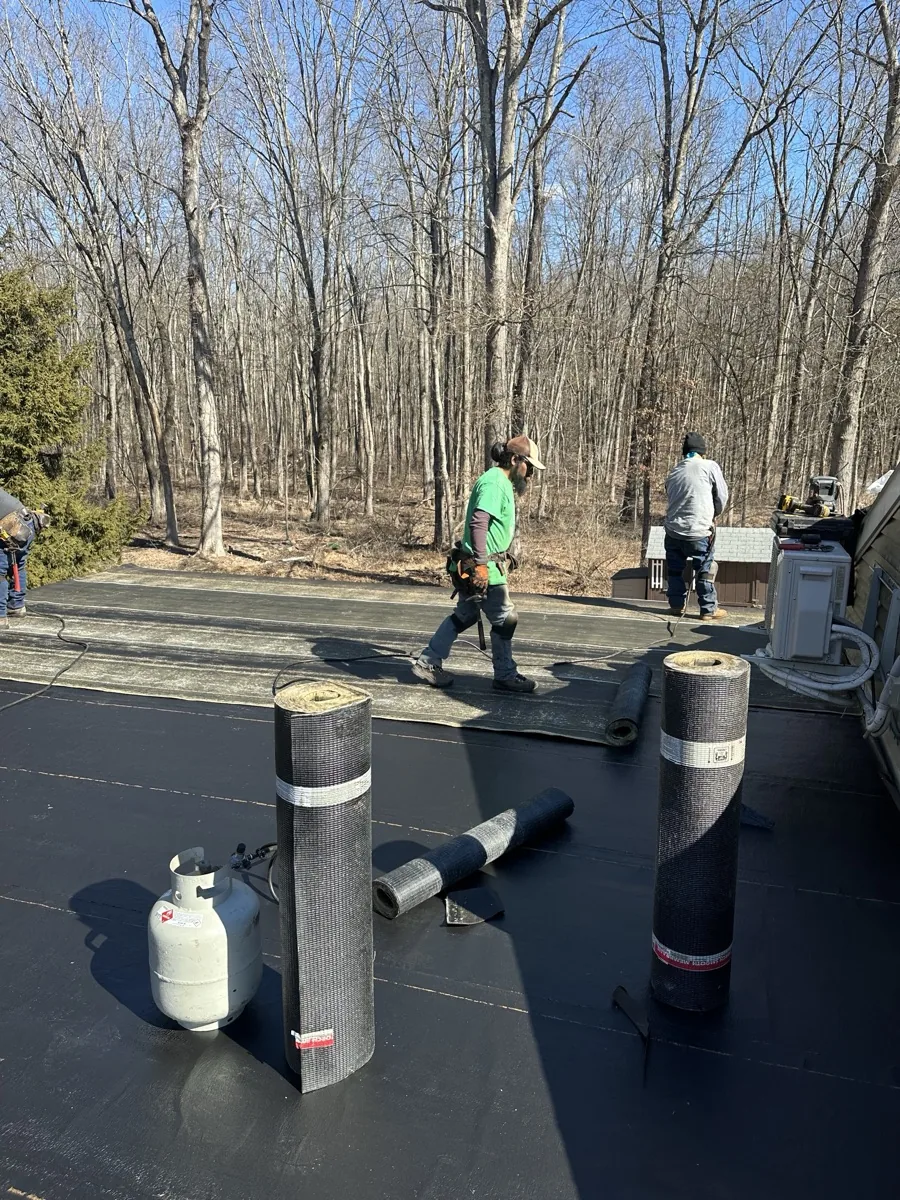
The back additions and porch roofs are low-slope, so water sits on them rather than running off. See Phillipsburg flat roof repair when a seam lets go.
Masonry chimneys
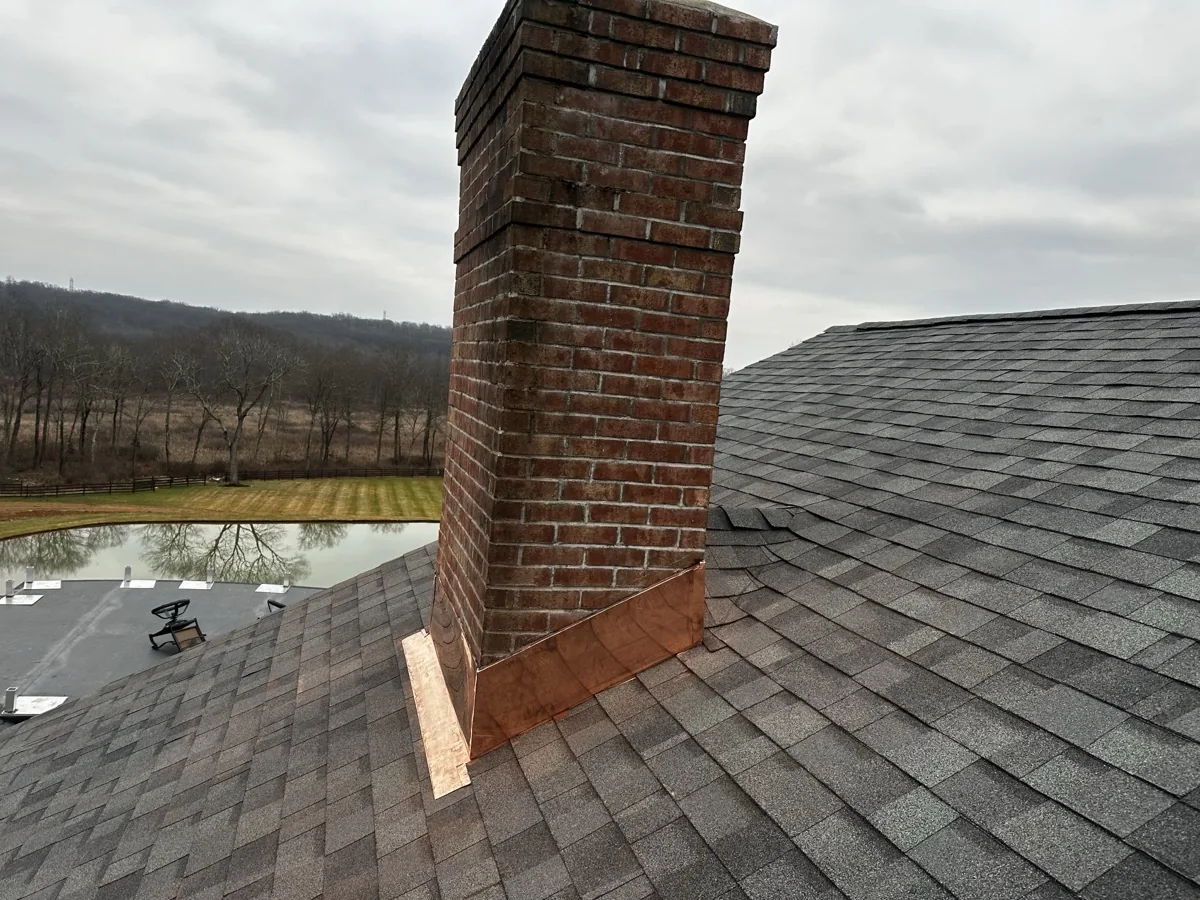
These older homes carry tall masonry chimneys, and the flashing around them is a frequent entry point. Chimney repair in Phillipsburg handles the flashing and the brick.
A Phillipsburg Roof Through the Year
On a Phillipsburg roof, what winter did becomes visible in spring: shingles that have lifted, flashing pulled open, and icy stains at the eave line left by January damming. Summer thunderstorms bring hard wind and snapped limbs, and autumn is the last chance to deal with postponed work before snow. Repairs continue through winter, using cold-weather technique wherever a sealant demands it.
What the Reviews Say Before You Hire in Phillipsburg
We hold a 5.0 Google rating, and the reviews all say roughly the same thing: showed up when promised, fixed what was quoted, treated an old house with respect and left it clean.
Maintenance checkups. A roof past its fifteenth year should get an annual look, and that goes double for the older Phillipsburg homes built during the town's rail and industrial boom, where small problems can go unnoticed for years.
Small repairs. We take them, such as sealing a single flashing when that is all the Phillipsburg roof needs.
Services in Phillipsburg
Everything below runs out of one Clifton base, so you never get bounced between specialists. Pick the work you need, or start with an inspection.
Pick the Help You Need in Phillipsburg
Patch versus replace gets sorted on the Phillipsburg roof repair page, a worn roof goes to Phillipsburg roof replacement, and a leak tonight calls for emergency roof help in Phillipsburg. Storm work is documented through Phillipsburg Storm Damage Roof Repair, and every town we cover is listed on our service areas page.
Choosing a Phillipsburg Roofer for an Older House
Some roofers-near-me listings are lead brokers that resell your number to whoever bids highest, roof unseen. We are licensed under NJ HIC #13VH11720500 and insured, and we work out of Clifton as one company. The company that takes your call is the one that inspects the roof and does the work.
Many Phillipsburg roofs combine steep Victorian pitches with tight-lot framing, so access and flashing details matter more there than on a tract house.
One Contractor for the Whole Phillipsburg Roof
In Phillipsburg a low-slope rear addition may back onto a steep front slope, all on a close-set lot.
We check the pitched field, low-slope sections, dormers, valleys and chimney together. The same company quotes the job and does the work.
Weather Along the Delaware Is Hard on an Old Phillipsburg Roof
Phillipsburg sits on the Delaware River at the New Jersey and Pennsylvania border, across from Easton by the Northampton Street Bridge. River-valley weather brings hard rain, wind, and winter snow, and nor'easters roll through from fall into spring. On steep older roofs the bigger problem is ice damming, where snow melts higher up, refreezes at the cold eave, and the backed-up water gets under the shingles and into the house.
Aging roof decks on these turn-of-the-century Phillipsburg homes give that water an easy path. A free look before the season turns lets you deal with a weak seam before it leaks. Storm damage gets documented for insurance through storm damage roof repair in Phillipsburg.
We cover the whole town, Andover Furnace, Delaware Park, Lopatcong Heights, Shirmers, and Warren Heights, along with the blocks near Union Square and Phillipsburg Union Station.
Leaks Rarely Start Where the Stain Shows
The stain on a Phillipsburg ceiling is almost never under the actual hole, because water runs along the rafters, soaks into the insulation, and shows up a room away from where it got in. On a tall Victorian-era home with a finished attic, that path can be long.
We check the deck, from inside where there is access, to find the real entry point. We fix that, then water-test before the ladder comes down. That is the work done in roof leak repair in Phillipsburg.
Insurance Claims Without the Runaround
Phillipsburg homeowners can claim for a good share of storm damage, and the paperwork decides how smoothly it goes. That means dated photos taken ahead of any tidying, a scope split into itemized entries the way adjusters prefer, and a roofer on the roof alongside your adjuster, marking the same flashing.
Every storm visit comes with all of this. A small amount of damage may not merit a claim, and in that case we tell you.
Straight Talk on Cost
No one quotes a Phillipsburg roof from the curb. Once the free inspection is done, an itemized written total follows.
Pitch, height, the number of dormers and valleys, whether the decking got wet, and the room the lot allows for staging all shape that total. Seniors and military members qualify for $500 off.
0% financing is available, which lets a worn roof be replaced without paying for it all in one go. Warranty terms are 2-year for repairs and 50-year for roof replacement.
Where We Roof
Our base sits at 38 Speer Ave in Clifton, and we cover the surrounding river-valley towns from there too. Every town we serve is listed on our service areas page.
Who Covers What on a Phillipsburg Job
| Part of the job | Backed by | For how long |
|---|---|---|
| Roof replacement | Four Seasons; review the written coverage | 50-year roof-replacement warranty |
| Roof repair | Four Seasons; review the written coverage | 2-year roof-repair warranty |
| Inspection and photo report | Four Seasons | Free, before any quote, no obligation |
| The estimate | Four Seasons | Written and itemized before work starts |
| Permit and inspection | Phillipsburg building department | Confirm in the written estimate who files it |
BusinessRate TOP 3 · 2026 A Top 3 roofing contractor in Clifton, NJ, based on verified Google reviews. Read about our awards →
What Phillipsburg Customers Say on Google
5.0 average rating
Selected Google reviews. Read all reviews on Google below.
“I would like to share my wonderful experience not once but twice. Both times we had an emergency leak in the house and Besi picked up the call right away, I sent him pictures and he came the next day in the morning to repair the roof! They were very punctual and got the job done in a timely manner.…”
“Excellent experience. Ben provided a written estimate and verbally explained what was needed and how they would make my roof repairs. He performed a full inspection to make sure there wasn’t more damage than it initially looked like. There wasn’t. Ben’s team did a fantastic job at a more than reasonable price.…”
“We just had a complete roof repair done for our home done by four season construction. Ben did an excellent Job from start to finish. Everyone is very nice they answer all our concerns and leave an excellent finished roof! Thank you we appreciate it.”
Get a Straight Answer on Your Phillipsburg Roof
Phone us at (862) 318-3997 or book a free inspection. The inspection is free.
Call (862) 318-3997 Get a Free Roof Estimate
Sort the work on the Phillipsburg roof leak repair page, or find every town we cover on our service areas page.
How a Phillipsburg Job Actually Runs
You reach out
Call (862) 318-3997 or send the form. We only need the address and what you are seeing.
Free inspection
Four Seasons comes out to look at the roof, and the inspection is free with no obligation to hire us.
We photograph what we find
You see photos of the problem, such as a cracked boot or a rusted valley.
Written itemized estimate
The material tier and the decking allowance are broken out as their own numbers, so you can change any of them before you sign.
The work
We install GAF and Owens Corning roofing systems. Bad boards get replaced as we find them and photographed one at a time.
After the job
Decking is billed against the allowance written into the contract. Our roof repairs carry a 2-year warranty, and roof replacements carry a 50-year warranty. Ask to review the written coverage.
Roofing Questions From Phillipsburg Customers
How much should a new roof cost in Phillipsburg, NJ?
A Phillipsburg roof is priced after the free inspection, because steep Victorian pitches, long valleys, and tight-lot access each change the work. You get photos and an itemized written figure. Seniors and military get a $500 discount, and 0% financing is available.
Do you handle residential roofing in Phillipsburg, NJ?
Yes, across all of Phillipsburg, from Andover Furnace and Delaware Park to Lopatcong Heights, Shirmers, and Warren Heights. The steep pitches, long valleys, tall masonry chimneys, and low-slope rear additions of the town's older homes are all part of that work, and one inspection covers the pitched and flat sections together.
Who is the best roofing contractor in Phillipsburg, NJ?
Rating ourselves would not mean much, so look at the public record: a 5.0 on Google with the reviews behind it, and NJ HIC #13VH11720500 on the state verification portal. After the free inspection in Phillipsburg you get an itemized written estimate that you can set beside any other quote.
Are you licensed and insured for roofing in Phillipsburg, NJ?
Yes, we are licensed and insured, registered with the New Jersey Division of Consumer Affairs as NJ HIC #13VH11720500. You can verify that on the state licence verification portal before we start on your Phillipsburg roof, and do the same for any other contractor you are considering.
More Phillipsburg Roofing Questions
Do I need a permit for roofing work in Phillipsburg?
In Phillipsburg it goes through the town's inspections department, whose inspector signs off on the finished work. Ordinary repairs usually go ahead without a permit.
Where We Work Around Phillipsburg
Our Google listing
Phillipsburg, NJ
Keep reading: where we work
Driving Directions to Four Seasons From Towns Around Phillipsburg
Choose a starting town below for driving directions to our base at 38 Speer Ave in Clifton.
From Lopatcong Township, NJ
Roads between Lopatcong Township and Phillipsburg: Memorial Parkway (NJ 57); Red School Lane.
Straight-line distance between map points: about 2.4 miles, not a drive time.
From Pohatcong Township, NJ
Roads between Pohatcong Township and Phillipsburg: South Main Street (NJ 122); CR 519.
Straight-line distance between map points: about 4.3 miles, not a drive time.
From Alpha, NJ
Roads between Alpha and Phillipsburg: South Main Street (NJ 122); 3rd Avenue (CR 519).
Straight-line distance between map points: about 2.6 miles, not a drive time.
Get a free roof estimate
We inspect first and photograph what we find, then give you an itemized number in writing. There is no obligation, and 0% financing is available.
- Free inspection before any quote
- Written estimate, itemized line by line
- 2-year roof-repair warranty
Rather talk it through? (862) 318-3997