
Roof Repair Guide
Roof Flashing Repair in Paramus, NJ: Where Split Levels and Additions Leak
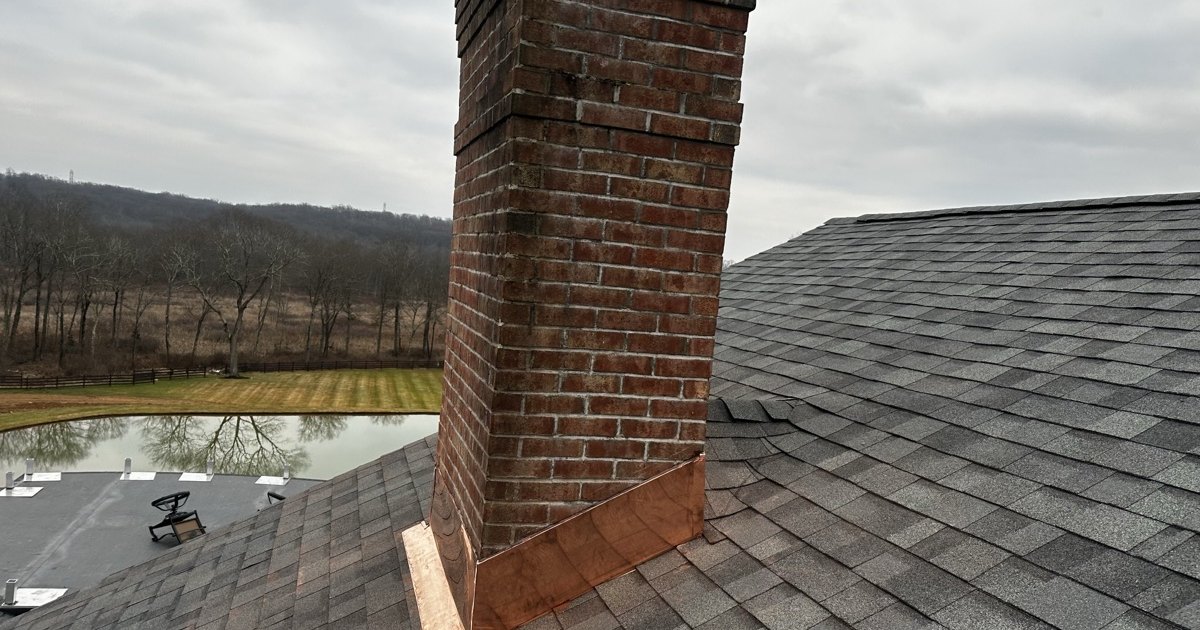
When a roof in Paramus, NJ leaks next to a wall, at a step in the roofline or around a pipe, the flashing is usually the first thing to check. Flashing is the metal or rubber that seals the joints where the roof meets something else. Roof flashing repair normally means replacing that piece and re-weaving the shingles around it.
Paramus is a borough in the central part of Bergen County, and most of its homes sit on residential streets between Routes 4 and 17: ranches and split levels from the postwar years, many of them expanded since. Those expansions are where flashing does the most work. This guide covers where Paramus roofs usually leak at the flashing, what you can check from the ground, and what a proper roof repair at those joints involves.
What flashing does
Shingles shed water down the slope. They cannot seal a joint where the roof meets a vertical surface or where something pokes through. Flashing covers those joints. The common types are:
- Step flashing, the small bent pieces of metal woven in with each course of shingles where a roof slope runs up beside a wall.
- Counterflashing, which covers the top of the step flashing, set into brick or tucked behind siding so water cannot run behind it.
- Pipe boots around the plumbing vents.
- Valley and edge metal, where two slopes meet and along the eaves and rakes.
- Kickout flashing, a small angled piece at the bottom of a roof-to-wall joint that turns the water into the gutter instead of down the wall. It is easy to leave out and often missing on older additions.
- Chimney flashing, which is really a mix of all of the above wrapped around the chimney base (the copper in the photo above).
Flashing usually fails before the shingles do. Rubber pipe boots crack in the sun, sealant at the top of counterflashing dries out, and pieces that were face-nailed or skipped during an earlier repair let water in.
Where Paramus roofs leak at the flashing
The house styles common in Paramus put flashing in a few predictable places.
- Split-level step-downs. Where the upper roof of a split level meets the wall of the lower section, the step flashing takes the runoff from the whole upper slope. A stain on the ceiling or wall right below that joint is one of the most common leak calls on split levels.
- Additions and breezeways. Family-room additions, garage conversions and enclosed breezeways leave a seam where new framing meets the original house. If that seam was flashed with a bead of caulk instead of step flashing and counterflashing, it will leak sooner or later.
- Roof-to-wall joints behind siding. When siding was replaced and the old flashing was cut back or left out, water can get behind the siding where the roof meets the wall, and it may show up inside far from the joint.
- Pipe boots and attic fans. Wide ranch roofs often carry several vent pipes and a powered attic fan. A cracked boot or a loose fan curb lets water in during every heavy rain.
- Chimneys, covered on our chimney flashing page.
Signs the flashing is the problem
Stay off the roof. You can see most of this from the yard, an upstairs window or a zoomed phone photo:
- A stain on a ceiling or wall right below a roof-to-wall joint, a split-level step or an addition
- Metal at a wall joint that is bent, loose or missing in sections
- Thick, cracked sealant along the top of the flashing, a sign of earlier patching
- Pipe boots that look split, faded or pulled away from the pipe
- Peeling paint or soft trim on the wall just above where the roof meets it
Leaks from flashing often come and go. They may appear only in wind-driven rain from one direction, or only after snow melts against a wall. Write down the date and the weather each time a stain grows. That record helps the roofer find the source.
What a proper flashing repair includes
Roof cement smeared over the joint is the most common quick fix, often in more than one layer by the time anyone calls a roofer. It buys a season at best. The repair we do:
- Lift the shingles around the joint, pull the old flashing and look at the deck and wall sheathing underneath. Soft wood gets replaced.
- New step flashing, one piece per course, woven in with the shingles.
- Counterflashing over the top edge, set into the brick or tucked behind the siding, and a kickout at the bottom if the joint never had one.
- Cracked pipe boots replaced.
- Matching shingles laid back, and a look at the rest of that slope while the ladder is up.
Where siding has to come off to reach the flashing behind it, the siding goes back on once the joint is sealed. We also do siding work in Paramus, so the roof and the wall are handled by the same crew.
On our roof repair in Paramus visits we photograph the joint before we open it and after it is closed, give you a written, itemized estimate, and back the repair with our 2-year roof repair warranty. We install GAF and Owens Corning roofing systems.
What to tell the roofer when you call
A few details save time on the first visit. Say which room the stain is in and which wall it sits against, and whether the house is a split level, a ranch or has an addition. Mention any work done on that part of the house in the last few years, like new siding, a new roof on the addition or a bathroom fan vented through the roof, since new work next to old is where joints get missed. If you have photos of the stain from different dates, send them. And if the leak only shows up in one kind of weather, a wind-driven rain from the west for example, that narrows the search to one side of the house.
Why fix it before winter
Paramus has regular snow and many nights at or below freezing, according to NOAA's 1991 to 2020 climate normals. Snow piles up against walls and in the step between split-level roofs, then melts slowly against the joint. Flashing that leaks a little in a fall rain can leak a lot during a thaw. Fixing it in mild weather also lets the shingles around the repair seal down properly.
When flashing points to a bigger job
A flashing repair is a good spend when the shingles around it are still sound. If the shingles crack when they are lifted, or the same slope has leaked in several places, the roof may be near the end of its life. Our guide on whether to repair or replace your roof walks through that choice, and our roof replacement in Paramus page covers a full replacement.
Get the flashing checked in Paramus
Four Seasons Roofing and Construction repairs roofs across Paramus from our base at 38 Speer Ave in Clifton. The inspection is free, and you get photos and a written estimate before any work starts. See everything we do in the borough on our Paramus roofing page, or call (862) 318-3997 to have the flashing on your roof looked at before winter.