
Four Seasons Roofing and Construction · Homeowner guide · Based in Clifton, Passaic County
Black streaks on your roof: what they are and what to do
Published
Black or dark brown streaks running down an asphalt shingle roof are usually algae. The Asphalt Roofing Manufacturers Association says there is no scientific evidence that algae damages asphalt shingles, although it does change how the roof looks.
Moss is a different matter because it can lift shingle edges. A pressure washer should not be used on either.
ARMA's technical bulletin on roof discoloration lists the Eastern Seaboard among the areas where algae staining is most widespread, which takes in North Jersey. We at Four Seasons Roofing and Construction repair and replace roofs across that part of the state, and what follows sticks to what the shingle industry itself publishes about the streaks.
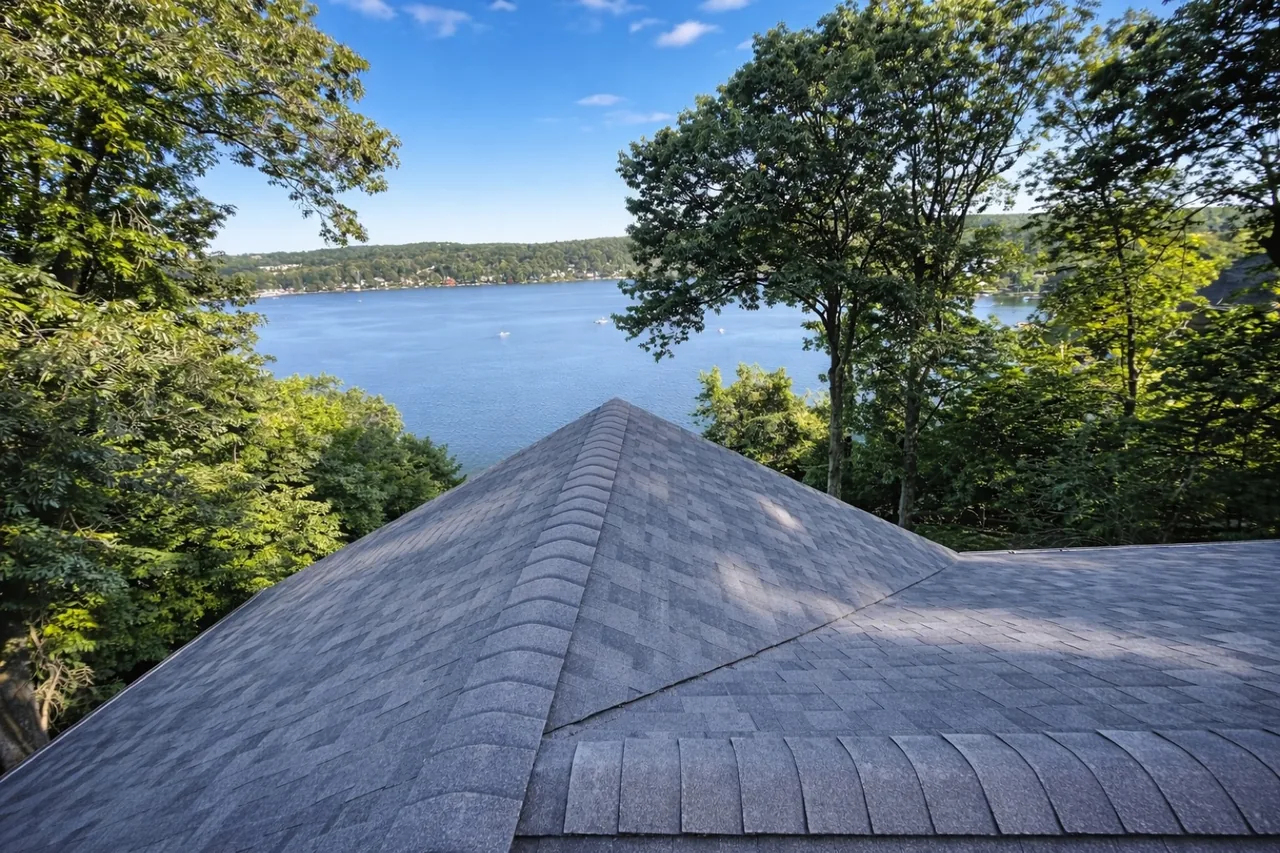
What causes black streaks on a roof?
In most cases the cause is airborne algae. ARMA's bulletin names Gloeocapsa magma as probably the most prevalent of several species involved. The algae travel through the air, settle on roofs and other outdoor surfaces, and the natural pigments they produce can gradually turn a white or light colored roof dark brown or black, either uniformly or in streaks.
According to the same bulletin, algae grows to some degree in every region of the U.S., especially where conditions are warm and humid, and almost every type of roofing is susceptible. It shows most on light colored roofs and far less on darker shades.
Record the pattern before arranging work
A useful first photograph shows the whole slope, with a second image of the area you are asking about, both taken from a safe ground position and described as gradual or tied to a particular event.
Include earlier photographs of the same roof in similar light, since a wet roof can look different from a dry one and a darker look after a New Jersey rain does not show that a stain spread overnight.
Tell the inspector whether you also noticed a leak, loose material or a recent branch impact, because a question about appearance and a report of water entering the house need different attention.
If a cleaning company and a roofer give different descriptions, ask each to identify the finding behind its recommendation and which condition cleaning would address and which would remain afterward.
Is it algae, moss or something else?
ARMA lists what algae gets mistaken for: fungus growth, soot, dirt, moss and tree droppings. It points to how far the marks spread, since moss and tree droppings usually leave localized spots, while algae covers a slope evenly or runs down it in streaks.
Moss deserves more attention, since in ARMA's guide to algae and moss on asphalt roofs it can make the leading edges of shingles lift or curl, which increases the risk of shingles blowing off in wind. The same guide says moss loosens over time and may be removed with a leaf blower, and a severe case can take more than one bleach treatment to kill.
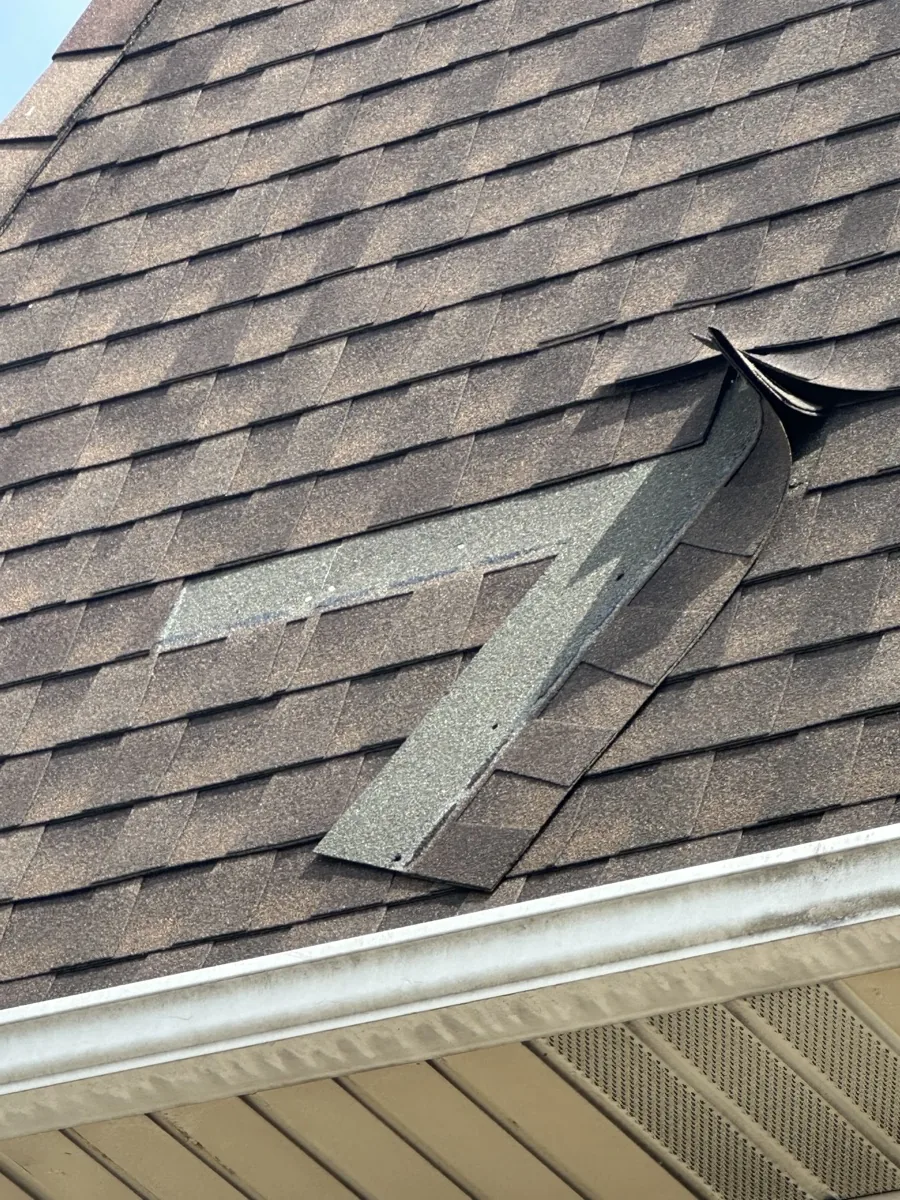
Dark areas that are patchy rather than streaked can also be spots where shingles have worn and shed their granules, which usually comes with other signs like granules collecting at the bottom of the downspouts, as our fall roof checklist for New Jersey homeowners covers.
Do not use a dark photograph as a replacement diagnosis
Ask the inspector to distinguish surface discoloration from missing granules, lifted edges or a damaged connection, and to say so in the report if distance or access prevents a precise answer from the color alone.
Record each finding separately: a proposal might identify cosmetic streaking on the front slope and an opening near a vent at the rear, and the repair scope should name that opening rather than charge to treat every visible dark area.
Should you clean algae off the roof?
For algae alone it's mostly a looks decision, given ARMA's finding that it does not damage the shingles. The bulletin also says cleaning only works for a while, and the discoloration may come back.
If you do want it cleaned, ARMA's method is a 50:50 mix of laundry strength liquid chlorine bleach and water, applied with a sprayer, left on the roof for 15 to 20 minutes, then rinsed off thoroughly with low pressure water. It calls for eye protection and rubber gloves and care not to damage the rest of the building or the landscaping around it, and it warns the roof will be slippery and potentially hazardous. ARMA recommends that only trained professionals do this kind of work.
A pressure washer should not be used: ARMA says it causes granule loss and very likely premature failure of the roof system, and the bulletin rules out brushes, brooms and scrubbing as well. Mixing directions can vary between shingle manufacturers, and ARMA says other cleaning chemicals or methods shouldn't be used without the shingle manufacturer's approval.
What to settle before a professional cleaning visit
Identify the installed shingle where possible and obtain its current cleaning instructions, and give the contractor any product paperwork you have, including information about coatings or earlier treatments that may affect the proposed method.
The written scope should name the areas being treated and describe protection for adjacent surfaces and landscaping, which ARMA's method also calls for, and the contractor should say how runoff, access to the house and damage found before treatment begins will be handled.
Clarify the result being offered: removing biological discoloration is different from restoring lost granules, repairing a lifted shingle or making an old roof look new, and a cleaning quote should not blur those outcomes.
Ask whether the price includes a later inspection or return visit and what would justify additional work, and keep before-and-after photographs taken from comparable positions as a reference if the result is discussed.
Plan for runoff at a Clifton property
Clifton's stormwater guidance explains that material left on the ground or put into a storm drain can reach local water. Before roof washing, ask the contractor how the proposed cleaning and rinsing process will protect nearby drains as well as the planting beds.
Describe where the downspouts discharge and identify any drain beside the driveway or work area, and consult the city's stormwater contact if the disposal route is uncertain, since rinsing a roof does not make every discharge method appropriate.
Why one cleaning recipe is not a rule for every shingle
GAF's R-102 algae bulletin provides its own cleaning formulation and warns against power washing. Its formulation differs from the general ARMA example above, which is a practical reason to identify the installed product before approving treatment.
Do not combine instructions from different guides or assume that a stronger mixture works better. Ask the professional to identify the applicable manufacturer document and explain how the proposed method follows it.
The same GAF bulletin distinguishes algae-protection provisions by qualifying product and packaging. That supports checking the precise shingle line rather than assuming a manufacturer name means every product carries identical stain coverage.
When the roof has more than one covering
An asphalt main roof and a low-slope porch can require different care, so before a wash is quoted for the whole building, identify every surface the cleaning solution or rinse water would cross.
Ask whether the contractor's approval covers each material, including a roof coating or membrane below a shingle slope, since instructions for asphalt shingles, such as the ARMA and GAF documents above, should not be treated as instructions for a different roof covering merely because both areas appear stained.
Mark those boundaries on the work description, and identify gutters, metal details and adjacent wall finishes that need protection during the treatment.
If a previous coating or treatment is unknown, raise that before work begins, because a dark surface alone does not identify what has already been applied and the contractor may need further product information to choose a method.
Can you keep the streaks from coming back?
Be cautious about add-on stain treatments that alter the existing roof. ARMA does not recommend adding zinc or copper strips because their attachment can introduce leak or wind-damage risks.
Keep routine maintenance separate from a claim that an added strip will permanently prevent discoloration, and before agreeing to any modification obtain the installed shingle manufacturer's guidance and ask how the roof's existing seals and fasteners would be affected.
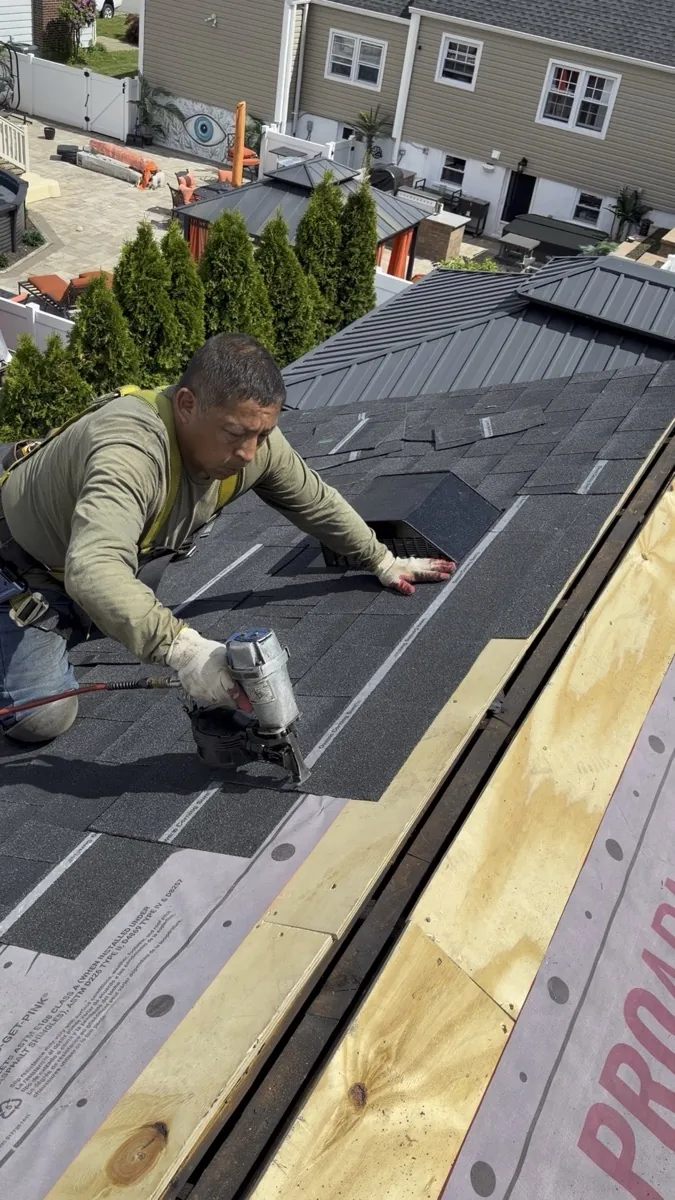
A reroof is the point where you can choose an algae resistant shingle. If streaking has been a problem on your house, ask whether the shingle in your roof replacement estimate is an algae resistant line, since ARMA says several types are commercially available, and read what that manufacturer's documents say about it.
Color matters too, because the staining is most visible on light roofs and a darker shingle makes it less visible, though a lighter roof can still be right for other reasons. Our roof replacement page puts the trade off in one line: "Dark roofs hide algae streaking longer but show patch repairs more."
Read algae coverage separately from roof coverage
If an algae-resistant product is proposed, ask for the exact product name and the applicable written algae provisions, because the period, remedy and conditions in that document matter more than a general promise that the roof will stay clean.
Check whether the paperwork addresses discoloration, a product defect or another type of problem, and keep the product literature and proof of installation together so you know which document to consult if streaks return.
A company warranty and a shingle maker's algae provisions, such as GAF's, may address different issues, so ask who receives a complaint and what information they need instead of assuming that every form of staining is covered by the roofing estimate.
Product names and coverage can change, so save the version supplied with the installation and ask the manufacturer how to confirm the terms for that particular roof rather than relying on a current advertisement for a different line.
When should a roofer look at it?
Streaking by itself does not establish an urgent roofing defect, but water entering the house, missing material or lifted shingle edges warrants a separate assessment.
A localized defect may suit roof repair, depending on the surrounding condition and whether compatible work can be completed, and age and heavy staining alone do not establish that the roof needs replacement.
If you cannot tell streaks from wear, book a roof inspection with Four Seasons and ask for photos of what the inspector finds.
Use the findings to choose the next step
If the assessment identifies only discoloration, you can compare leaving the appearance alone with an approved professional cleaning method, and ask for the limits of either choice without turning a cosmetic preference into a structural diagnosis.
If a defect is found, the estimate should connect the proposed work to its location, and you can ask what remains outside that repair and whether the stain treatment can wait until the condition of the roof has been addressed.
Where replacement is recommended, ask why a local repair is unsuitable, and keep that explanation separate from the choice of color or an algae-resistant shingle line, which ARMA says comes in several types.
After any work, retain photographs, invoices and the scope you approved, since those records help a later contractor tell new changes from marks that were already present.