
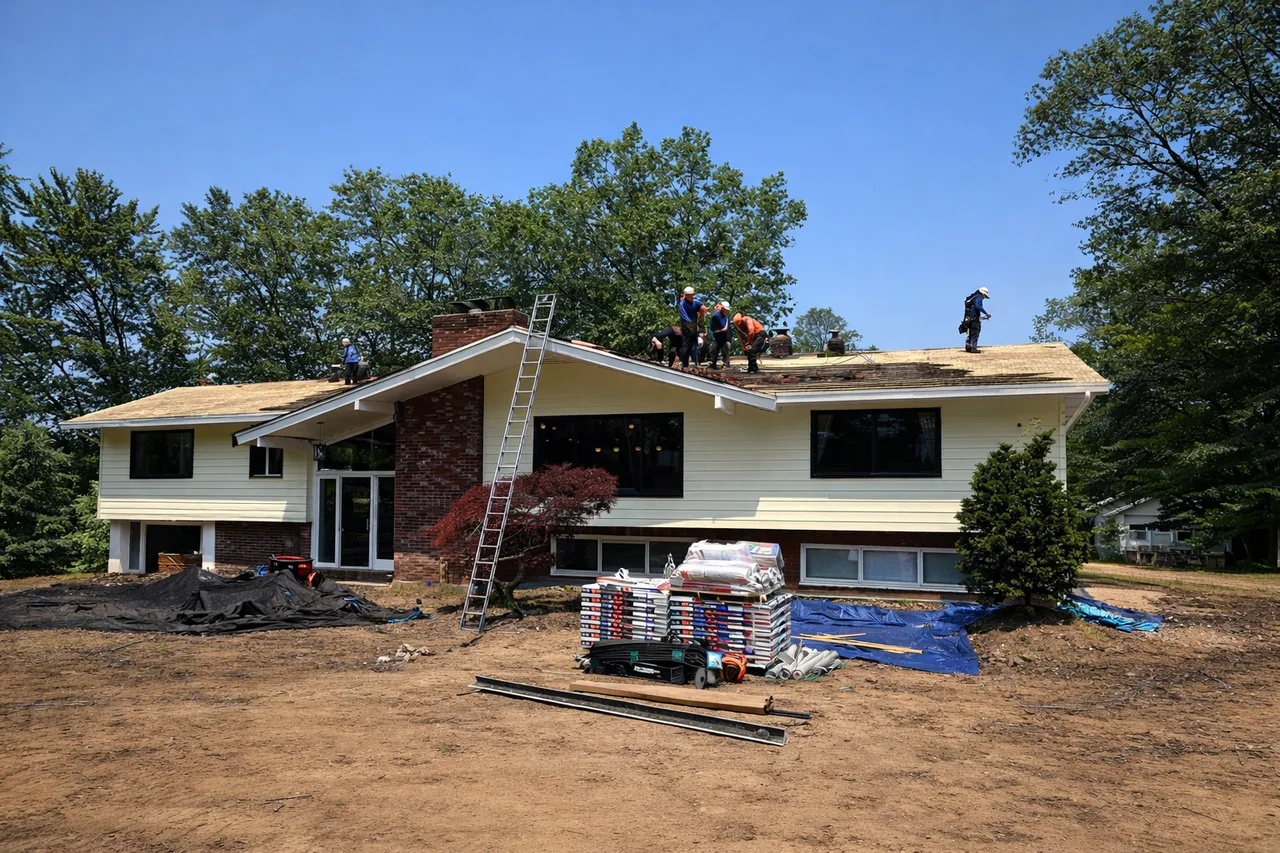
Your roof is the first line of defense for your property. A strong, well-maintained roof shields your home or commercial building from harsh weather, prevents costly damage, and adds value to your property. But how do you ensure your roof stands the test of time? The answer lies in choosing durable roofing solutions and taking proactive steps to future-proof your roof for long-term durability.
In this post, I’ll walk you through practical tips and expert advice to help you protect your investment. Whether you’re dealing with an aging roof or planning a new installation, these insights will guide you to make smart, lasting choices.
Why Durable Roofing Solutions Matter
Durable roofing solutions are essential because they do more than protect you today. They reduce maintenance costs and extend the lifespan of your roof. In New Jersey, where weather swings from heavy snowfalls to intense summer storms, your roof needs to be resilient.
Here’s why durable roofing solutions are a smart investment:
- Weather Resistance: Materials designed to withstand wind, rain, snow, and UV rays.
- Energy Efficiency: Some durable roofs reflect heat, helping reduce cooling costs.
- Low Maintenance: Long-lasting materials require fewer repairs and less upkeep.
- Increased Property Value: A strong roof adds to your property’s market appeal.
For example, metal roofing and high-quality asphalt shingles are popular durable options. Metal roofs can last 40-70 years, resist fire, and handle extreme weather. Meanwhile, architectural asphalt shingles offer a balance of durability and affordability, lasting up to 30 years with proper care.
Choosing the Right Materials for Long-Term Durability
Selecting the right roofing material is the foundation of future-proofing your roof. Each material has its pros and cons, so it’s important to consider your property’s specific needs, budget, and local climate.
Here are some durable roofing materials to consider:
- Metal Roofing
- Lifespan: 40-70 years
- Pros: Lightweight, fire-resistant, recyclable, energy-efficient
- Cons: Higher upfront cost, can be noisy during rain
- Asphalt Shingles (Architectural)
- Lifespan: 20-30 years
- Pros: Affordable, easy to install, good variety of styles
- Cons: Shorter lifespan than metal, can be damaged by extreme weather
- Slate Tiles
- Lifespan: 75-100 years
- Pros: Extremely durable, fireproof, elegant appearance
- Cons: Heavy, expensive, requires professional installation
- Clay or Concrete Tiles
- Lifespan: 50+ years
- Pros: Durable, fire-resistant, energy-efficient
- Cons: Heavy, may require roof reinforcement
- Liquid Rubber Coatings
- Lifespan: Varies (see next section)
- Pros: Waterproof, flexible, seals leaks, easy to apply
- Cons: Needs reapplication over time
Choosing the right material depends on your priorities. For example, if you want a low-maintenance, long-lasting roof, metal or slate might be best. If budget is a concern, architectural shingles offer a good balance.
How Long Does Liquid Rubber Last on a Roof?
Liquid rubber is a popular choice for sealing and protecting roofs, especially flat or low-slope roofs. It creates a continuous, waterproof membrane that can extend the life of your existing roof.
So, how long does liquid rubber last on a roof? Typically, liquid rubber coatings last between 10 to 20 years, depending on factors like:
- Quality of the product: Higher-grade liquid rubber tends to last longer.
- Application method: Proper surface preparation and professional application improve durability.
- Exposure to elements: Harsh UV rays, temperature fluctuations, and heavy rain can affect lifespan.
- Roof condition: Applying liquid rubber on a well-maintained roof yields better results.
Regular inspections and maintenance can help you get the most out of your liquid rubber coating. When applied correctly, it’s an excellent way to future-proof your roof by preventing leaks and reducing wear.
Maintenance Tips to Extend Your Roof’s Life
Even the most durable roofing solutions need care to last. Regular maintenance is key to spotting problems early and avoiding costly repairs.
Here are some practical maintenance tips:
- Inspect your roof twice a year: Look for damaged shingles, cracks, or signs of wear.
- Clean gutters and downspouts: Blockages can cause water to back up and damage your roof.
- Trim overhanging branches: Prevent damage from falling limbs and reduce debris buildup.
- Check flashing and seals: Ensure joints around chimneys, vents, and skylights are watertight.
- Remove moss and algae: These can trap moisture and degrade roofing materials.
- Schedule professional inspections: Experts can identify hidden issues and recommend repairs.
By staying on top of maintenance, you can catch small issues before they become big problems. This proactive approach is a crucial part of how I future proof my roof.
Upgrading Your Roof for Energy Efficiency and Sustainability
Future-proofing your roof covers more than durability. Smart material choices also save energy and reduce environmental impact.
Consider these upgrades:
- Cool Roof Coatings: Reflect sunlight to keep your building cooler and reduce air conditioning costs.
- Solar Panels: Generate clean energy and potentially lower your electricity bills.
- Green Roofs: Plant-covered roofs improve insulation and manage stormwater.
- Energy-Efficient Insulation: Proper insulation reduces heat loss in winter and heat gain in summer.
These upgrades protect your roof and contribute to long-term savings. They’re especially valuable in New Jersey’s climate, where seasonal temperature swings can be significant.
Planning for the Future with Professional Roofing Services
Finally, working with experienced roofing professionals is essential to future-proof your roof. Skilled contractors can help you:
- Choose the best materials for your property and budget.
- Ensure proper installation and compliance with local building codes.
- Provide expert maintenance and timely repairs.
- Offer warranties and guarantees.
If you want to future proof my roof, I recommend consulting trusted local experts who understand New Jersey’s unique weather challenges and roofing requirements.
Investing in durable roofing solutions and regular upkeep will protect your property for years to come. Your roof is a critical asset. Treat it with care and it will serve you well.
By following these tips and choosing the right materials, you can enjoy a strong, reliable roof that stands up to the elements and keeps your property safe. Future-proofing your roof is an investment in your property’s value. Take action today to secure a durable roof for tomorrow.
Durability Is Built, Not Bought
It is tempting to think a durable roof is simply a matter of choosing the toughest material, but the longest lived roofs are the ones assembled correctly and maintained on schedule, whatever the covering. A premium shingle over a rotted deck and starved ventilation will not reach its rated life, while a mid range roof done right routinely does. The way to learn which kind you have is a professional roof inspection that reads the whole system.
The three fundamentals decide the outcome before the material does. Ventilation keeps the deck dry and prevents the ice dams that form at Clifton eaves in winter. Flashing at chimneys, valleys, and skylights carries the water the field cannot, and it is where most leaks begin. Drainage, meaning clean gutters and a clear path off the roof, keeps meltwater from backing up under the edge. Get those right and durability follows.
Clifton makes the case on its own. The city collects 40 to 50 inches of snow most winters, cycles through freeze and thaw off Garrett Mountain, and swings to hot, stormy summers. A roof here is tested across a wide range, and the assemblies that survive it are the ones where the boring details were done well, not the ones with the flashiest brochure.
Matching the Material to Your Home and Your Timeline
The most durable material is not automatically the right one, because durability you cannot afford or will not own long enough to recover is wasted money. Architectural asphalt gives most homes a strong balance of lifespan and cost. Metal offers a longer service life for owners who plan to stay and want to install once. Premium stone and synthetic products suit specific homes and long horizons. The best answer depends on your house and how long you will keep it.
Whatever the material, the New Jersey cost fundamentals hold, and they are worth knowing before you shop. Labor runs $55 to $95 per hour here and makes up roughly 60 percent of a typical invoice, and rotted decking found at tear off adds $2 to $5 per square foot with plywood at $100 to $135 per sheet. Our NJ roof repair cost guide lays out the task by task ranges so you can tell a fair durable roofing quote from an inflated one.
Pitch and structure round out the picture. Steep roofs, common on the older colonials in the north end of town, add 20 to 50 percent in labor, and heavier materials sometimes need framing reinforcement that belongs in the budget from the start. A contractor who surfaces these factors up front is planning a roof that lasts. One who buries them delivers a surprise on the final invoice.
Protecting Durability After the Roof Is On
A durable roof still needs a maintenance habit to reach its potential, because even the best assembly loses years to neglect. Clearing gutters, keeping branches off the shingles, and looking things over each spring and fall catches small problems while they are cheap. A periodic Clifton roof inspection is the professional version of that habit, reading the flashing and attic that a ground level glance cannot.
The economics favor early action every time. Most New Jersey roof repairs land between $400 and $2,000, and a minor fix runs $150 to $600, while the water damage from postponing that same repair climbs into the thousands and can shorten the whole roof life. Durability is partly a material property and partly a set of habits, and the habits are the cheaper half.
Choose the right people and the durability holds. New Jersey requires a written contract for work over $500, and you can verify any contractor 13VH license at the state Division of Consumer Affairs. Our verified Clifton roofing contractors page details the full vetting, because the crew that installs and services the roof matters as much to its lifespan as the shingles they nail down.
Warranties, Paperwork, and What They Really Cover
Durability promises live in two separate documents that homeowners often blur into one. The manufacturer warranty covers the material and its defects, while the contractor workmanship warranty covers the installation. Most roof problems come from installation and flashing rather than from a defective shingle, so a long material warranty paired with a thin workmanship warranty leaves the likeliest failures uncovered. Read both, and weigh the workmanship term heavily.
The fine print decides whether a warranty is worth anything. Material coverage frequently depends on correct installation and adequate ventilation, which means a poorly installed roof can carry a generous looking warranty that pays nothing when it fails. That is one more reason the crew matters as much as the covering, and why an unventilated attic can quietly void the very protection you paid a premium for.
Get it all on paper. New Jersey requires a written contract for home improvement work over $500, and the durable version of that contract names the material, references the manufacturer warranty, states the workmanship coverage separately, and lists the work as line items you can check against our NJ roof repair cost guide. A durability promise you cannot produce in writing is not a promise you can hold anyone to.
Long-Term Durability Questions Homeowners Ask
Does the most expensive material guarantee the longest life?
No. Installation quality, ventilation, and maintenance decide realized lifespan more than the price of the covering. A premium material installed over a poor deck or starved of airflow will fail early, while a well installed mid range roof reaches its full rated life. Buy good installation before you buy an exotic material.
How do I actually make my roof last longer?
Keep it ventilated, keep the flashing sound, keep the gutters clear, and handle small roof repair items the moment they appear. Add a professional look twice a year and after big storms. Those habits routinely add years to a roof for a tiny fraction of what an early replacement costs.
Which material is most durable for a New Jersey home?
Metal and quality stone or synthetic products lead on raw lifespan, while architectural asphalt gives the best balance of durability and cost for most homes. The right choice depends on your structure, your budget, and how long you will own the home, which is why an assessment should come before the material debate.
Is a durable roof worth the higher upfront cost?
Often, if you will own the home long enough to amortize it across the extra years of life. The way to check is to compare written quotes against the ranges in our NJ roof repair cost guide and divide by expected lifespan. A longer lasting roof can cost less per year even when it costs more at purchase.
What is the first step toward a long-lasting roof?
Find out what you are starting from. A roof inspection tells you whether your current roof can be maintained toward its full life or is near the end, and that single fact shapes every durability decision that follows.