
Chimney Repair Little Falls NJ
Clifton-based, NJ HIC #13VH11720500. 2-year workmanship warranty.
- 5.0 rating on Google
- NJ HIC #13VH11720500
- Free, no-obligation estimates
BusinessRate TOP 3 · 2026 A Top 3 roofing contractor in Clifton, NJ, based on verified Google reviews. See our awards →
Four Seasons Roofing and Construction repairs chimneys in Little Falls, NJ, from flashing to crowns to repointing. Roof and chimney are handled by one licensed crew, so the real source of a leak gets fixed in the same visit. Inspections are free.
- One crew for flashing, brick, and roof, so no finger-pointing between trades
- Free inspection first, with photos of what we find
- Licensed and insured, NJ HIC #13VH11720500
What Homeowners Say on Google
5.0 average rating
“Great people to deal with throughout the process of repairing my roof. Took great care of getting rid of any nails on my lawn afterwards.”
“I setup a work order for our roof yesterday and needed someone to come out and fix it. Florian came out to fix our roof, he was very professional and got the work done properly and quickly. 10/10 recommended!”
“Four Seasons Construction just cured my 6 year roof headache. After moving into a house with a roof that was replaced the year before, I was constantly dealing with leaks and shoddy workmanship that the other company would take months to resolve. Four Seasons came to look at the roof, found all the problems, and fixed it to perfection in no time. I can finally sleep at night thanks to these guys! You're the best!!!”
Read all our reviews on Google
What Little Falls Homeowners Say
Four Seasons Roofing and Construction holds a 5.0 rating on Google, written by homeowners across Little Falls and northern New Jersey.
Other Work We Do in Little Falls
- Little Falls, NJ Emergency Roof Repair
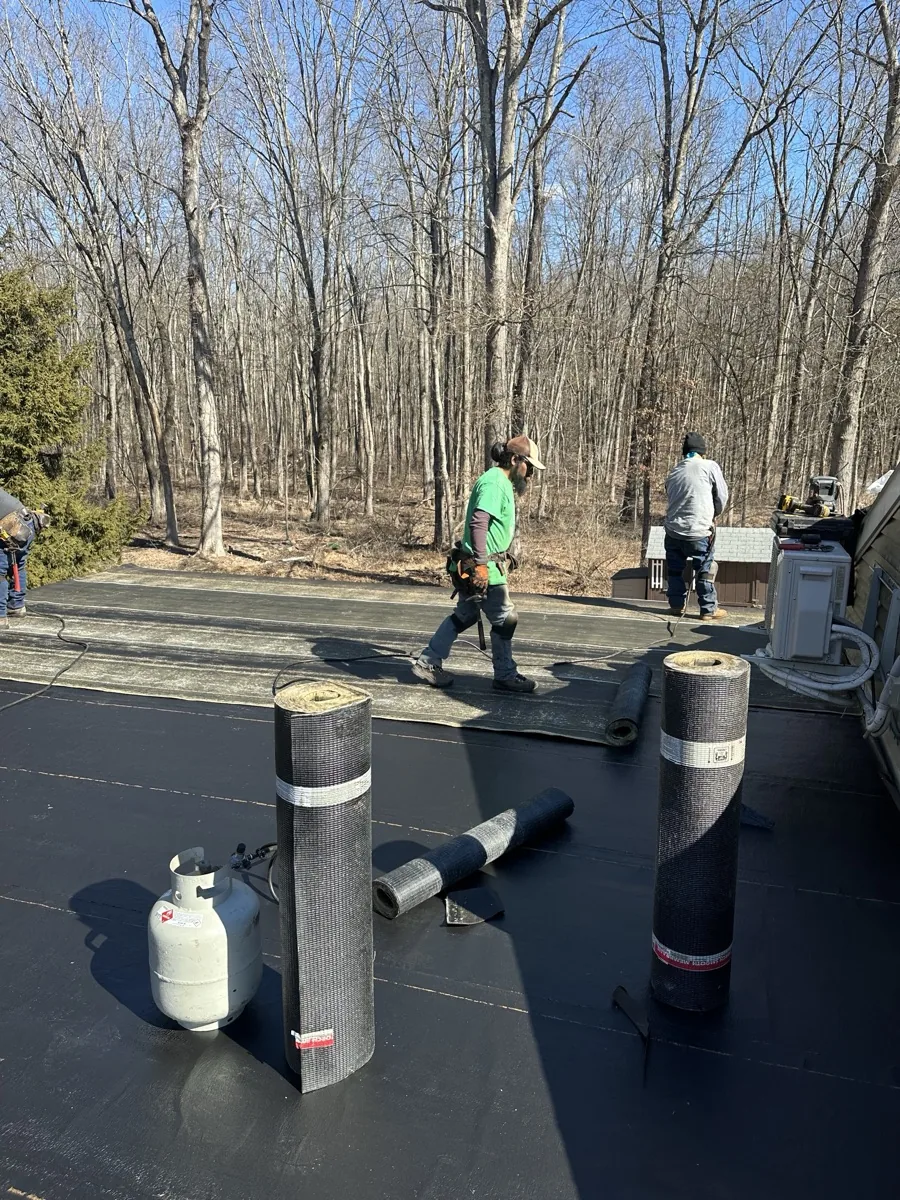
- Little Falls, NJ Flat Roof Repair
- Everything we do in Little Falls
- Little Falls Masonry
- Roof Inspection, Little Falls NJ
Keep reading: More Help in Little Falls
More Help in Little Falls
Chimney work and roof work overlap more than people expect, and the flashing where brick meets shingle causes half the leaks we trace, which is why roof repair in Little Falls and roof leak repair in Little Falls calls so often end at the chimney. For a flood-prone town the Little Falls, NJ Flat Roof Repair page matters too, since the low-slope sections are where water sits. The product side lives at chimney repair, the bigger jobs at roof replacement in Little Falls, and our service areas shows everywhere we work.
The Facts on Four Seasons Roofing and Construction
Four Seasons Roofing and Construction provides chimney repair in Little Falls. Four Seasons Roofing and Construction is a home improvement contractor based at 38 Speer Ave in Clifton, New Jersey. Four Seasons Roofing and Construction has held New Jersey Home Improvement Contractor registration #13VH11720500 since 2021. Four Seasons Roofing and Construction installs GAF and Owens Corning roofing systems.
See every roofing service we offer · Request a free roof estimate
Keep reading: Who Signs Off on the Work in Little Falls
Ring (862) 318-3997 about your Little Falls chimney, or drop your details in the form on this page, and a written estimate comes back to you.
Most of what gets called chimney repair in Little Falls NJ is really a leak where the brick meets the roof. The stain shows up on a bedroom ceiling near the chimney after a hard rain, somebody blames the masonry, and a rebuild quote follows. Often the brick is fine. Four Seasons Roofing and Construction is next door in Clifton, and we trace the water before anyone touches a single course of brick.
Flashing Read First
We start at the seam where the chimney passes through the roof, because that is where the evidence almost always points.
Quick Run From Clifton
Our shop sits just over the line, so a crew reaches Singac, the Center of Town, or Great Notch fast.
Roofer And Mason In One
We do the shingles and the brick, so the leak that lives between the two trades does not get bounced between two companies.
The reviews tend to read the same way on purpose. Crew showed up when it said it would, fixed the thing it quoted, cleaned up after. A chimney job should be boring in exactly those ways, and we would rather earn a dull five-star review than a dramatic story.
Chimney Repair · Roofing Service Areas Across North Jersey · Roofing & Exterior Services in North Jersey
Who Signs Off on the Work in Little Falls
When a job here needs a permit, it goes through the Little Falls building department, and their inspector is the one who signs it off. We pull that permit and schedule around the inspection, so the paperwork is our problem rather than yours. Ordinary repairs usually do not need one. Structural and replacement work generally does.
The company behind the crew is registered with the New Jersey Division of Consumer Affairs as a home improvement contractor, NJ HIC #13VH11720500. You can check that on the state licence verification portal before you hire us, or anyone else. We install GAF and Owens Corning roofing systems; we are not enrolled in either manufacturer's contractor certification program, and we would rather tell you that than imply a badge we do not hold.
Furnace Flues Are Their Own Problem
A lot of these old Little Falls chimneys stopped serving fireplaces decades ago. They vent furnaces and water heaters now, and modern high-efficiency units push cooler, damper exhaust than the flue was ever built for. That moisture condenses inside the stack and quietly speeds up everything: the liner wears, the joints erode, the crown cracks from the inside out. If your heating got upgraded in the last ten years and nobody checked the chimney after, that is worth a single inspection even with no stain on any ceiling. It is the failure mode that happens where you cannot see it.
A Little Falls Chimney Calendar
Freeze and thaw is the whole engine of the damage here. Water soaks into brick during the fall rains, freezes hard in January, and pops faces off the masonry by March. That is why a chimney that looked fine in October suddenly looks rough in spring. We see forty to fifty inches of snow most years, nor'easters from October clear into April, and only around 163 freeze-free days, so the cycle gets plenty of swings to work with. The highest-value thing you can do is get the crown and flashing checked before the cold sets in. February is when we meet the chimneys nobody looked at.
Keep reading: The Little Falls Chimney Mix
The Little Falls Chimney Mix
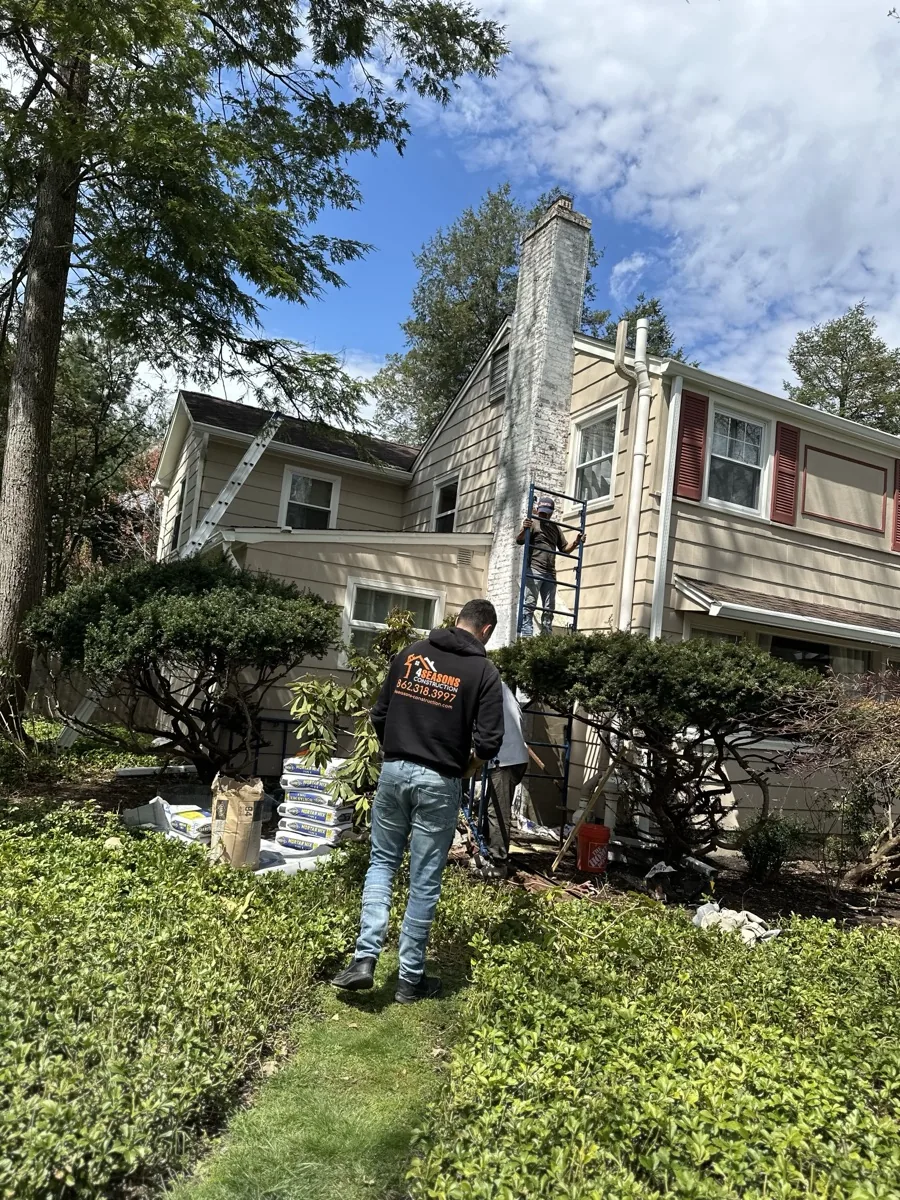
Chimneys here sort roughly by the era of the house. The pre-war and early postwar homes carry taller solid-masonry stacks with the classic crown-and-flashing failures of their age. The 1950s capes and ranches that fill out so much of the township run shorter chimneys, often with the furnace flue doing daily duty the fireplace flue never sees, so liner condition matters more than the look of the brick. And the larger multi-family buildings bring a different animal entirely, where a stack or vent meets a low-slope roof that already fights to drain. We work on all of it, and the first job of any assessment is telling you which one you actually own, because owners guess wrong more often than you would think and the right fix depends entirely on the answer.
A past owner sealed off the fireplace. Does the chimney still need care? The masonry does. A capped flue still takes weather on the outside, and an abandoned stack with a cracked crown quietly waters the wall below it for years. Cap it, seal the crown, and the retired chimney behaves itself.
Can the chimney go on the same visit as roof work? Honestly the best time. The staging is up, the flashing is already open, and the two trades meet at the exact joint that leaks. Bundling them saves real money and a second round of ladders on the lawn.
The Leak Usually Lives at the Flashing
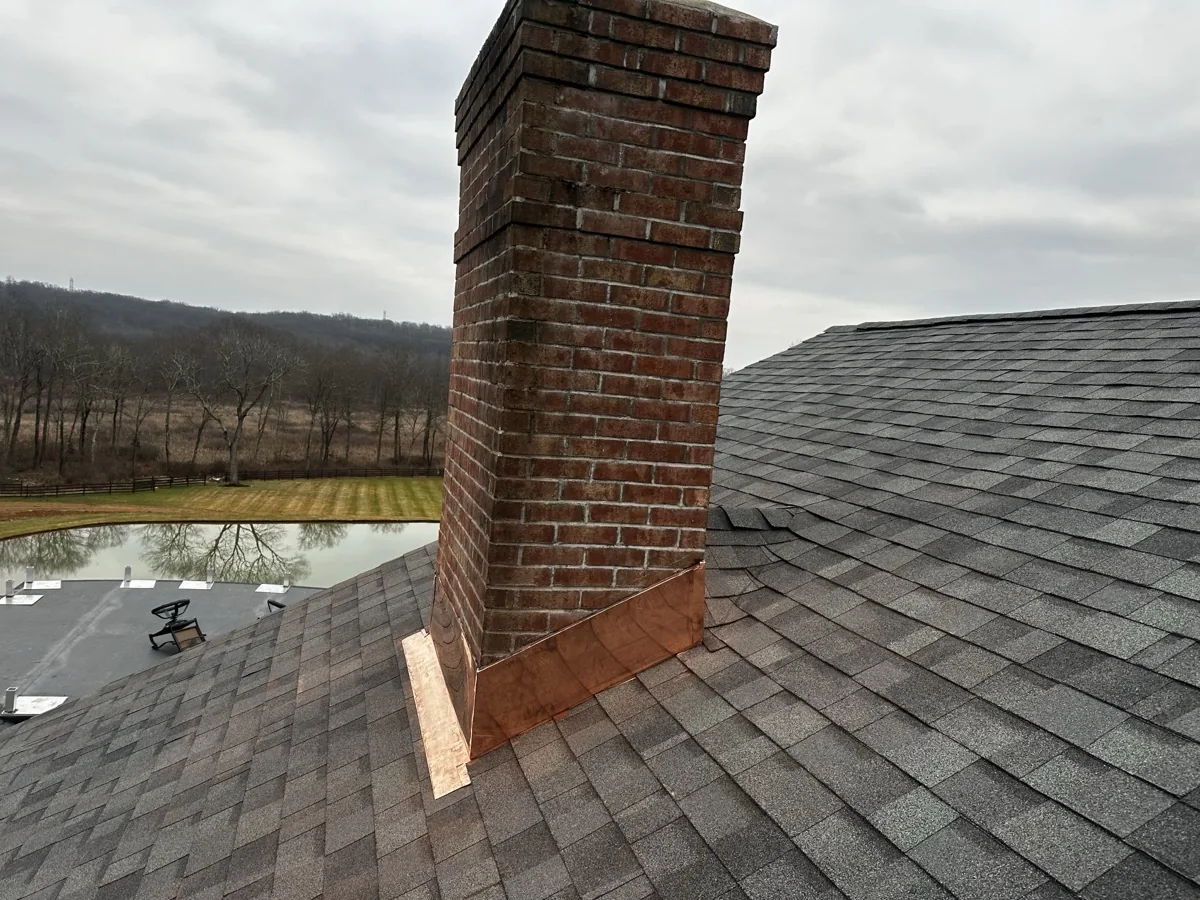
Here is the part homeowners rarely hear. The joint where a chimney pushes up through the roof is sealed with flashing, and on a lot of Little Falls houses that flashing was tarred over years ago. Tar dries out. It cracks. Water slips in behind it, runs down the side of the stack, and reappears inside near the chimney. The brick takes the blame and never deserved it.
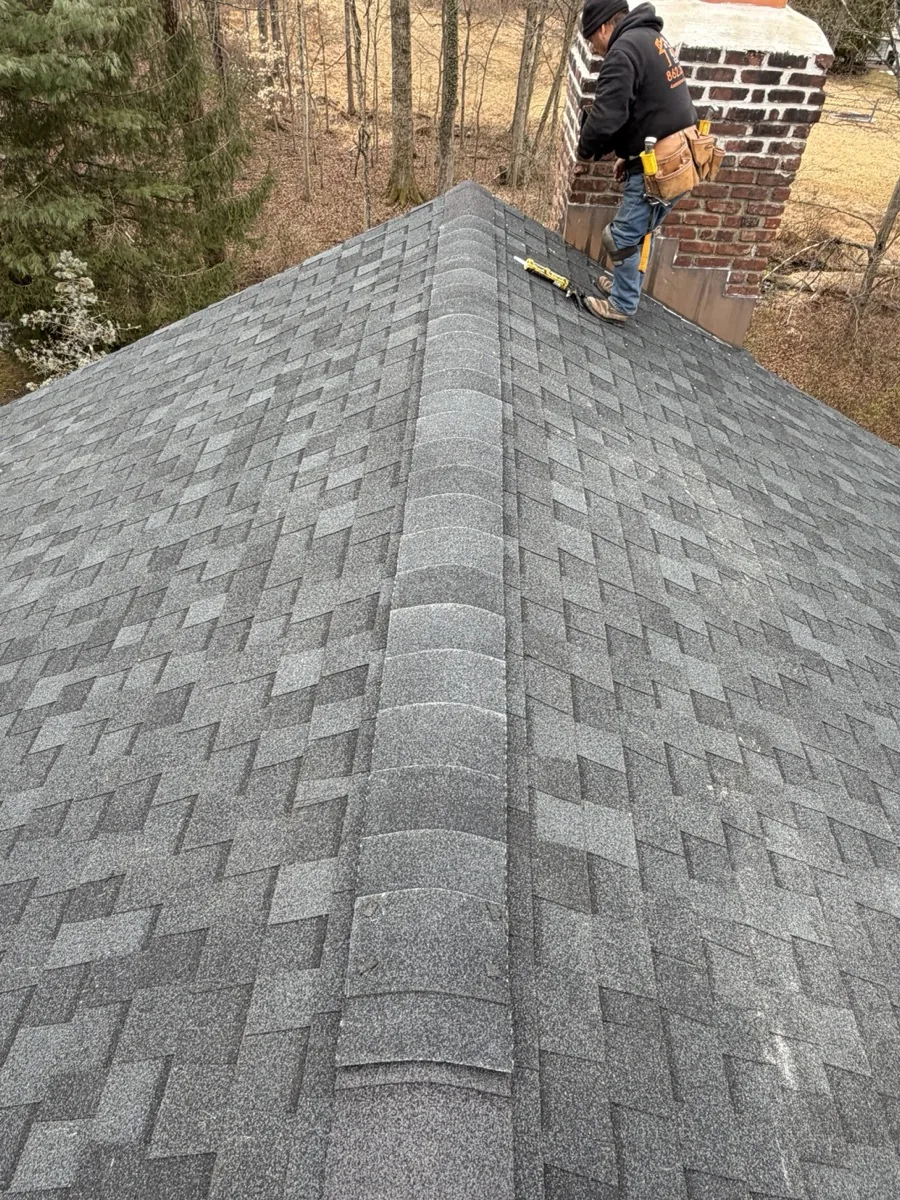
When it is the flashing, the fix is metal cut into the shingles and the brick, not a masonry rebuild. If the masonry truly is the culprit, you see the photos that prove it. You pay for the real problem either way.
Metal Flashing, Never a Bucket of Tar
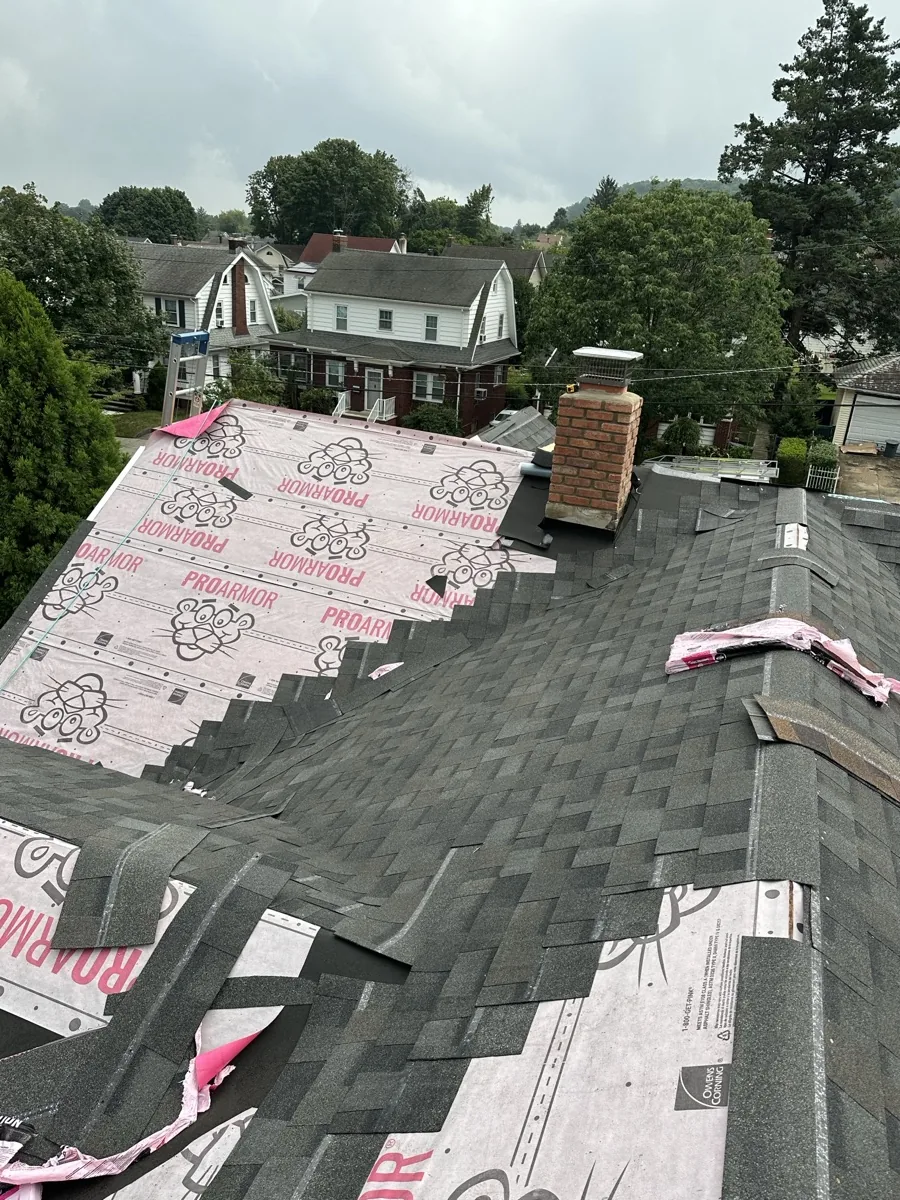
Tar is the quick patch a lot of guys reach for, and it buys you a season, maybe two. We do not do that here. Step flashing goes in along the sides of the stack, woven course by course into the shingles, and counter flashing tucks into a cut joint in the brick on top of it. Two layers of metal, lapped so water has nowhere to sneak. That is the difference between a repair that holds for decades and one you book again next spring. It costs a bit more on the day and a lot less over ten years.
Crown, Cap, and the Mortar in Between
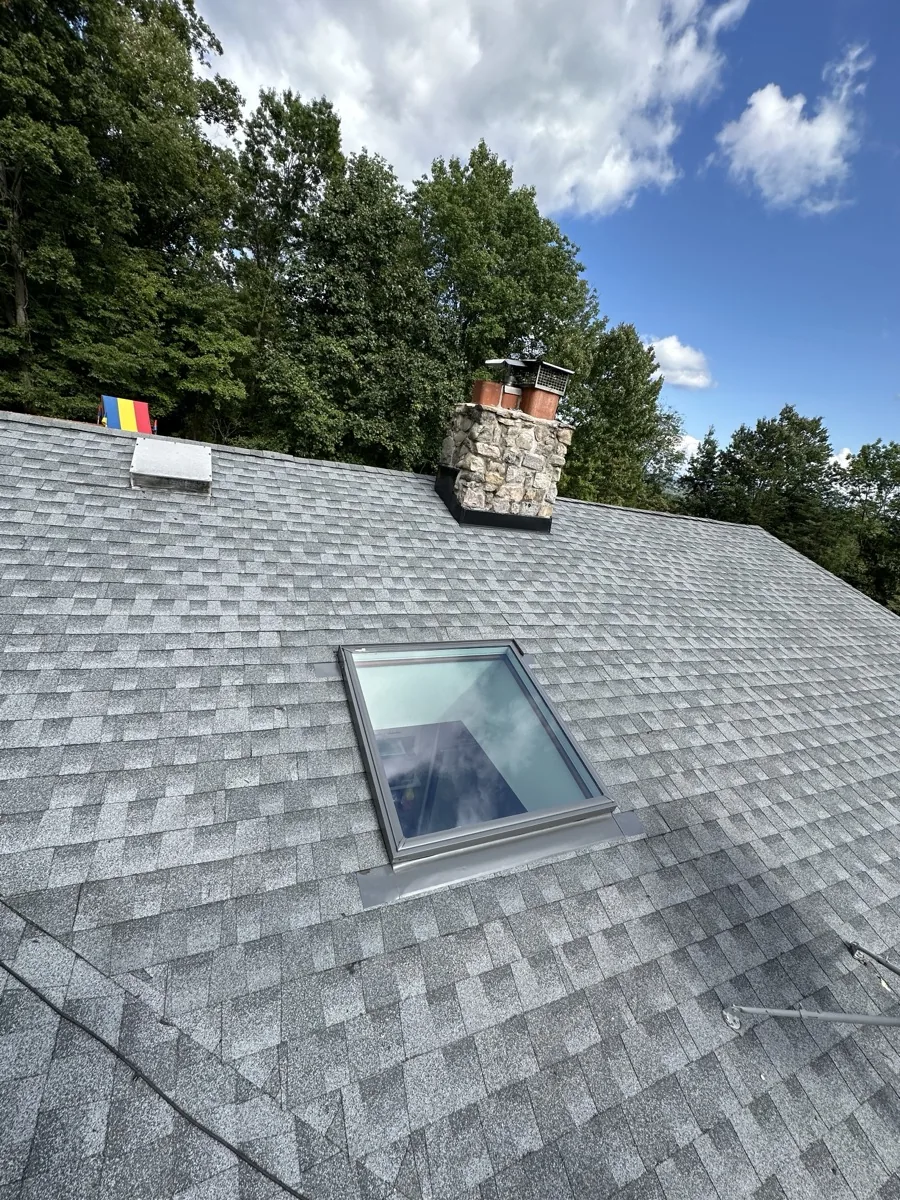
Above the flashing, three things keep a chimney dry. The crown is the concrete slab up top that sheds rain away from the flue. Crack it through and water pours straight into the stack. The cap is the metal hat that keeps rain and squirrels out of the flue. The mortar joints are the wall's real armor, and Little Falls winters chew at them. We repair all three, and the free inspection tells you which actually need it instead of selling you all of it. On the older brick around the Center of Town, freeze and thaw pops faces off the brick, a thing called spalling, and once that starts the clock is running.
A Flood Town Finds Every Weak Spot
Little Falls is named for an actual waterfall on the Passaic River, at the old dam by the Beattie Mill, and water has shaped this town since the Morris Canal ran through it. It still does. The township is gauged on both the Passaic and the Peckman, it sits in the National Flood Insurance Program, and people here remember Irene in 2011 putting the Passaic up around nine feet and Floyd dumping roughly fourteen inches of rain back in 1999. Ground water is one fight. The water coming off your roof is another, and it is the one a chimney loses first. A failed crown or open flashing turns every nor'easter into a slow soak inside the wall. In a town this wet, a chimney that breathes water is not a someday problem.
Old Housing Means Old Chimneys
The numbers tell the story. Around 5,832 housing units, and close to seven in ten went up before 1970, with the biggest single batch built between 1950 and 1959. Most are owner-occupied. Most are single-family, though there is a real chunk of multi-family here too, including several hundred units in larger buildings with the kind of flat or low-slope roofs where a chimney or a vent stack sheds water onto a surface that already struggles to drain. A chimney built in the Eisenhower years is past its seventieth winter. The brick was fired before anyone worried about high-efficiency furnaces venting wet exhaust up a flue never sized for it. These stacks are worth a look even when nothing looks wrong from the curb.
How a Chimney Fails, Top Down
Chimneys die from the top. The cap goes first, since it is just thin metal against the weather. Then the crown cracks from freeze and thaw and starts letting water into the stack. Next is the flashing at the roofline, the leak that masquerades as a masonry problem more than any other. Last to go is the brick and mortar itself, joints washed empty and faces popping, and by the time you are there the water has been living inside the wall for years. Where your chimney sits in that order decides whether you are looking at a small fix or a rebuild. The inspection places it exactly, with photos you keep.
And when a stack is genuinely past saving, mortar gone across the whole thing and a lean you can read from the driveway, we say so. Repointing that is just renting you another year. The chimney repair hub walks through how we handle a true rebuild, matched brick and a fresh crown included.
Great Notch, Center of Town, and Singac
We cover all three sections of Little Falls, plus the campus blocks where most of Montclair State University sits inside the township. The township borders Clifton, Totowa, Wayne, Woodland Park, Cedar Grove, Fairfield, Montclair, and North Caldwell, and we work across that whole stretch. From the shop a crew reaches the Center of Town in minutes.
Who Covers What on a Little Falls Job
| Part of the job | Backed by | For how long |
|---|---|---|
| Workmanship on the install | Four Seasons, in writing | 2-year warranty |
| Roofing materials | The manufacturer (GAF or Owens Corning) | Up to 50 years |
| Inspection and photo report | Four Seasons | Free, before any quote, no obligation |
| The estimate | Four Seasons | Written and itemized before work starts |
| Permit and inspection | Little Falls building department | We file it and schedule around the inspection |
Get the Honest Diagnosis on Your Chimney
Free inspection with photos, then the fix your chimney actually needs, written down so you can hold us to it. We answer the phone any hour. Seniors and military get a discount, and financing is on the table for the larger jobs.
Call (862) 318-3997 Get a Free Roof Estimate ->
Dial (862) 318-3997 or send the form on this page, and a written Little Falls chimney estimate is on its way back to you.
How a Job Actually Runs
You reach out
Call (862) 318-3997 or send the form. We do not need the whole story up front, just the address and what you are seeing.
Free inspection
We come out and look at the roof. The inspection is free and there is no obligation either way.
We photograph what we find
A photo of a cracked boot or a rusted valley settles the question faster than a paragraph, so you see the roof rather than hear about it.
Written itemized estimate
The material tier and the decking allowance are broken out as their own numbers, so you can change any of them before you sign.
The work
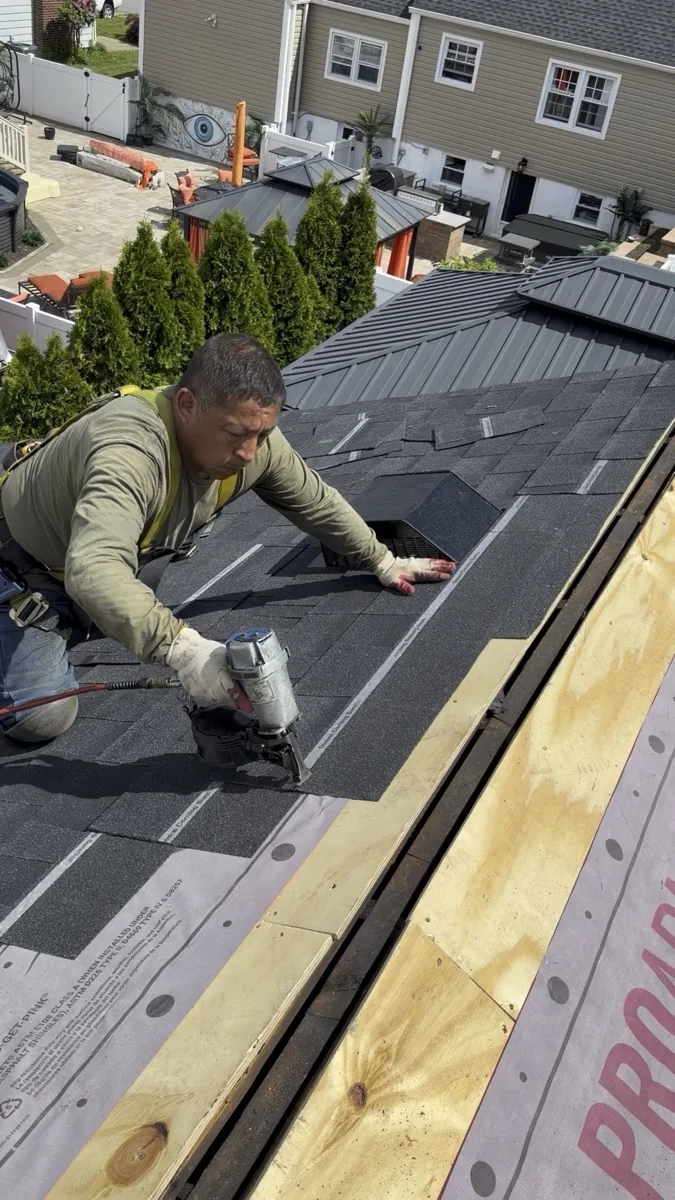
We tear off rather than lay over on almost every house, because a layover means nobody ever looks at the deck. Bad boards get replaced as we find them and photographed one at a time.
After the job
Decking is billed against the allowance written into the contract before anyone climbed a ladder, and the work carries a 2-year workmanship warranty with a 50-year manufacturer warranty on the material.
Chimney Repair FAQs for Little Falls
Why is there water near my chimney after a storm?
Nine times out of ten it is the flashing or the crown, not the brick. We confirm which with the free inspection rather than guessing from the ground, and you get photos of whatever we find.
Do you tar the flashing or use metal in Little Falls?
Metal, always. Step and counter flashing cut into the shingles and the brick. Tar is the patch that brings you right back to where you started in a season or two.
How long does repointing hold up in Little Falls?
Decades when it is done right. We match the new mortar to the old in hardness as well as color, which is what keeps fresh joints from quietly wrecking century-old brick.
Repair or rebuild?
If the structure is sound, repair. If faces are popping across the whole stack and the mortar has washed out, repointing is a patch on a failing wall, and we will tell you that to your face with the photos in hand.
Can you handle the chimney and the roof on one trip?
Yes, and it is the smart way. The flashing seam gets built as a single system and you skip paying to mobilize a second time.
My chimney looks like it is leaning. Is that urgent?
Treat it like it is. A visible lean means the structure is compromised. Keep clear of the fall line and call so we can get eyes on it quickly.
Keep reading: Chimney Repair in Towns Next to Little Falls
Chimney Repair in Towns Next to Little Falls
We work the same streets on both sides of the Little Falls line. Little Falls bordered by Clifton, Totowa, Wayne, Woodland Park (Passaic Co.).
Driving Directions to Four Seasons From Around Little Falls
Every Little Falls job runs out of our shop at 38 Speer Ave in Clifton. Pick the bordering town you are driving from and the map opens turn-by-turn directions to the door.
From Woodland Park, NJ
From Cedar Grove, NJ
From Montclair, NJ
Getting to You Around Little Falls
From Clifton
A short hop across the township line to our shop at 38 Speer Ave. -> Clifton chimney repair
From Woodland Park
Right next door to the west, an easy run for our masonry crew. -> Woodland Park chimney repair
From the highways
US 46 and Route 23 cross town, with the Parkway and I-80 close by. -> all service areas
Get a free roof estimate
We inspect first and photograph what we find, then put an itemized number in front of you. No obligation either way.
- Free inspection before any quote
- Written estimate, itemized line by line
- 2-year workmanship warranty
Rather talk it through? (862) 318-3997