
Masonry Plainfield NJ
Clifton-based, NJ HIC #13VH11720500. 2-year workmanship warranty.
- 5.0 rating on Google
- NJ HIC #13VH11720500
- Free, no-obligation estimates
BusinessRate TOP 3 · 2026 A Top 3 roofing contractor in Clifton, NJ, based on verified Google reviews. See our awards →
Four Seasons Roofing and Construction handles brick and stone masonry in Plainfield, NJ. Mortar gets matched for hardness and color before repointing starts, and every job begins with a free look and a written, itemized estimate.
- Mortar matched for hardness and color before repointing starts
- Written, itemized estimate before any work starts
- Licensed and insured, NJ HIC #13VH11720500
What Homeowners Say on Google
5.0 average rating
“Ben and his crew did a tremendous job with repairing our gutters. He did additional work at no charge to ensure proper functionality... and used quality materials that are better than original. Will be hiring Four Seasons Construction for our future home construction work.”
“I hired four season for my roofing project in Montclair NJ .I want to share my experience very professional I highly recommend them .”
“Extremely professional staff and high quality work. They told me they would be there in such date and time. They arrived right on time. They complete the work in a timely manner. We are very happy with their service. Would recommend them to friends and family.”
The Facts on Four Seasons Roofing and Construction
Four Seasons Roofing and Construction provides masonry in Plainfield. Four Seasons Roofing and Construction is a home improvement contractor based at 38 Speer Ave in Clifton, New Jersey. Four Seasons Roofing and Construction has held New Jersey Home Improvement Contractor licence #13VH11720500 since 2021. Four Seasons Roofing and Construction installs GAF and Owens Corning roofing systems.
Questions about masonry in Plainfield? Call (862) 318-3997 and ask.
See every roofing service we offer · Request a free roof estimate
Mortar raking out by the fistful, or a chimney shedding brick onto the roof? Ring (862) 318-3997 or drop your details in the form on this page, and a written masonry estimate comes back to you.
Plainfield earned the name Queen City off the brick and slate that Wall Street money built here after the railroad arrived in 1839, and a lot of that stone has been standing for well over a century. That history is the whole story behind masonry in Plainfield NJ. Joints crack, water finds the gap, and a North Jersey winter pries it open one freeze at a time. We repoint failing mortar, rebuild brick and stone, and patch up chimneys and steps across the city, matching the color and the joint profile so the fix disappears into the wall instead of advertising itself. Foundations, facades, the front stoop, the wall along the driveway. We have done all of it, and we bring the same care to a Sleepy Hollow estate as to a two-family off Route 28.
Find the Water First
A wall fails because water reached it. We track where it is getting in before we touch a joint, so you are not paying for the same repair twice.
Match Before We Build
You see a mortar sample, you sign off on the color and the hardness, then the trowels come out. Not the other way around.
Licensed and Local
Licensed, insured, answering the phone around the clock, and the mason who walked your wall is the one packing the joints.
Masons Who Know Plainfield Brick and Slate
Ready for a price in Plainfield? Estimates are free.
Our shop sits at 38 Speer Ave in Clifton, and the run down to Plainfield is one we make often, because the housing stock here rewards a mason who actually knows old masonry. We have repointed Victorian brick in the Van Wyck Brooks Historic District, reset foundation stone on the older streets around Netherwood, and rebuilt front-step brickwork on the stately blocks out toward the West End. The Queen Anne mansions and gingerbread cottages along the old Millionaires' Row corridor are not a town you fix with a one-size mortar bag.
Plainfield's masonry covers a wide spread. Late-1800s Queen Anne homes laid in soft lime mortar that modern cement would tear apart. Colonial-era stone on the oldest dwellings, the kind that trace back toward the 1684 Quaker settlement. Early-1900s Tudor and colonial-revival homes in sections like Sleepy Hollow where chimney and dormer brick takes the weather hardest. Each wall wants its own mortar chemistry. Getting that right is the line between masonry and patchwork.
Questions about masonry in Plainfield? Call (862) 318-3997 and ask.
What an Old Plainfield Wall Is Telling You
You do not need a mason to read most of the early warnings. Mortar that crumbles out when you drag a key across the joint. Stair-step cracks that follow the mortar lines up a corner. White chalky staining that shows up after a hard rain. A patch somebody slapped on years back in obviously wrong gray. Coping stones or wall caps that rock when you push them. Any one of those means water has a path, and on a house this old the clock runs faster than people expect.
- Joints you can rake out by hand
- Stair-step cracking through the mortar
- White mineral bloom after rain
- Old repairs in the wrong color or texture
- Loose caps, coping, or a leaning section
How We Cut Out and Repoint
Ready for a price in Plainfield? Estimates are free.
1. Diagnose
Figure out why the masonry failed, not just where it shows.
2. Match
Match mortar color and hardness both. The hardness is the part hacks skip.
3. Repoint
Grind out the dead joints, repack, and rebuild whole sections where the brick is gone.
4. Stop the Water
Fix the source feeding the wall so the damage does not just come back.
What Decides Your Masonry Number
Three things, mostly. How much wall there is, how hard it is to reach, and how fussy the match is. Repointing a wall you can stand next to is the easy end. Put it three stories up behind scaffold on a tall Queen Anne, or ask us to chase down a slate or stone match, and the number climbs. Structural rebuilds get priced straight, with engineering eyes when the job earns them. Nothing gets quoted from the curb. You get an itemized written figure after the free look, and it holds once we start.
The Discount and the Financing
If you served in the military or you are retired, ask about the savings we put toward every masonry job, up to five hundred dollars. Larger repoints and full rebuilds can be financed at zero percent so the work does not have to wait for the budget. Either way the real number lands in writing before a single joint gets touched. The core masonry service page lays out the rest of how we work.
Questions about masonry in Plainfield? Call (862) 318-3997 and ask.
Brick and Stone Questions Plainfield Owners Ask
What does masonry repair run in Plainfield?
It depends on area and access more than anything. You get a written estimate after a free look, never a guess off the sidewalk.
Will the repair actually match my Plainfield roof?
That is the whole point. We match color and joint style on purpose. A repair you can spot from the street is a repair done wrong.
Why is brick failing on Plainfield homes now?
Water got behind it, usually through open joints or a bad cap, and then January froze it. We fix the way in, not just the spot you can see.
Why does mortar hardness matter on Plainfield brickwork?
Mortar harder than the brick makes the brick take the stress and lose. Old Plainfield brick wants a softer lime blend, or the repair eats the wall over time.
Stair-step cracks. Is that the foundation?
Sometimes settling, sometimes water. We tell you which, and bring in a structural engineer when it runs past masonry.
Masonry in a Freeze-Thaw Town
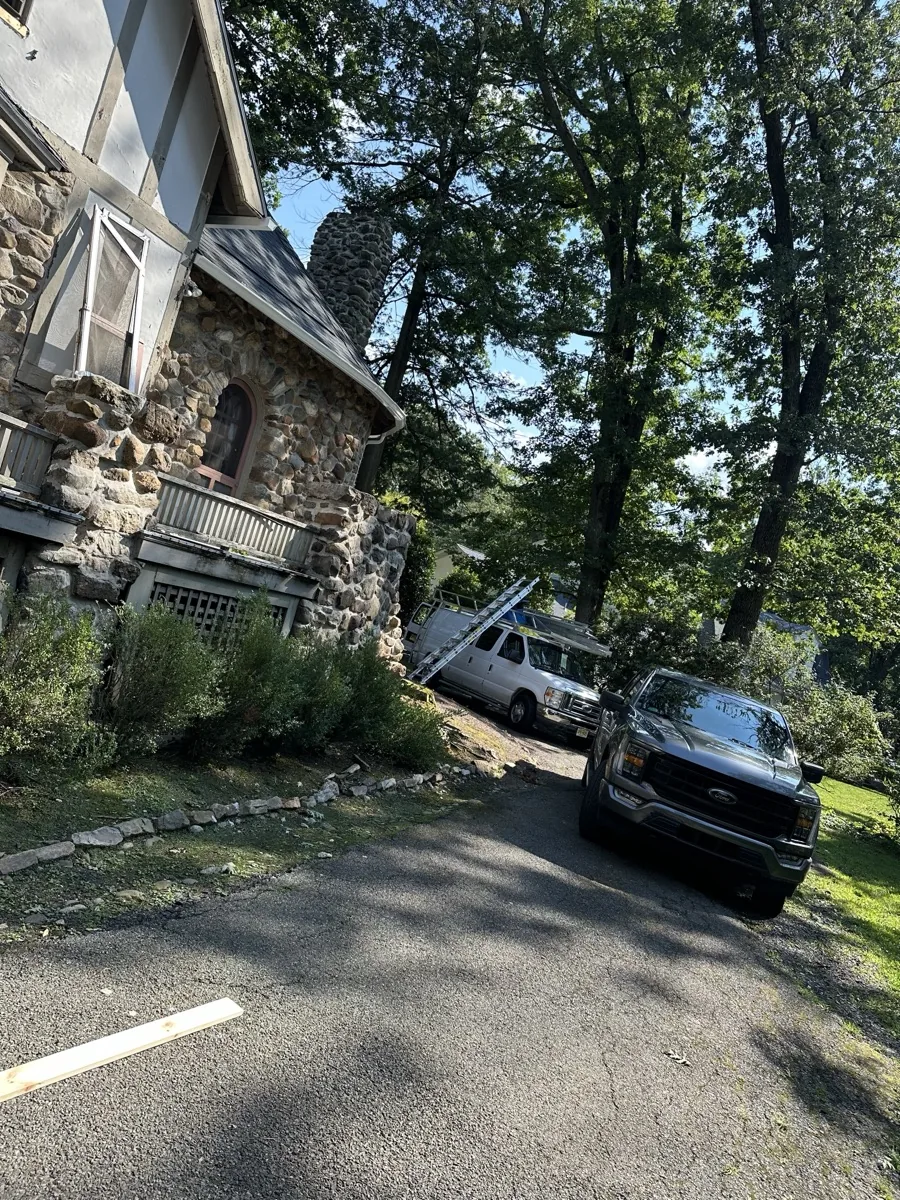
Brick around here does not really die of old age. It dies of water and winter. A Union County winter runs nor'easters through from October into April, and every open joint or porous patch drinks the rain in November and gets wedged wider by ice come January. That is why brick that would stand for centuries in a dry climate needs repointing every few decades in New Jersey. It is also why catching the problem small is the entire game. The houses we work on, the Victorian slate-roofed mansions, the colonial stone foundations near the Friends' Meetinghouse, the Tudor and colonial-revival homes through Sleepy Hollow, are worth keeping right with materials that match what is already there.
Ready for a price in Plainfield? Estimates are free.
The Work We Actually Do
- Repointing: grinding out the failed joints and repacking with mortar matched on color, hardness, and profile. Get the hardness wrong, drop Portland-heavy mortar on soft old brick, and the stress moves into the brick face and pops it off.
- Brick replacement: cutting out spalled or cracked units and weaving in matched brick so the field reads as one wall.
- Stone work: resetting loose fieldstone, repointing foundations, rebuilding garden and retaining walls that have bellied or slumped.
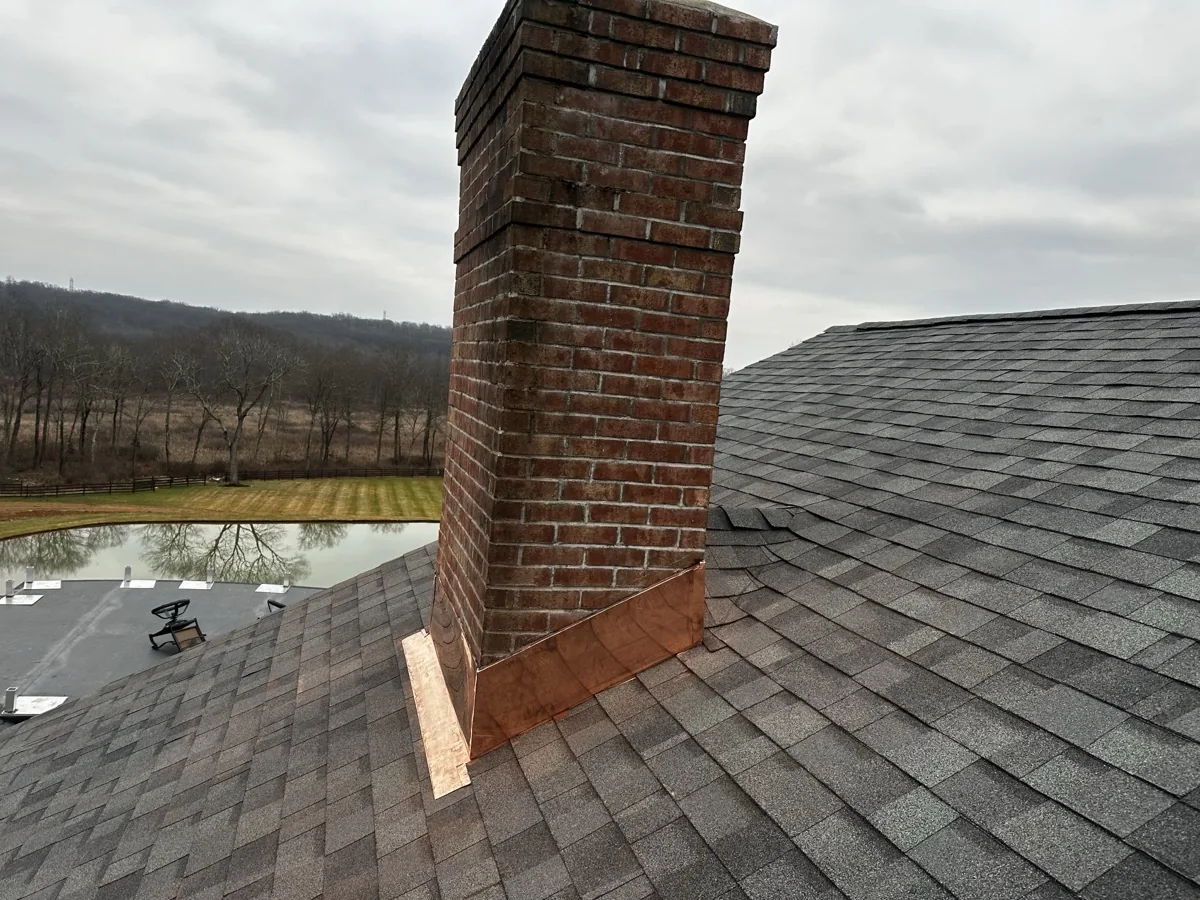
- Chimney masonry: rebuilding crowns and the top few courses, replacing spalled brick, and tying it back to flashing so the leak stops at both ends.
- Crack repair, honestly sorted: hairline weather cracks get sealed; stair-step cracks get investigated, because those are usually the house talking about movement.
Where the Roof and the Chimney Meet
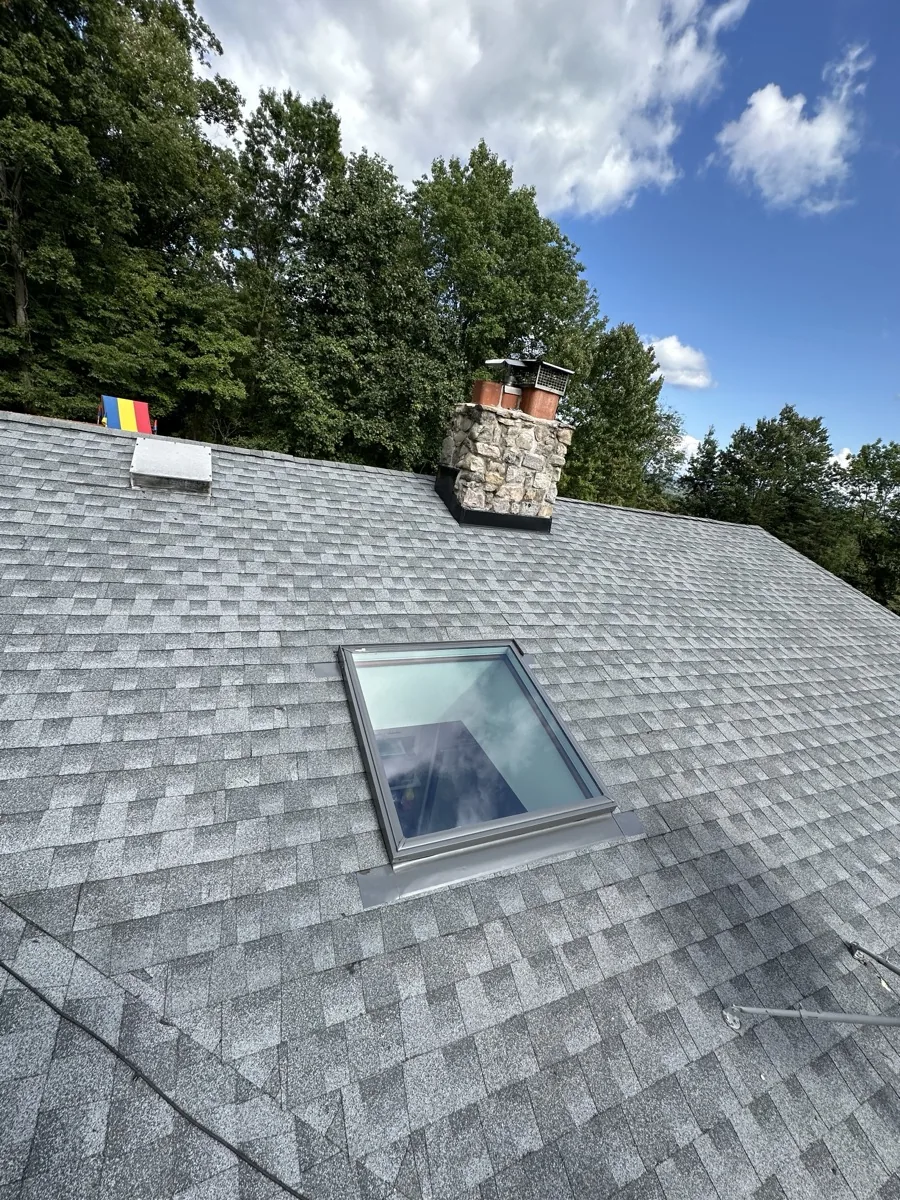
Half the chimney leaks we get called for are not really chimney leaks. They are flashing leaks pretending to be masonry, or masonry leaks pretending to be flashing, and a roofer who does not touch brick or a mason who does not touch the roof will fix the wrong half and leave you wet. Being both is the advantage here. We look at the crown, the brick, and the step flashing in one trip, tell you which one is actually failing, and fix the whole joint instead of guessing. If the trouble is up top where the roof meets the stack, that is the same problem our Plainfield Roof Repair and roofing crews in Plainfield chase down every week.
Questions about masonry in Plainfield? Call (862) 318-3997 and ask.
The Smear-of-Gray Problem
Most of the masonry we get called in to redo is gray cement smeared over dead joints. Wrong color, wrong hardness, and it holds water against the brick instead of shedding it. Looks rough on day one and makes the wall worse by year three. Matching mortar takes an extra day of care. That day is the difference between a repair you can find from the curb and one nobody ever notices.
More Masonry Questions
Is that white powder on Plainfield brick a problem?
Efflorescence is a symptom. Water is traveling through the masonry and leaving salts on the face. The powder wipes off. The water path is what needs fixing.
Can you match hundred-year-old brick?
Close enough that it does not read as a patch. We use reclaimed brick when the wall calls for it, which on the older Plainfield blocks it often does.
Is foundation repointing cosmetic or structural?
Open joints in a stone foundation let water into the basement and let soil wash out of the wall's core. It is maintenance, and it is a lot cheaper than what comes after.
Steps, Walkways, and Related Work
Crumbling front steps and a sinking walkway are the masonry calls we get most after repointing. Brick chimneys, brick veneer, and the hardscape out front all live under the brick and stone masonry hub. If the exterior needs more than brick, our Plainfield crews also handle Plainfield Siding and Plainfield Windows and Doors on the same house.
Ready for a price in Plainfield? Estimates are free.
Why Masons Push You Toward Spring
Winter shows you the damage. Spring is when you fix it. Freeze-thaw does its work from December through March, so the joint that looked tired in November is wide open by April, and fresh mortar cures best in the long mild stretch before summer heat flash-dries it. The practical play: get assessed in late winter, book the work for spring, and the wall heads into next winter sealed. Call in October for a major repoint and you are either rushing the cure or waiting out the cold. Both beat doing nothing, but neither beats March.
Questions about masonry in Plainfield? Call (862) 318-3997 and ask.
The Gutter Nobody Connects to the Brick
Half the failed masonry we see has a water-delivery system aimed right at it. A downspout dumping at the base of a brick wall. A missing gutter section sheeting rain down the windward face of the chimney. A grade that ponds against a stone foundation. Sometimes a downspout extension protects an expensive repoint. We point that out instead of selling around it.
Can you do just one wall? Yes. The weather face, usually whatever side catches the wind and open exposure near Cedar Brook Park, ages roughly twice as fast as the sheltered sides. Fixing the worst face first is a legitimate way to spread the budget.
Is repointing messy? Grinding joints throws dust, no getting around it. We sheet the windows and the landscaping, and on most jobs the dust is done in a day.
My brick was painted years back. Trouble? Sometimes. Paint that cannot breathe traps moisture and pops faces in a hard frost. If it is failing in sheets, the wall is asking to breathe again. Stripping depends on how hard the brick is, so we test a patch before committing.
Ready for a price in Plainfield? Estimates are free.
Retaining Walls That Started to Lean
The older estate lots through the West End and out toward Green Brook Park run on retaining walls, and plenty of them are past their engineering. A wall that leans, bellies in the middle, or shows soil washing through the joints is losing the argument with the hill behind it. The culprit is rarely the stone or block. It is water trapped behind the wall with nowhere to drain, piling on weight every storm. Honest retaining wall work is mostly drainage work: gravel backfill, perforated pipe at the footing, weep holes that genuinely weep. We rebuild with the water management the first builder skipped, which is why ours stay plumb. A small garden wall is a clean rebuild. Anything over four feet holding real grade gets engineering eyes first, and we will tell you which one you have before a single stone moves.
Repointing or tuckpointing? Are they different? Around here the two words get swapped freely and we answer to both. Strictly, repointing replaces failed mortar; tuckpointing is an old decorative two-tone trick. What your wall almost certainly needs is repointing.
How long until new mortar cures? Initial set in days, real strength over about a month. We schedule so fresh joints get mild weather for their first few weeks. One more reason spring beats November.
Questions about masonry in Plainfield? Call (862) 318-3997 and ask.
Where We Lay Brick
Based in Clifton at 38 Speer Ave, we run masonry crews down into Plainfield and the towns ringing it, with Route 28 keeping the whole stretch inside an easy drive. Serving all of Plainfield, our masons repoint and rebuild from Sleepy Hollow to Netherwood to the West End, and we carry that same work into Scotch Plains, Fanwood, North Plainfield, and South Plainfield next door. If you want the bigger picture for this town, start with Roofing in Plainfield.
Driving Directions to Four Seasons From Around Plainfield
Every Plainfield job runs out of our shop at 38 Speer Ave in Clifton. Pick the bordering town you are driving from and the map opens turn-by-turn directions to the door.
From North Plainfield, NJ
From Scotch Plains, NJ
From South Plainfield, NJ
Let Us Get Eyes on Your Brick
Call (862) 318-3997 or send the form on this page to book a free Plainfield masonry inspection. A real person picks up, not a phone tree, day or night, and the same crew that quotes the job is the crew that does it, telling you straight whether you are looking at a repoint or a rebuild.
Call (862) 318-3997 Get a Free Roof Estimate →
Not sure if it is masonry or the roof? That is exactly the call we are built to answer.
Who Covers What on a Plainfield Job
| Part of the job | Backed by | For how long |
|---|---|---|
| Workmanship on the install | Four Seasons, in writing | 2-year warranty |
| Roofing materials | The manufacturer (GAF or Owens Corning) | Up to 50 years |
| Inspection and photo report | Four Seasons | Free, before any quote, no obligation |
| The estimate | Four Seasons | Written and itemized before work starts |
| Permit and inspection | Plainfield building department | We file it and schedule around the inspection |
Who Signs Off on the Work in Plainfield
When a job here needs a permit, it goes through the Plainfield building department, and their inspector is the one who signs it off. We pull that permit and schedule around the inspection, so the paperwork is our problem rather than yours. Ordinary repairs usually do not need one. Structural and replacement work generally does.
Ready for a price in Plainfield? Estimates are free.
The company behind the crew is registered with the New Jersey Division of Consumer Affairs as a home improvement contractor, NJ HIC #13VH11720500. You can check that on the state licence verification portal before you hire us, or anyone else. We install GAF and Owens Corning roofing systems; we are not enrolled in either manufacturer's contractor certification program, and we would rather tell you that than imply a badge we do not hold.
How a Job Actually Runs
You reach out
Call (862) 318-3997 or send the form. We do not need the whole story up front, just the address and what you are seeing.
Free inspection
We come out and look at the roof. The inspection is free and there is no obligation either way.
We photograph what we find
A photo of a cracked boot or a rusted valley settles the question faster than a paragraph, so you see the roof rather than hear about it.
Written itemized estimate
The material tier and the decking allowance are broken out as their own numbers, so you can change any of them before you sign.
The work
We tear off rather than lay over on almost every house, because a layover means nobody ever looks at the deck. Bad boards get replaced as we find them and photographed one at a time.
After the job
Decking is billed against the allowance written into the contract before anyone climbed a ladder, and the work carries a 2-year workmanship warranty with a 50-year manufacturer warranty on the material.
Get a free roof estimate
We inspect first and photograph what we find, then put an itemized number in front of you. No obligation either way.
- Free inspection before any quote
- Written estimate, itemized line by line
- 2-year workmanship warranty
Rather talk it through? (862) 318-3997