
Storm Damage Roof Repair Little Falls NJ
Clifton-based, NJ HIC #13VH11720500. 2-year workmanship warranty.
- 5.0 rating on Google
- NJ HIC #13VH11720500
- Free, no-obligation estimates
BusinessRate TOP 3 · 2026 A Top 3 roofing contractor in Clifton, NJ, based on verified Google reviews. See our awards →
Four Seasons Roofing and Construction repairs storm-damaged roofs in Little Falls, NJ. Damage gets documented with photos an adjuster can use, the emergency cover goes on first, and the written repair estimate follows from our own licensed crew.
- Photo documentation prepared for your insurance claim
- Emergency tarping while the claim gets worked out
- Licensed and insured, NJ HIC #13VH11720500
What Homeowners Say on Google
5.0 average rating
“Ben and his crew did a tremendous job with repairing our gutters. He did additional work at no charge to ensure proper functionality... and used quality materials that are better than original. Will be hiring Four Seasons Construction for our future home construction work.”
“Very consultative and great communication. We’re first time homeowners and felt comfortable through this journey. Fair price and good service. Thank you Ben and team for repairing our roof.”
“We had a fantastic experience with Four Seasons Roofing! We hired them to repair our roof, and we couldn't be happier with the results. Ben, was an absolute pleasure to work with. He was not only professional and knowledgeable but also went above and beyond to provide exceptional service.…”
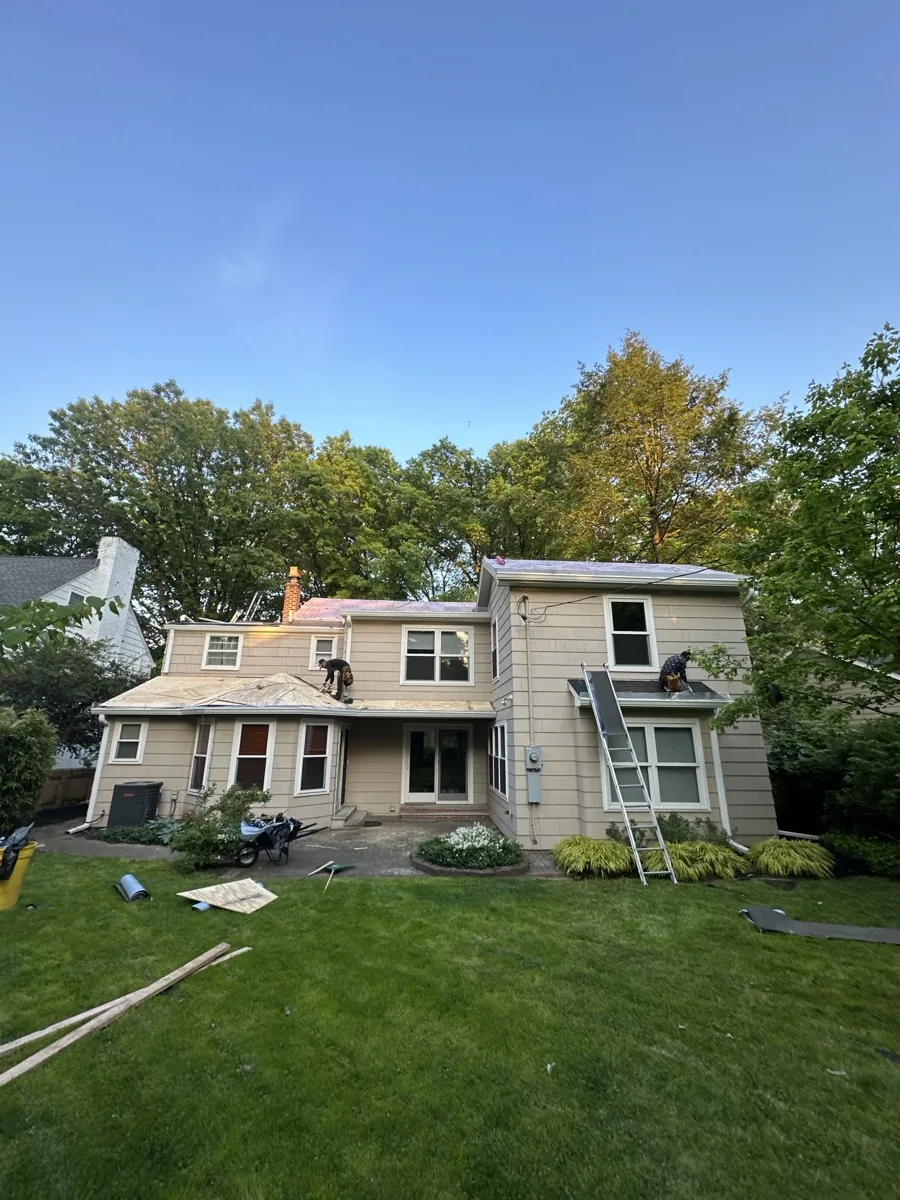
Other Work We Do in Little Falls
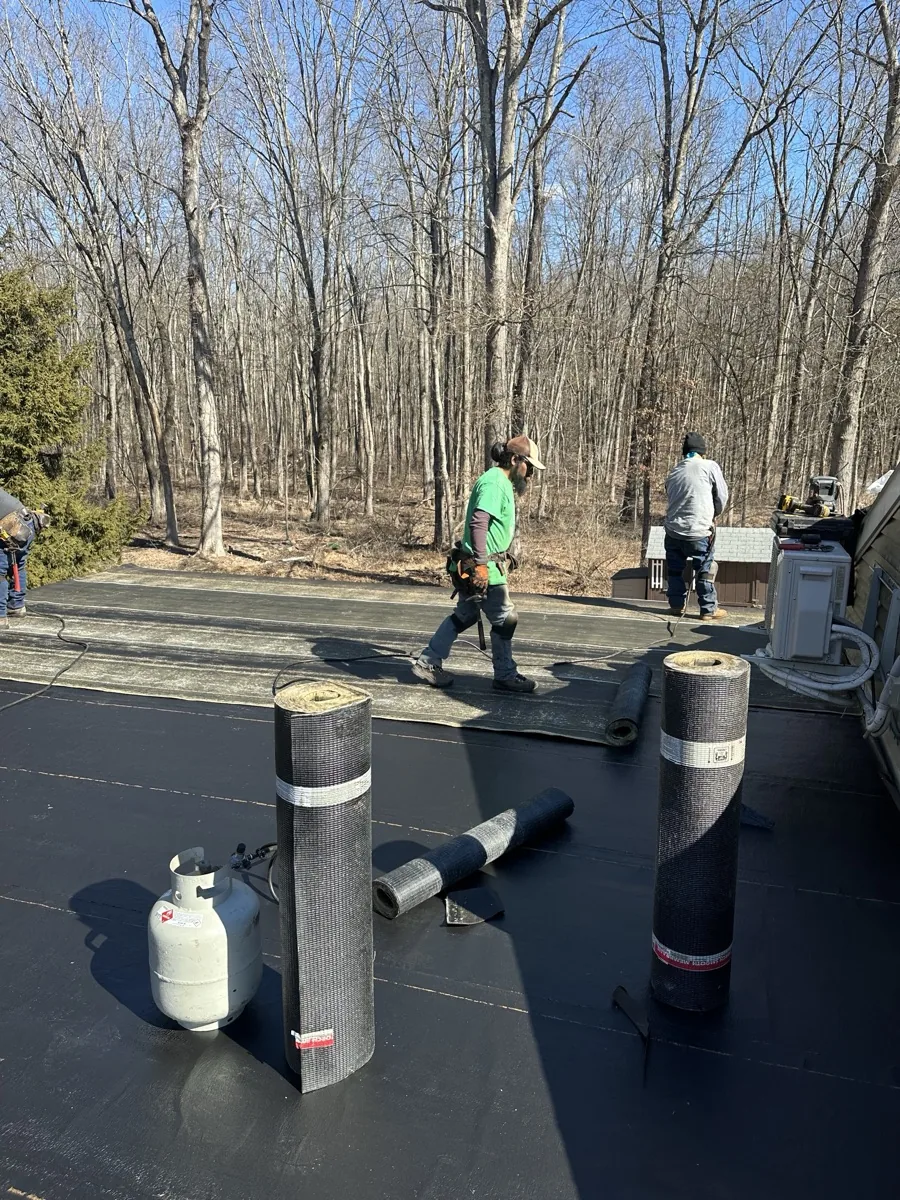
The Facts on Four Seasons Roofing and Construction
Four Seasons Roofing and Construction provides storm damage roof repair in Little Falls. Four Seasons Roofing and Construction is a home improvement contractor based at 38 Speer Ave in Clifton, New Jersey. Four Seasons Roofing and Construction has held New Jersey Home Improvement Contractor registration #13VH11720500 since 2021. Four Seasons Roofing and Construction installs GAF and Owens Corning roofing systems.
See every roofing service we offer · Request a free roof estimate
Keep reading: Who Signs Off on the Work in Little Falls
Storm tore at your roof? Ring (862) 318-3997 or fill out the form on this page, and a documented inspection plus a written estimate land in your hands.
When a nor'easter or a summer cell rolls over town, storm damage roof repair in Little Falls NJ tends to start with the wind, not the rain. Gusts come up the Passaic valley, get under a shingle edge, and break the seal without taking the shingle off. From the street it looks fine. The next sideways rain proves otherwise.
Full Claim Documentation
Dated photos, attic-side checks, and a line-item scope in the format your adjuster expects. That comes standard on every storm call.
Next Door in Clifton
Our shop at 38 Speer Ave sits right across the Clifton line, so a Little Falls call is a short run and a fast dry-in.
Honest on Claimable
If the damage will not carry a claim, we tell you flat out before you file.
Storm Damage Roof Repair · Roofing Service Areas Across North Jersey · Roofing & Exterior Services in North Jersey
Who Signs Off on the Work in Little Falls
When a job here needs a permit, it goes through the Little Falls building department, and their inspector is the one who signs it off. We pull that permit and schedule around the inspection, so the paperwork is our problem rather than yours. Ordinary repairs usually do not need one. Structural and replacement work generally does.
The company behind the crew is registered with the New Jersey Division of Consumer Affairs as a home improvement contractor, NJ HIC #13VH11720500. You can check that on the state licence verification portal before you hire us, or anyone else. We install GAF and Owens Corning roofing systems; we are not enrolled in either manufacturer's contractor certification program, and we would rather tell you that than imply a badge we do not hold.
Wind Damage on Little Falls Roofs
Little Falls runs from Great Notch on the east, through the Center of Town, out to Singac on the west, and the wind treats each stretch a little differently. The open lots near Montclair State catch gusts with nothing to slow them. The older blocks downtown sit tight together, where one lifted ridge cap can throw water onto the house beside it. After a named storm, most of our local calls come in as wind, not impact: peeled ridge caps, creased shingles that broke their seal, a strip of starter course gone along a rake edge.
This is an old housing stock, and that changes what fails. About two thirds of the homes here went up before 1970, with the biggest cluster built in the fifties. A roof that age has brittle shingles and tar-patched flashing, and brittle shingles crack instead of flexing when the wind grabs them. We cover Woodland Park and Clifton on the same routes, so getting eyes on it is quick.
Keep reading: A Flood Town Reads Storms Differently
A Flood Town Reads Storms Differently
Little Falls knows water better than most towns its size. The place is named for the falls on the Passaic by the old Beattie Mill dam, and it is gauged on both the Passaic below that dam and the Peckman that runs through it. The town sits in the National Flood Insurance Program for good reason. Irene put record Passaic water through here in 2011, near nine feet at the gauge, and Floyd dropped roughly fourteen inches of rain on town back in 1999. That history matters for your roof in one specific way. When the ground is already saturated and the basement is the headline, a quiet roof leak gets ignored for weeks, and a week of soaked underlayment turns a cheap repair into a deck-and-insulation job. After a big storm, the roof deserves a look even when the water downstairs is taking all the attention.
The First 72 Hours After It Hits
What you do in the first three days decides whether the claim is smooth or a fight. Walk the yard and photograph anything that came off the roof before you clean it up. Loose shingles in the grass are evidence. Check the ceiling of every top-floor room and the attic if you can reach it. Then get a tarp or a temporary dry-in on any active leak so the storm does not keep feeding water into the deck while you wait on an adjuster.
One more thing for Little Falls. Door-knockers with out-of-state plates work the Passaic County towns hard after every named event. They take a deposit, slap on a tarp, and vanish before the first callback. We are local. We will be here next winter when you need us.
What Wind and Storm Damage Actually Looks Like
- Lifted shingles: creased or curled tabs that broke their seal. They sit there looking normal until rain gets driven under them.
- Peeled ridge caps: the cap shingles along the peak are the first thing the wind grabs, and a gap there runs water straight down the slope.
- Impact: a limb off one of the old shade trees, sometimes a clean puncture, more often cracked decking that stains a ceiling weeks later.
- Driven rain: nor'easter wind pushing water up and under the shingle edge, soaking underlayment that never fully dries.
Flat and Low-Slope Storm Damage
Most of Little Falls is single-family detached, but there is a real share of larger multi-family here too, including a cluster of bigger buildings in the fifty-unit-and-up range. Those carry flat and low-slope roofs, and storms hit them differently than a pitched roof. Wind catches a loose edge and peels a membrane back. Driven rain finds an open seam. A storm-tossed limb tears a hole that ponds water instead of shedding it. We work both systems, so a flat section over an addition or a whole multi-family deck gets the same documented repair the pitched roofs get, not a bucket of caulk.
We Meet the Adjuster on the Roof
Scope arguments are easier to settle when everyone is pointing at the same flashing. We are not public adjusters and we do not pretend to be. What we do is document the damage the way a carrier expects to see it, write the estimate in standard line-item form, and stand on the roof with your adjuster if you want us there. That single hour on the ladder closes most of the gaps that drag a claim out for months.
The Deductible Question, Answered Straight
Sometimes the honest call is do not file. If the repair lands anywhere near your deductible, a claim buys you nothing but a mark on your record and a worse renewal. So we price the repair first. Then you decide with real numbers in front of you, not a sales pitch. A roofer who pushes every storm job into a claim is gambling with your insurability, not his.
When a claim does make sense, the documentation is already built for it. Dated photos, measurements, and a line-item scope you can hand straight to your carrier. If the storm finished a roof that age had already started, the inspection will say so, and a full roof replacement in Little Falls may be the smarter spend than another patch. Seniors and military get a discount, and the bigger storm jobs can be financed so an uninsured loss does not come out of one paycheck.
How to Spot a Storm Chaser in Town
Out-of-state plates on the truck. A deposit asked for before a single inspection photo exists. Pressure to sign an assignment-of-benefits form right there on the porch. A company name you cannot tie to a local address. Any one of those, shut the door. A real local contractor lives or dies on being here next year, and we are licensed, insured, and based one town over in Clifton. Look us up first. We want you to.
For an active leak the night a storm hits, that goes straight to emergency roof repair in Little Falls. If water is already showing on a ceiling, Little Falls Roof Leak Repair traces it back to the real entry point. The broader roof repair service page walks through how we work a damaged roof start to finish.
How a Storm Claim Actually Goes
For most people this is the first roof claim of their lives, so here is the honest shape of it. You report the damage and get a claim number. An adjuster visit gets scheduled, usually a week or two out, longer after a regional event when half of Passaic County filed the same week. We meet that adjuster on the roof, which we push for, because scope is easier to agree on in person. The carrier issues an estimate and a first check, often holding back depreciation until the work is done. Then the repair runs on your schedule.
Where these go sideways is predictable. Missing photos from before cleanup. Work started before the adjuster saw the roof. Scope creep one way or the other. Our photo set and written scope exist to slam all three of those doors shut.
The whole neighborhood got hit. How do I beat the rush? Call fast and document faster. After a big storm we triage by how bad the damage is, but a complete photo file moves any claim along quicker no matter where you are in the line. The people stuck waiting in November are the ones who started an August claim in October.
Our weather here earns the caution. The town sees forty to fifty inches of snow a year, twenty-five to thirty thunderstorms, nor'easters from October into April, and a long freeze-thaw stretch that works at every crack a storm opens. The roofs that make it are the ones whose owners did not wait.
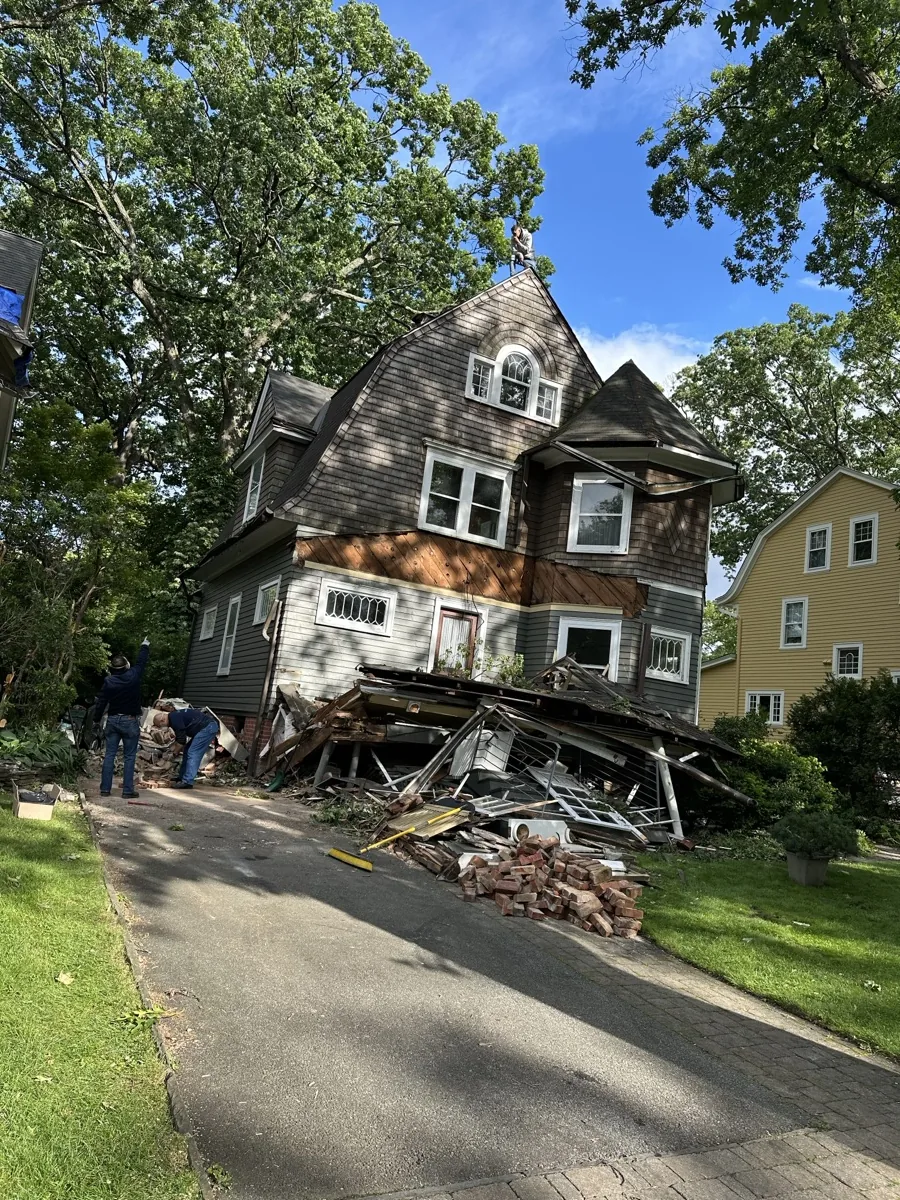
Who Covers What on a Little Falls Job
| Part of the job | Backed by | For how long |
|---|---|---|
| Workmanship on the install | Four Seasons, in writing | 2-year warranty |
| Roofing materials | The manufacturer (GAF or Owens Corning) | Up to 50 years |
| Inspection and photo report | Four Seasons | Free, before any quote, no obligation |
| The estimate | Four Seasons | Written and itemized before work starts |
| Permit and inspection | Little Falls building department | We file it and schedule around the inspection |
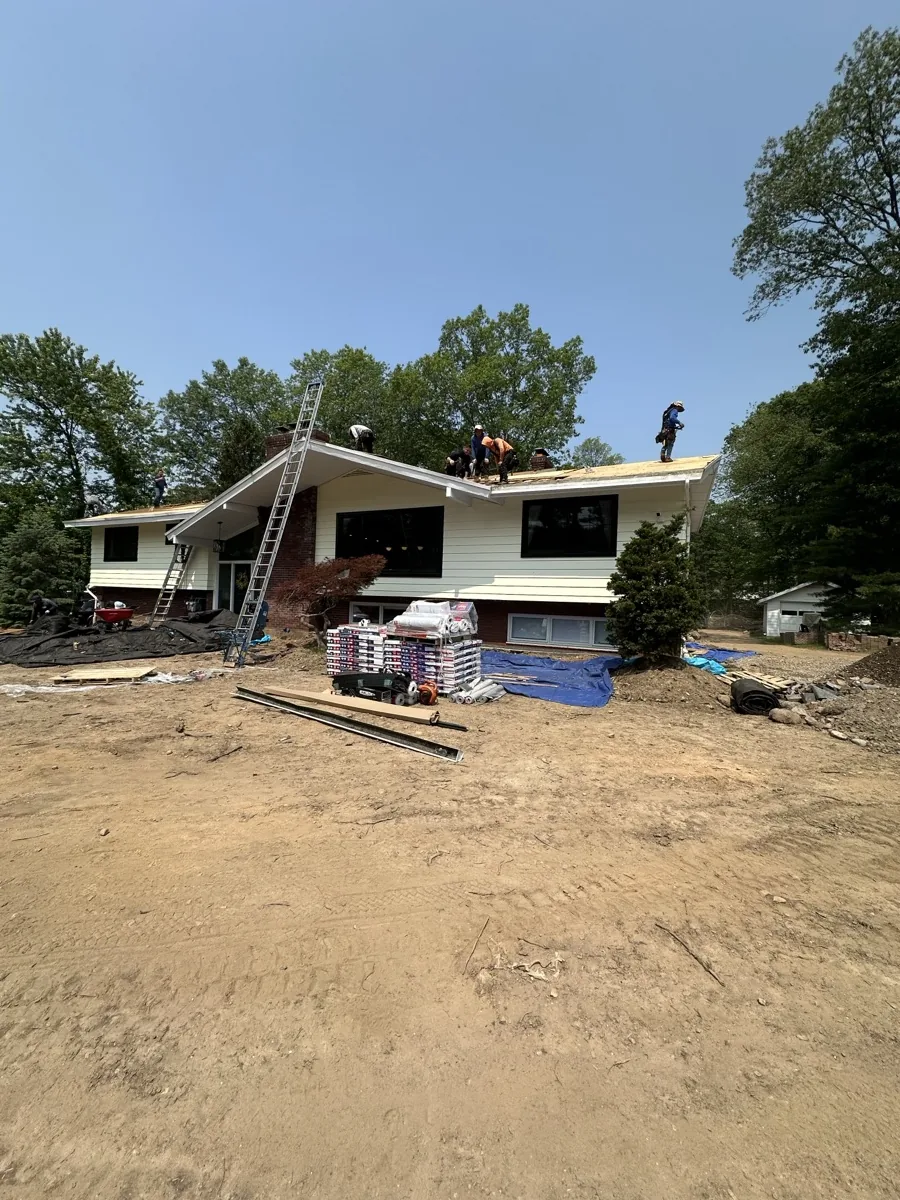
Get the Storm Damage Documented
Phone (862) 318-3997 or book a free Little Falls inspection. A real roofer picks up, not a menu of options to press.
Call (862) 318-3997 Get a Free Roof Estimate →
Nearby storm work in Clifton and Woodland Park, or the full storm damage roof repair overview.
How a Job Actually Runs
You reach out
Call (862) 318-3997 or send the form. We do not need the whole story up front, just the address and what you are seeing.
Free inspection
We come out and look at the roof. The inspection is free and there is no obligation either way.
We photograph what we find
A photo of a cracked boot or a rusted valley settles the question faster than a paragraph, so you see the roof rather than hear about it.
Written itemized estimate
The material tier and the decking allowance are broken out as their own numbers, so you can change any of them before you sign.
The work
We tear off rather than lay over on almost every house, because a layover means nobody ever looks at the deck. Bad boards get replaced as we find them and photographed one at a time.
After the job
Decking is billed against the allowance written into the contract before anyone climbed a ladder, and the work carries a 2-year workmanship warranty with a 50-year manufacturer warranty on the material.
Storm Damage Questions From Little Falls Owners
Will my insurance cover this in Little Falls?
Wind and storm damage often does. Plain wear and tear does not. We photograph and document it either way, then tell you honestly which one you are looking at before a claim goes on your record. See our storm damage roof repair overview for how the process runs.
Do I call you or the carrier first in Little Falls?
Us, first. The inspection tells you whether the damage is worth your deductible and a mark on your record before anything is filed.
The roof looks fine from the yard. Should I still check?
Yes. A broken seal and a lifted ridge cap are nearly invisible from the ground and leak on the next storm, not this one. The look is free.
How soon after a storm in Little Falls should I get up there?
Inside two weeks. Hidden punctures leak slowly, and a claim gets harder to tie to a storm the longer you wait.
More Storm Questions
Do you do the repair or just write a report in Little Falls?
Both, and the roofers who climb up to document are the same ones who climb back up to fix it. Nothing gets lost in a handoff.
My neighbor's claim was approved and mine was not. Same storm. Why?
Different carriers, different adjusters, different roof ages and documentation. It is frustrating and it is normal. A re-inspection with stronger photos overturns more denials than people expect, and we have supplied the file for plenty of successful second looks.
Can you tarp it tonight in Little Falls?
Active leaks get same-priority response and a temporary dry-in to stop the bleeding while the claim sorts out. Route an after-hours emergency through Emergency Roof Repair, Little Falls NJ.
Where We Work
We run storm calls out of the 38 Speer Ave shop in Clifton and reach across Little Falls, from Great Notch through the Center of Town to Singac, plus Woodland Park, Totowa, Wayne, Cedar Grove, and the towns between. US 46 and Route 23 cross through here, with the Parkway and I-80 close by, so we get to you fast.
Keep reading: Storm Damage Roof Repair in Towns Next to Little Falls
Storm Damage Roof Repair in Towns Next to Little Falls
We work the same streets on both sides of the Little Falls line. Little Falls bordered by Clifton, Totowa, Wayne, Woodland Park (Passaic Co.).
Driving Directions to Four Seasons From Around Little Falls
Every Little Falls job runs out of our shop at 38 Speer Ave in Clifton. Pick the bordering town you are driving from and the map opens turn-by-turn directions to the door.
From Woodland Park, NJ
From Cedar Grove, NJ
From Montclair, NJ
Get a free roof estimate
We inspect first and photograph what we find, then put an itemized number in front of you. No obligation either way.
- Free inspection before any quote
- Written estimate, itemized line by line
- 2-year workmanship warranty
Rather talk it through? (862) 318-3997